Manifesto
In 1985, Paul Vecchiali directed his eleventh feature-length film, Trous de mémoire. It was shot in a day, improvised, with just two actors and in a single location. The opening credits refer to it as an impromptu. However, this casual gesture is invested with both weight and lightness — the sureness of a skilled and experienced hand. What Vecchiali sketches here is not just a film to come, but also the contours of those he had already made and the lines of his horizon.
This modest project, small even by Vecchiali’s parsimonious standards, is a return, as his hero Godard was periodically prone to make, to bare essentials and clarification of purpose (not Numéro deux… perhaps Numéro un plus un). In its radical spareness, its equally marked purities and impurities, it serves as a limit case for narrative cinema and as a provocative manifesto by Vecchiali of what he viewed as constitutive of the medium and, by exclusion, what he deemed outside of it.
Minimalism
The film is small, and it is fair to begin with this trait, as it is a belligerent one that demands to be noticed. Vecchiali was always working with less, on the outer edges of the French funding systems and with bespoke production models, but the smallness of this particular project has something of a tantrum about it. Take away my toys, put me in the corner, Vecchiali seems to say, but I will still be heard. This spareness is not a negative or ascetic quality though; it only brings into sharper relief what is there. And what is that?
We are by the river. There is a bench, a tree. We hear a highway in the distance, the wind in the leaves above. We are with two people, two characters played by Françoise Lebrun and Vecchiali himself, and they are with each other — at least for this day they have agreed to spend together, which is also the day the performers have agreed to film, and the hour and a little more we have agreed to watch them onscreen.
Precisely, this agreement is that, for this elastic period of shared time, the other is all that is needed: a person who is not ourselves but whose existence we commit to believing in. And we must believe in them even when they deny us themselves, when they keep secrets and when they hide, as Vecchiali and Lebrun do in their first shot together, their backs turned to the camera, their words a first skirmish of offensive and defensive maneuvers, not yet honest or understood.
We must also believe when ‘magic’, a special effect, intervenes, as it does close to the end of the film, when Lebrun and Vecchiali pop into a previously unpeopled landscape from thin air. The most minimal of special effects, created out of precisely nothing, out of absence. Vecchiali seems to say that cinema is spectacle, but that this spectacle can be as simple as presence and non-presence. This perhaps connects the film to Cocteau, specifically Orphée (1950), another story of a man entering a hell (here, that of memory) in search of a woman who will accompany him part of the way back but ultimately leave him disappointed.
Melodrama
This man and woman talk, look, move, touch, always in relation to one another. They laugh, bitch, kiss, lie, cry real tears and false ones too. They charm and annoy each other, and their faces flash, despite their pretenses, with love and hate.
An aside: let’s be clear that when we say a man and a woman, we also mean any other combination of genders, because in Vecchiali, as in Proust, behind every fictional couple — often but not always heterosexual — there is the stubborn glint of other possible configurations, both fictional and real.
Back to this couple: they feel emotion, and so do we. Despite Vecchiali’s formalism, emotion will always have the higher ground in his work, running rampant and roughshod whenever it pleases. He is first and foremost a melodramatist and all his films are melodramas, whatever other generic costume jewelry they might coquettishly deck themselves in (at various times, that of the war film, the policier, the serial killer or sports drama, the PSA or the porno). He is one of those filmmakers who found, in the love affair between two or more people, everything else, including inexhaustible depths of form. There are many others: Naruse, Hong, Mankiewicz, Ghatak, Masumura, Grémillon…
Also Dreyer. Trous de mémoire closely resembles his Två människor, an unfairly overlooked film cruelly slighted even by Dreyer himself. Both are remarkable distillations of a filmmaker’s whole world into a single sustained conversation about whether it might be possible for a man and a woman to trust each other again.
Memory
Trust each other again, because the couple in Trous de mémoire is not a couple. They were one, years before. Now they are only haunting each other. It is as if one of them were alive and the other dead — neither is sure which is which, but both are trying to bring each other over to the other plane, whatever that might be. What ties them together still is their past, but unlike in Proust, no resurrecting miracle will occur. The past is irretrievable.
Still, the desire for it persists, but memory must be sought not alone, within oneself, but with others, in search parties of two, who scour the scorched earth of the past looking for shared landmarks. What better goal for these expeditions of nostalgia than a song, like the one Vecchiali’s character enlists Lebrun to help him track through the ruins of their old relationship?
But a chanson is an invention, a romance unto itself, that lasts only a few minutes before it must be reinvented. That is the past for Vecchiali — something that cannot be remembered or forgotten, only reinvented. And this always happens alongside others and, in the end, for others. His character here thinks he is seeking a fragment of the past that will fill his own trous de mémoire, but, once found, if this can be said to belong to anyone, it is to Lebrun, not him.
Mystery
The lost time that Vecchiali reels in over the course of the film comes to the surface of the present as a tin can, a rubber tire, a MacGuffin. It was nothing, a mystery not worth solving. This was perhaps evident from the first. It is possible Vecchiali’s character knew the solution to his riddle all along, that, ever the gallant, he invented it to hand Lebrun a victory as he might a rose. After all, he is shameless, a manipulator, weeping like an infant one moment and taking cover behind sarcasm the next.
Aren’t these the rules of the game though? When Lebrun and Vecchiali play battleship, aren’t they acknowledging that this is all cinema is? Two people taking their turns asking questions, firing shots in the dark, waiting to hear whether their missiles have torn through steel or dropped into silence. In order to destroy, to conquer? No. In order to draw out that silence, the periods of not knowing, of desire.
The film’s silences are perhaps its real mystery, and one that will remain forever unsolved. They are Lebrun’s, and stand in defiant opposition to Vecchali’s verbose stage-managing, his relentless redirection of the conversation. From time to time, she sets her lips and says no more, and a terrifying excess of reality rushes into her averted gaze.
Mort
At one point, Vecchiali, feeling Lebrun is slipping away, takes one of his cheapest shots, a desperate bid for sympathy. He claims he is dying of cancer. Maybe he is, or maybe he is just being melodramatic. In any case, she doesn’t take the bait, barely acknowledges his words, and soon after it is she who leaves the picture.
Nearly forty years later, Vecchiali would make another impromptu, and call it, Godardian tongue firmly in cheek, Bonjour la langue. It is almost identical in form and format to Trous de mémoire — an update to prosumer digital only makes it clearer how prescient his innovations had been all along.
He again acts in the film. However, this time he doesn’t make any claims about dying. There is no need. Frail and fixed in place, intermittently overcome by tears, it is all too plain to see that he has barely any time left. Still, just enough for a last will, last testament, last manifesto, last melodrama. For a last film, one that contains all that he had made, all that he could, and all that he will not.
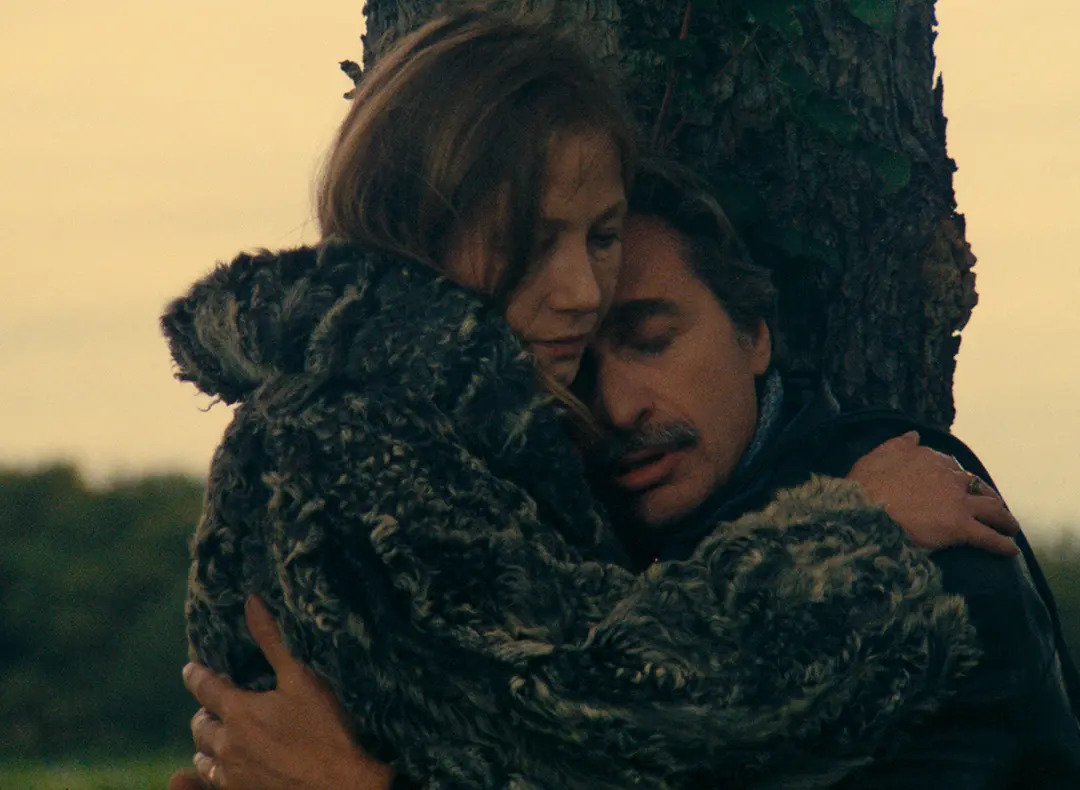
Trous de mémoire (Paul Vecchiali, 1985)