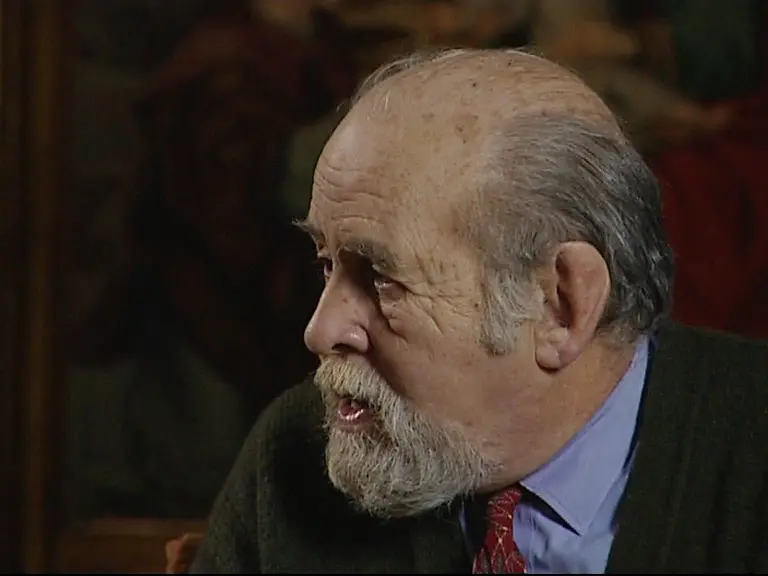
A 15ª Pedra (Rita Azevedo Gomes, 2007)
Rita Azevedo Gomes enrolled in Painting at the Sociedade Nacional de Belas Artes in Lisbon but did not finish the course, which was completely transformed with the 25th of April. Making it to the next year became a purely administrative matter, let alone being about painting, as politics and rallies occupied everything and everyone. She then went to work for a year as a teacher in São Bartolomeu de Messines, a small town in Silves in the Algarve. Still in the 1970s, she was collaborating in various capacities with Luís Noronha da Costa on his short films Karl-Martin (1974), D. Jaime ou a Noite Portuguesa (1974), Padres (1975) and O Construtor de Anjos (1978). Shortly afterwards, she photographed stills and planned shot lists for João Botelho, and worked as a prop maker, costume designer, and art director for Paulo Branco on films he produced like Eduardo de Gregorio’s Aspern (1982), Valeria Sarmiento’s Notre mariage (1984) and Werner Schroeter’s Der Rosenkönig (1986). [1]
Azevedo Gomes also worked as a costume designer on Francisca (1981), a film directed by Manoel de Oliveira. At this time, while looking for a job, she began attending screenings that were part of the Cinema Americano cycles at the Calouste Gulbenkian Foundation, curated by João Bénard da Costa, who invited her to work with him. In the following years, with him as sub-director, she began a long collaboration with the Cinemateca Portuguesa, where she was in charge of graphic design for many of the institution’s publications, among which we can highlight In Alfred Hitchcock’s (1982), Nicholas Ray (1985), Aurélio da Paz dos Reis (1996), O Cinema vai ao Teatro (1996), Um Mar de Filmes (1998), Frank Capra — O Nome Acima do Título (1999), António Campos (2000), Cinema & Pintura (2005) and A Palavra (2007).
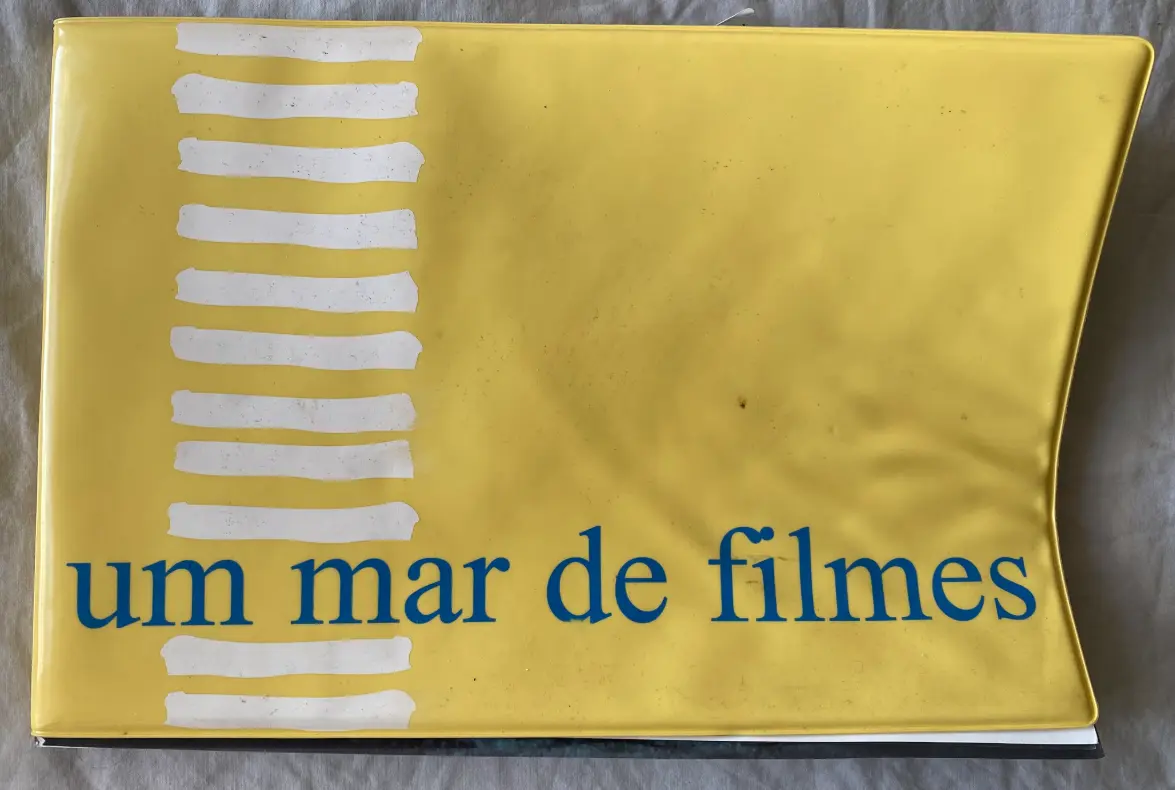
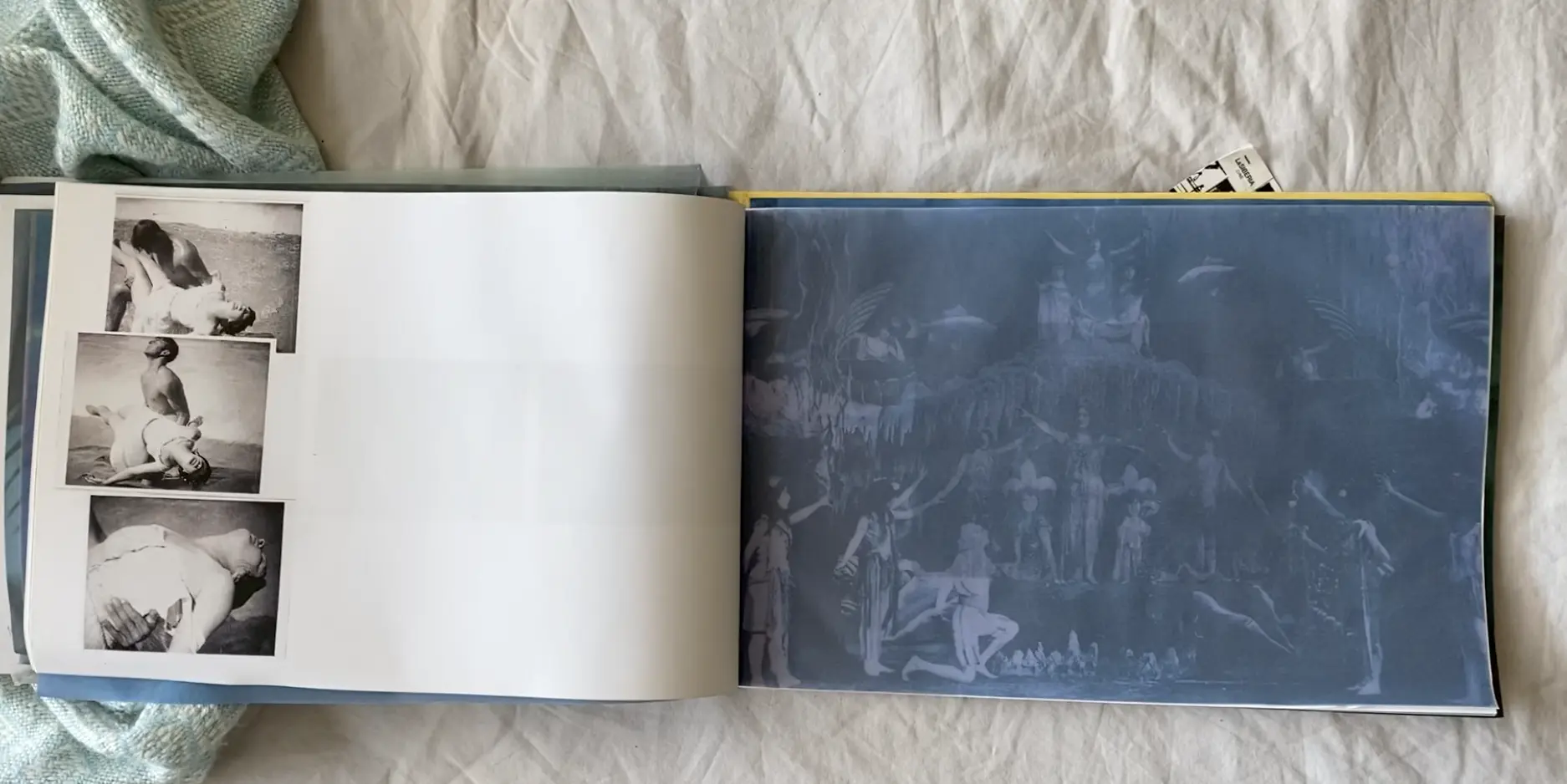
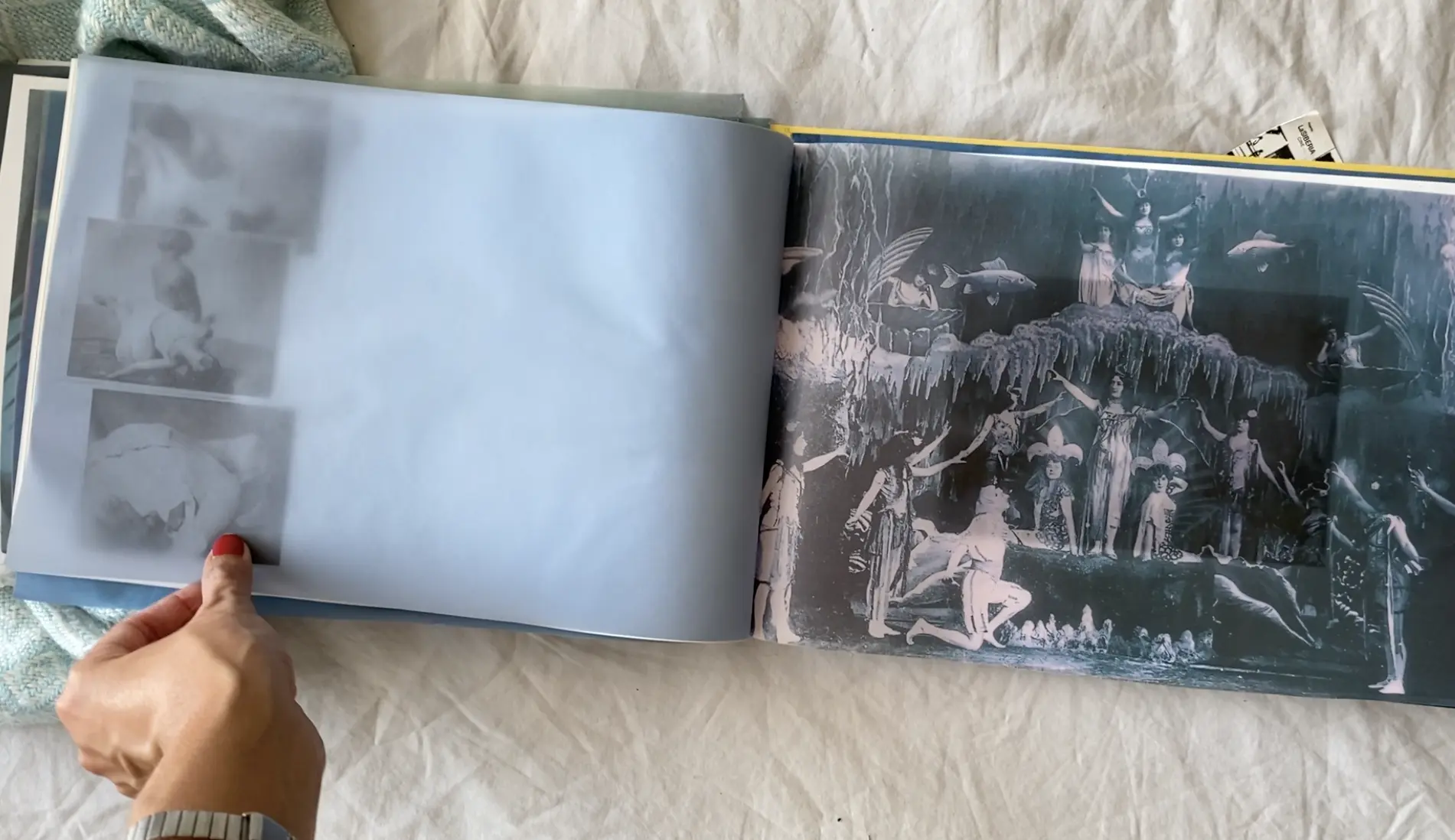
Images courtesy of Lucía Salas.
The cast of Francisca featured a certain Duarte de Almeida, a pseudonym used by Bénard da Costa when he was invited to work as an actor. Having also appeared in O Passado e o Presente (1971) and Amor de Perdição (1979), [2] on the occasion of Oliveira’s films being screened at the Cinemateca in October 1981, he wrote: ‘Of everything that I have done to this day, what will remain are the three characters Oliveira thought I should play. For them alone have I justified my passage through this planet. My eventual virtues and defects are a homage to the vice of Soul–Cinema. It was good to be a contemporary of Manoel de Oliveira. And to have been appearance, ghost, life, death, body, soul in the films of one of the greatest artists to have emerged from any time or place.’ [3]
Then 72 years old, Oliveira was making his sixth feature film, as it was only from the 1980s onwards that he was able to work regularly and build a body of work amounting to thirty-three features and about as many short films in 2015, by a miracle that allowed him to live to the age of 106, which, according to him, was an act of divine intervention to compensate him for the years of silence and lost time during the Estado Novo. Although attacked and misunderstood, as he’s always been, he was already the man of cinema and the man of the century, someone who witnessed two world wars; who was born before the founding of the Republic, still under monarchy; who experienced firsthand the rise of fascist terror and the injustices of the revolution itself, for he was from a middle-class background; who had begun his career in 1927 and thus been active in the silent era; who, in addition to all this, had been an athlete, a racecar driver and a gallant movie star. And who, with each step of his journey, each shot, each film, each aesthetic revolution within his oeuvre, each lapidary phrase, between the synthetic and the enigmatic, only seemed to deepen the mystery of his passage through this world.
‘Manoel’s presence was exuberant’, said Azevedo Gomes in an interview from 2019, ‘to be with him was a pleasure. He would always mention something, when he dropped by, that would leave us talking for a week. He had an extraordinary presence of mind, always with an unexpected response.’ [4] And João Bénard da Costa was someone from whom many generations have learned and will continue to learn how to see cinema, who knew how to share his love for certain films through presentations and passionately written texts, who could see beyond the obvious by perceiving a detail that escaped everyone else and who, if necessary, would let himself be carried away by paroxysms describing romantic, baroque, ‘astonishing’, ‘stunning’ shots, scenes and sequences in ‘the most beautiful of films’. In going against the current, he was able to create his own, by eulogizing what was forgotten or denouncing what was rotten in the system, dreaming of dictionaries that would catalogue the entirety of cinema, since although there are so many films, there are also never enough, and one must move heaven and earth, leaving no stone unturned in the search for lost or hidden gems. His enormous body of written work itself contains many surprises for us, even today pointing to paths never before trodden and work that remains to be done.
He had a great admiration for Oliveira as an artist, so much so that it prevented them — for it was mutual — from maintaining a conventional friendship, having dinner at each other’s houses, taking vacations together, or even addressing each other by the familiar ‘tu’, since they were also thirty years apart in age. In the interview referenced above, Azevedo Gomes, twenty years younger than the younger of the two, suggests, ‘They preserved this relation of esteem, friendship, and mutual admiration at a certain level, so that it didn’t fall off in any direction. It never progressed beyond that, and they always upheld a mutual respect. Manoel for João, because he was the director of the Gulbenkian and had always defended Manoel’s films; the younger João for Manoel, because he liked Manoel and his cinema immensely.’
Having begun her own career as a director with O Som da Terra a Tremer in 1990 and witnessing many encounters between these two giants of cinema over the years, from early on, Rita Azevedo Gomes wanted to leave us something of their relationship. And so A 15ª Pedra was born, initially attempted on the set of O Quinto Império in Tomar in 2004, but it would only take shape two years later at the National Museum of Ancient Art in Lisbon, where it was filmed over the course of one day. The film is essentially a single shot, with Oliveira on the left, in front of what appears to be a Calvary triptych, and Bénard da Costa on the right, in front of a painting of the Annunciation.
In addition to beginning and ending the two-hour conversation with wide shots, linked together by panoramic shots that evoke the first scene of Dreyer’s Gertrud (this is perhaps no coincidence, since the film is discussed a great deal, and Azevedo Gomes, at the request of the poet João Miguel Fernandes Jorge, had recently photographed all of the shots in Ordet for a catalogue published by the Cinemateca around the same time); allowing us to see the painting of the Annunciation when Oliveira speaks of the painting of the same theme; seemingly arranging the two men according to what she knows about them, for she almost leans the former director of the Cinemateca against the far right of the frame, trusting in his tendency to approach his interlocutor as much as he can; avoiding intervening in the conversation as much as possible, except when she changes the film from color to black and white as this becomes the topic; [5] limiting herself to saying ‘whenever you want’ at the beginning, and ‘Dreyer’ when Oliveira is trying to remember Murnau (the filmmaker from Porto gives a false clue when he says ‘the one who made Vampyr’): she also, unbeknownst to him, passes some notes to Bénard da Costa to prevent the conversation from revolving solely around his films — an apparently real risk, given how much admiration the former had for the latter’s work.
Starting with La Sortie de l’usine Lumière à Lyon and L’Arrivée d’un train à la Ciotat (a departure and an arrival) as the archetypes of two different paths with infinite possibilities for cinema — as in that spectrum of invisible colors with which it might one day be possible to film the soul — the two men talk a little bit about everything. About architecture, Leonardo da Vinci and Michelangelo, the equivalence between artistic impulses and criminal impulses (it is here that Oliveira says once more that ‘making a film is like committing a crime’), atheism as religion, the paradoxes and contradictions that make up art and life, the sacred and the profane, truth and falsehood, that make the height of vanity the height of humility, warmer colors cooler and cooler colors warmer; Fritz Lang, Aristotle and Molière, Henry Miller, Titian and Vermeer, Pablo Picasso, Wagner and Beethoven, José Régio and Agustina Bessa-Luís. But they are also still able to surprise each other after so many years, discovering something new in a sound, a shot, or an image, like the death knell in Gertrud, or the ray of light that could only have come from God in Ordet. Such things can be called by so many different names — and one of them may even be ‘the fifteenth stone’, for they are seen with the heart.
Watching the conversation, we would have no way of guessing this, but the former director of the Cinemateca had also visited the garden described by Oliveira, which gives the film its title. When they speak about Ryōan-ji, he doesn’t mention whether he’s been there or not, only that he once exchanged a few words with a Buddhist monk. But in the book Quinze Dias no Japão, published in 2001, [6] which deals with many of the themes discussed in this beautiful conversation filmed by Rita Azevedo Gomes, he writes, ‘The garden at Ryōan-ji teaches us, among other things, and as the East Asians say, that an entire lifetime is not enough to learn, that each thing is simultaneously itself and its double, that nothing exists outside the gaze that gives existence to it, and that — as in Zeno’s paradox, of which it is perhaps the supreme illustration — movement is the most radical of our illusions.’
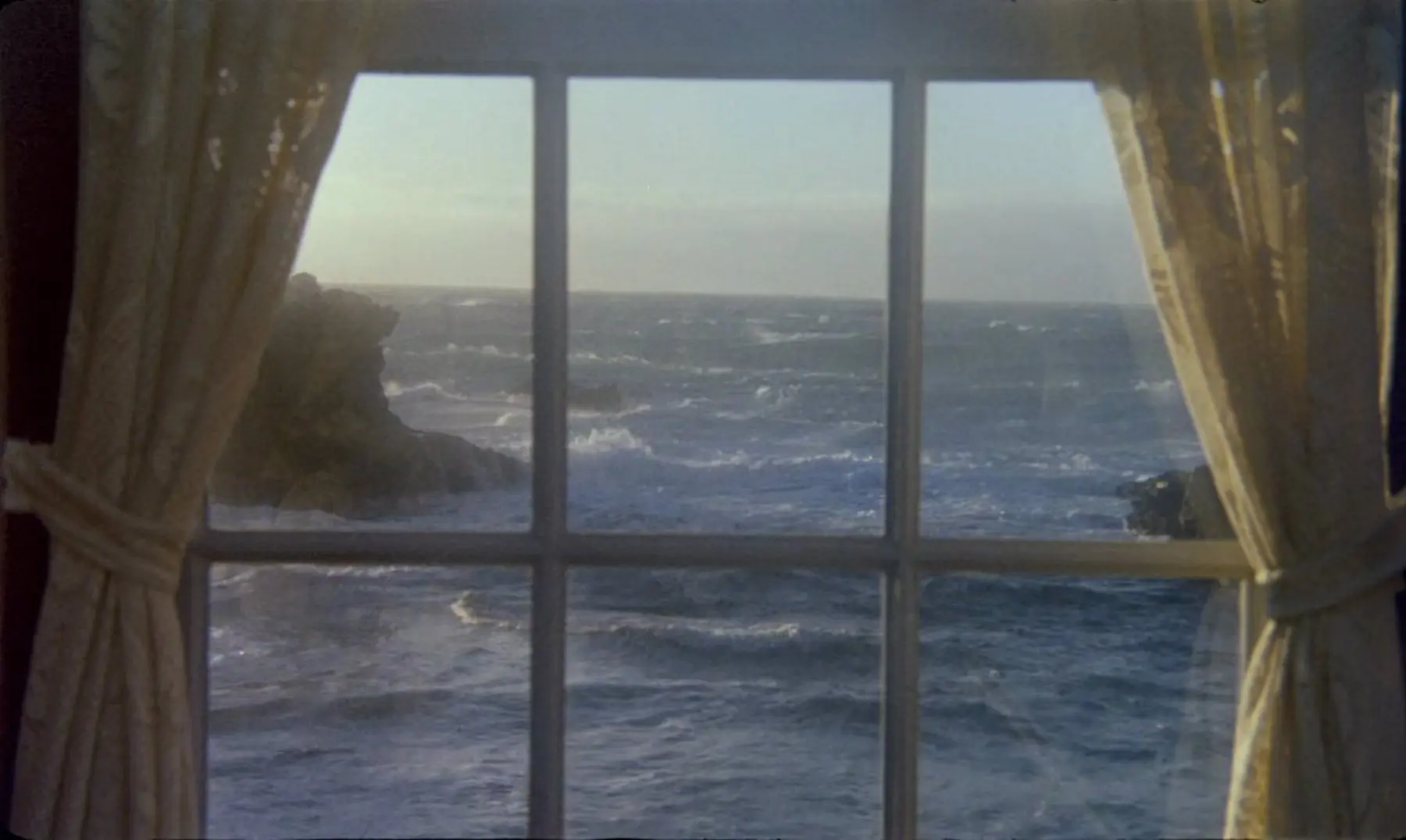
Francisca (Manoel de Oliveira, 1981)
Notes
Editor’s note: According to Azevedo Gomes, Branco fired her from the set of this film, but she stayed on to help without being credited. See our interview with her in this issue for a more detailed account.
He would later appear in Le Soulier de Satin (1985), Non, ou a Vã Glória de Mandar (1990), A Caixa (1994), O Convento (1995), Palavra e Utopia (2000), Porto da Minha Infância (2001), O Princípio da Incerteza (2002), Espelho Mágico (2005) and Rencontre Unique (2007).
In João Bénard da Costa, ‘O Cinema é um Vício’, part of the catalogue dedicated to Manoel de Oliveira (Cinemateca Portuguesa, 1981), pp. 5–12. Republished in João Bénard da Costa — Escritos sobre Cinema, book I, volume 4 (Cinemateca Portuguesa and Museu do Cinema, 2021), pp. 922–30.
In conversation with Mário Fernandes and José Oliveira at the Livraria Linha de Sombra, Lisbon, June 2019, <https://www.youtube.com/watch?v=Xsknr2Uzm58>.
The joke may be unnecessary and interrupts the flow of this part of the conversation; however, it is worth noting that, a year after pointing out that Oliveira hadn’t made another black-and-white film since O Pintor e a Cidade (1956), Bénard da Costa appeared in Rencontre Unique (2007), a black-and-white short film directed by Oliveira, where he plays Pope John XXIII alongside Michel Piccoli,who plays Nikita Khrushchev.
A compilation of five articles published during the 1970s in the Diário de Notícias, part of a series of travel books run by the newspaper O Independente, with which Bénard da Costa was collaborating.