[In] films, as in the novel, a more ample and multifaceted reality is captured through the development of partial and accumulative elements, which do not exclude, of course, a synthesis which will give a climax to the work. A high quality photograph or story proceeds inversely; that is, the photographer or the story writer finds himself obliged to choose and delimit an image or an event which must be meaningful, which is meaningful not only in itself, but rather is capable of acting on the viewer or the reader as a kind of opening, an impetus which projects the intelligence and the sensibility toward something which goes well beyond the visual or literary anecdote contained in the photograph or the story. An Argentine writer who is a boxing fan told me that in the struggle between an emotive text and its reader, the novel always wins on points, while the story must win by a knockout. This is true in the sense that the novel progressively accumulates effects upon the reader while a good short story is incisive, biting, giving no quarter from the first sentence. Don’t take this too literally, because a good short-story writer is a very clever boxer, and many of his early blows can seem harmless when really they are undermining his adversary’s most solid resistance. Take whatever great story you like and analyze its first page. I would be surprised if you found any gratuitous, merely decorative elements. The short-story writer knows he can’t proceed cumulatively, that time is not his ally. His only solution is to work deeply, vertically, heading up or down in literary space. This, which seems like a metaphor, nevertheless expresses the essential aspects of the method. The story’s time and space must be condemned entities, submitted to a high spiritual and formal pressure to bring about that opening I spoke of. [1]
—Julio Cortázar, Some aspects of the short story
It’s about empathy.
—Berlinale 2026 jury member
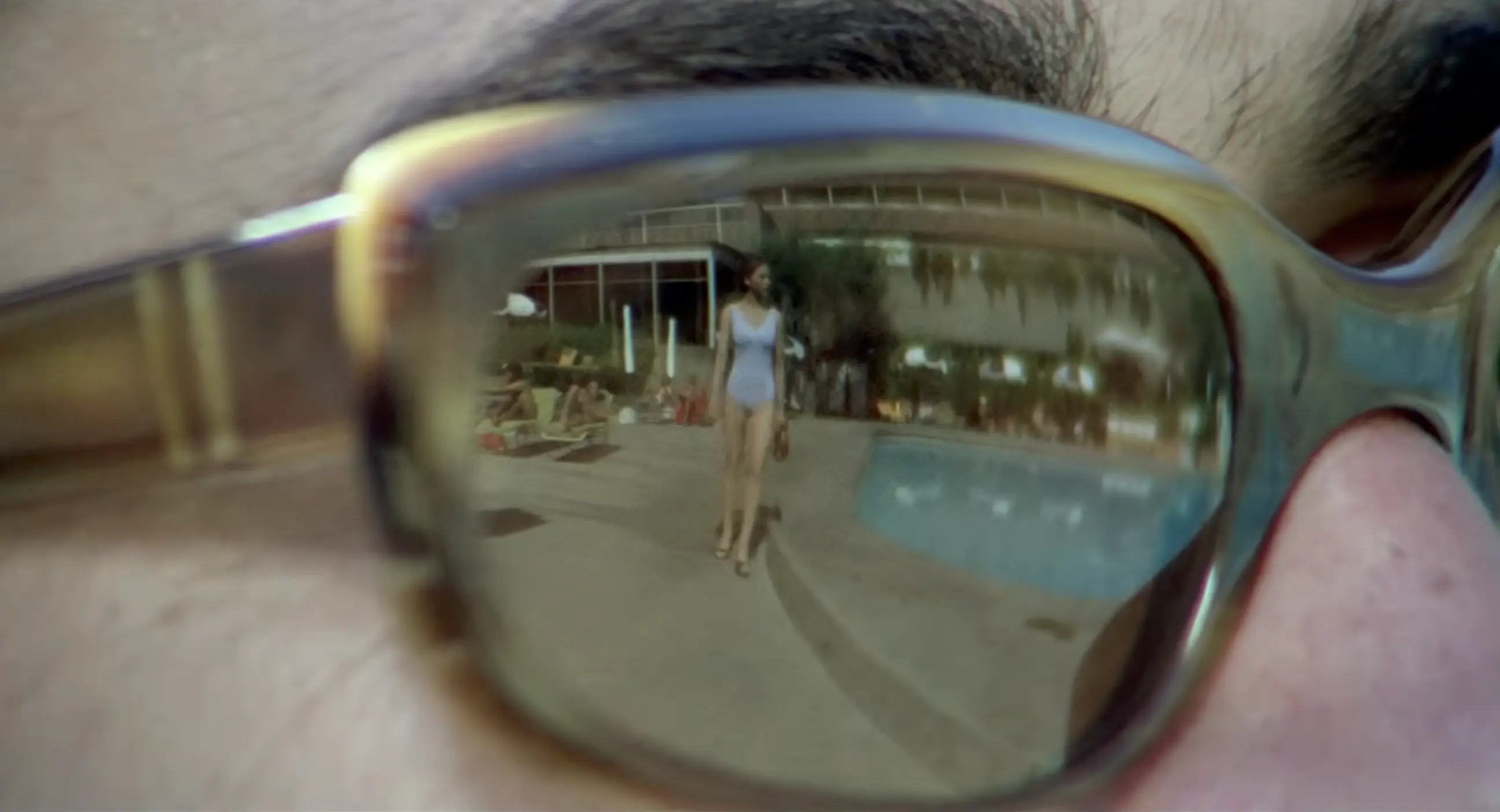
Senza Parole (Dino Risi, 1977)
In between flights, the air hostess takes off her uniform and rests by the hotel pool, where she soon elicits the interest of a charming foreigner. They exchange glances, swim together, run across gardens, all without communicating, for they do not speak any common language. At night, in the restaurant, she shows him a map and asks where he’s from; in a charismatically clumsy way, he points to somewhere in the sea, near the coast of an unidentified country. She laughs at his answer, but does it as if she’d laugh no matter what the answer could be. They dance in a club to romantic music, sleep together in the hotel room, and already must say goodbye to each other the next morning at the airport, as she heads back to work. By what we can tell, they don’t even know each other’s names. In their last instant together, with the portable record player he gifted her in her hands, she turns back to glance at him one last time before embarking on the plane. He responds with a silly smile. The end?
A few hours later, at the hotel bar, as he drinks a cup of coffee by himself, the anchorman in the television broadcasts the news that the plane has exploded mid-flight, killing all passengers and crew, among whom the prime minister of some unidentified Middle Eastern country. The male protagonist, motionless, takes another sip of the coffee. The televised voiceover continues: preliminary investigations suggest a terrorist attack, a bomb planted in a portable record player. He turns around, tightens his belt, and leaves by the right side of the frame. The end.
* * *
Because of the film’s brevity — at only seven minutes — there is an imperative need for condensation and for inserting the spectator into the diegesis as quickly as possible. This requires a certain roughness, some raw force. In the same manner that the short story compares to the novel in literature, the form of the short film requires particular expedients compared to that of a feature. Here are some of the main procedures which work together in rendering this structural condensation possible:
So: everything works in order to produce images and sounds that are as instantly understandable as possible, reducing the complexity of the elements, enclosing them into limited and controlled spaces, concentrating the spectator’s focus and attention while reducing all unwanted noise or unnecessary information; and then, inducing the spectator, through the strong use of point of view, through the well-known songs, through the familiarity of its images, to an immediate identification, most clearly established in the virtuoso scene by the pool early in the film. A happy carefree couple, ‘Ti amo’, and that’s enough. Everything else — what happened before, their names, their very words, the outside world — is elided. All gaps are quickly glossed over, left aside, compensated by strong music, hidden from our attention.
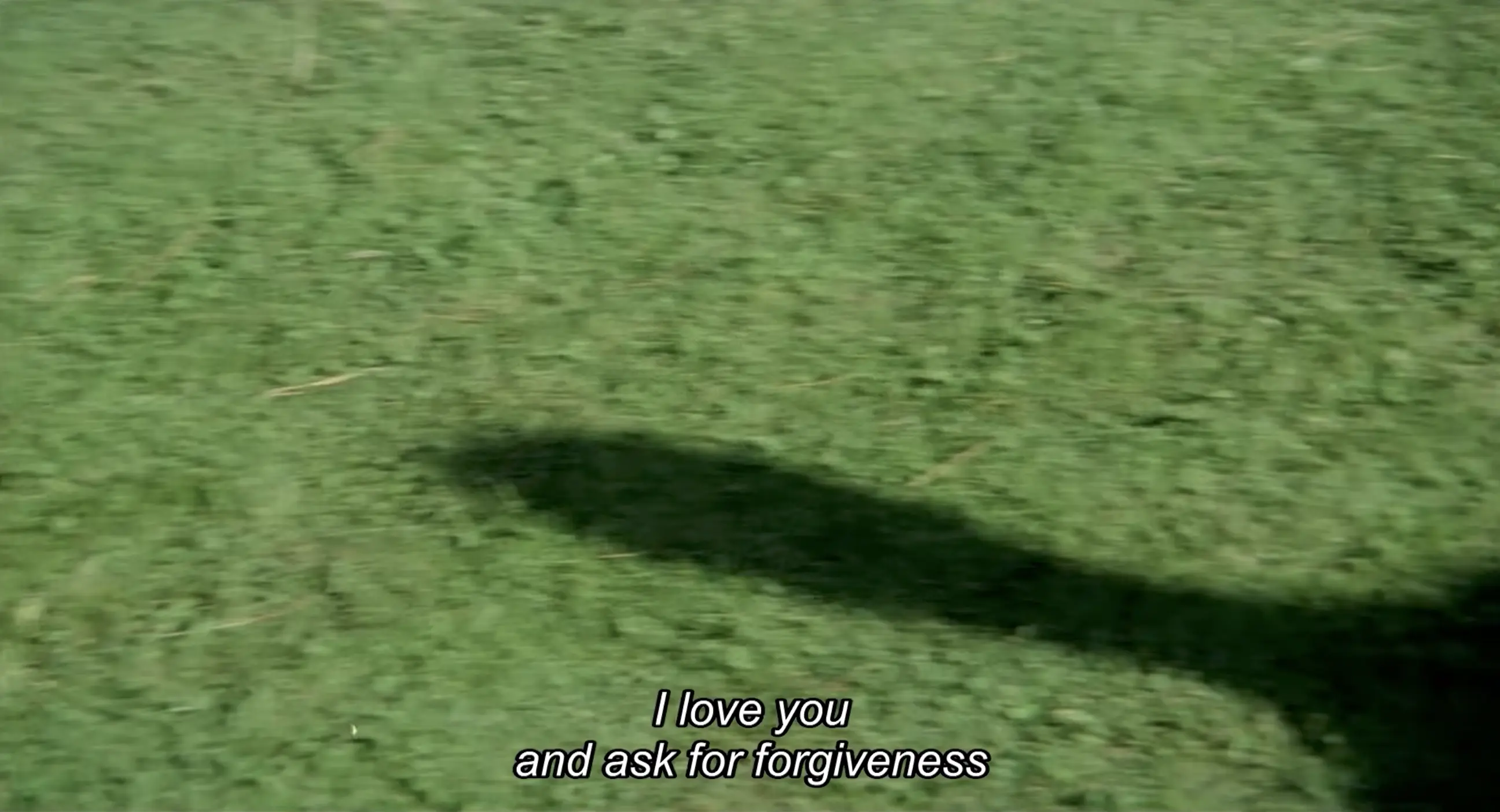
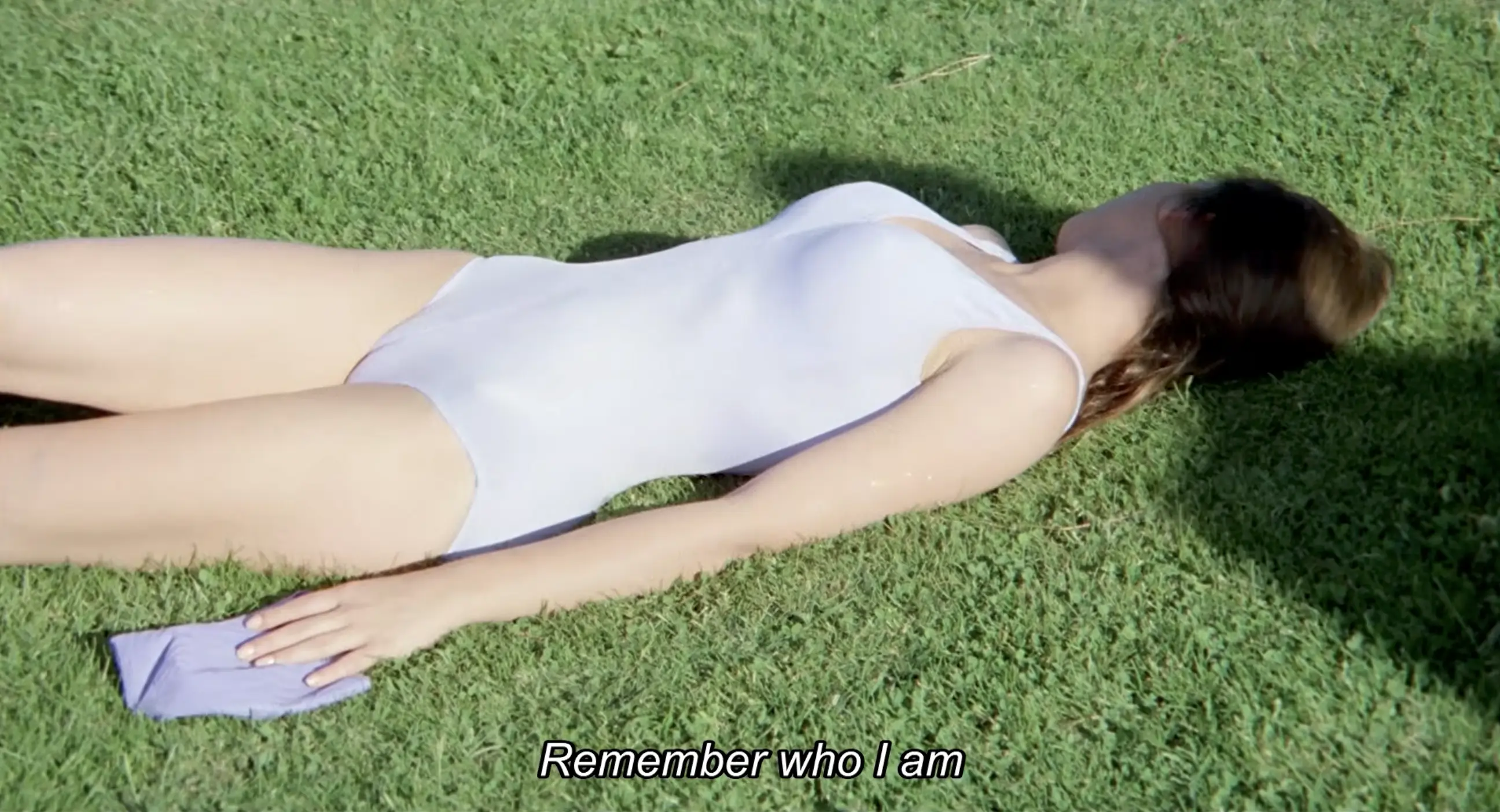
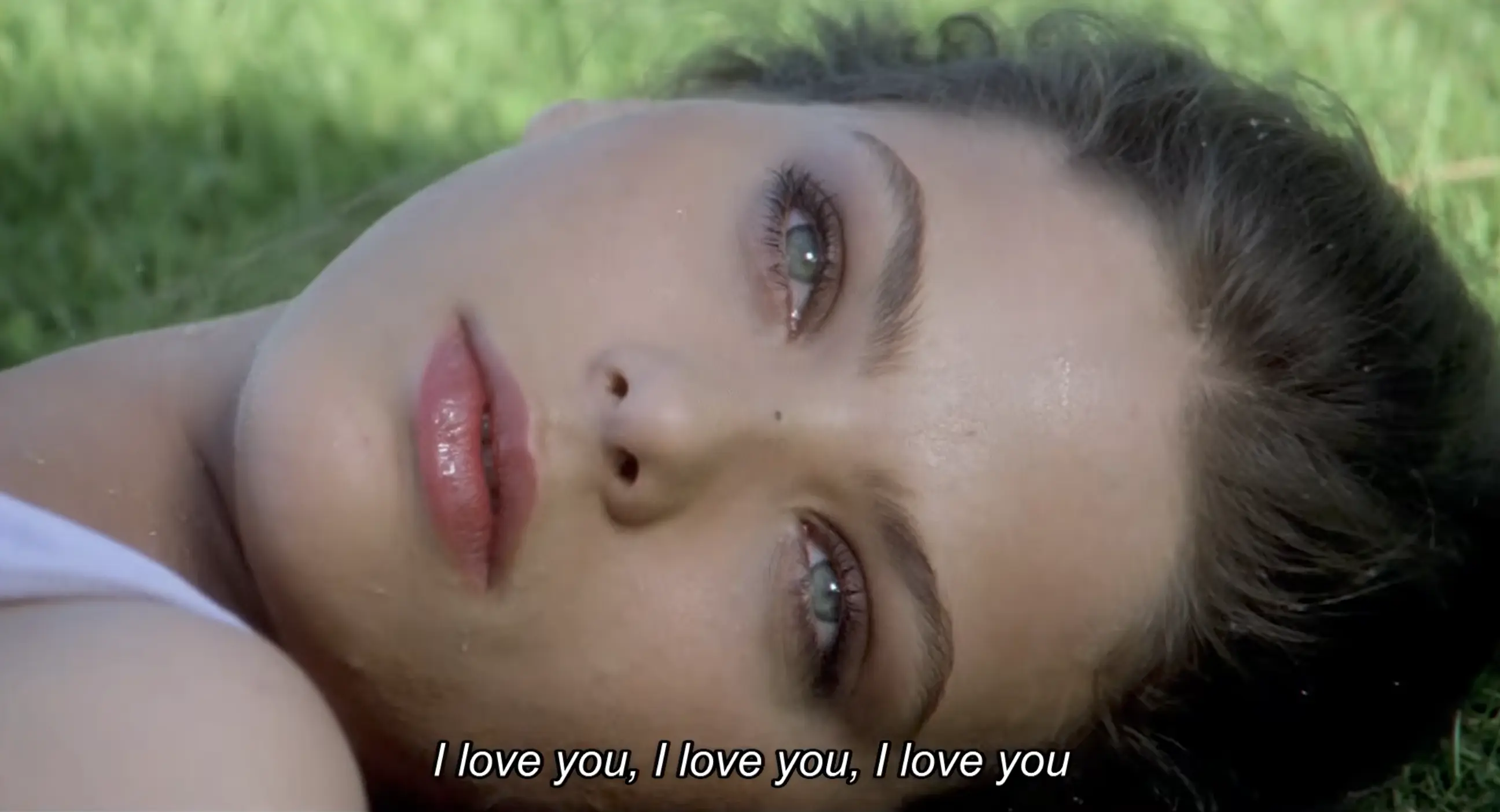
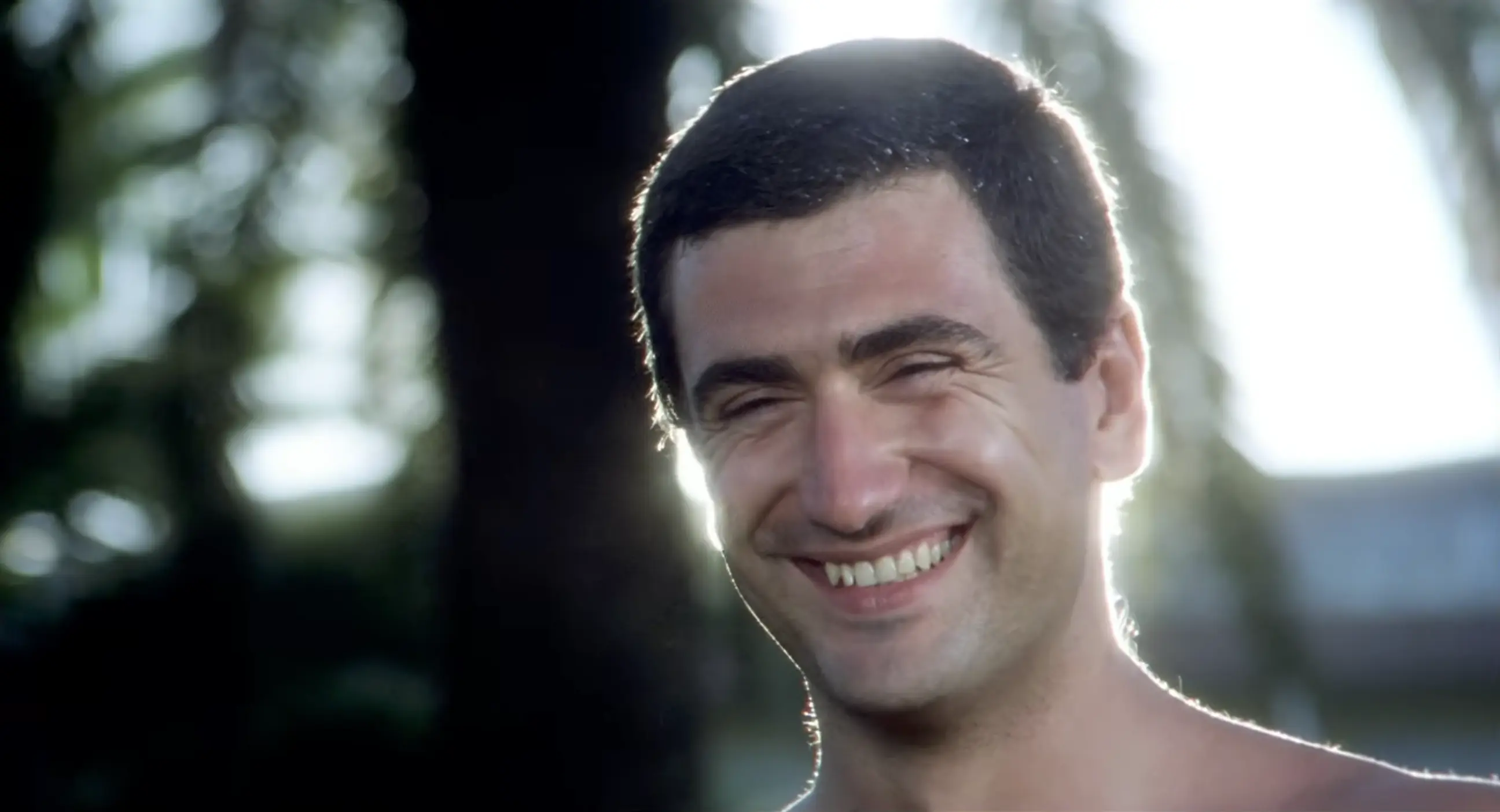
All of this is true, up to the very end.
In the final shot, our focus is on him, standing there, drinking coffee while facing the camera and looking at the off-screen TV whose reporting we hear in off, allowing all of our visual concentration to fall exclusively on him, while, once again, it is the soundtrack — not music, but the news — which is forcibly informing our reading of the scene: the supposed horror or incomprehension we read in his Kuleshovian facial and bodily inexpressiveness, the pause due to the alleged shock before he takes another sip! Until, finally, with the words of the anchorman carefully calibrated so that the revelation of the portable record player may come only at the very end, his inexpressiveness is broken by him almost saying ‘mission accomplished’ as he tightens his belt and suddenly turns to exit our field of view. For the first time, the soundtrack has contradicted our reading of the scene. Suddenly, as he disappears, our attention is no longer busy with him nor with the girl; his point of view, previously seductive, is now estranged from us, while her flirtatious gaze has literally and figuratively blown up mid-air. So that now, at last free and released, the observational–contemplative faculties of our perception spread out over the entire surface of the screen, over those people, over that seemingly generic, innocuous and harmless hotel which we have inhabited since the beginning of the film and which now is literally the reverse shot, that is, the complement, the counterpart of the piece of news we just heard off-screen.
After the explosion of the woman, of all previous events, of the romance, of the idyll, of the innocence, of the protagonist who has been the utmost center of our identification — all of this that is suddenly cancelled, denied — there is a negative pressure pushback right in its epicenter, the hotel, which in turn wishes to suck anything up to fill the sudden void of its banality. And so everything that is around the man who left — the well-off couple sitting still in the foreground, their faces worried; the unsuspecting man in the background who is left hanging in between two columns when the image freeze-frames, in suspension; the enclosed environment of the bar that frames the outside world while at the same time allowing itself to be penetrated by it — acquires weight and concreteness as it’s suddenly sucked into our awareness. The film’s image, so harmless, becomes a black hole whose existence we have so far ignored. Its contents cannot reach us and yet we feel the great gravitational pull of their infinite density. After seven minutes of pure centripetal concentration, an infinite off-screen space is now suggested, expanding outwards from all directions of the frame, threatening to suck everything and everyone into God knows where. In a single shot, Risi goes from Hitchcock all’italiana to Straub–Huillet.
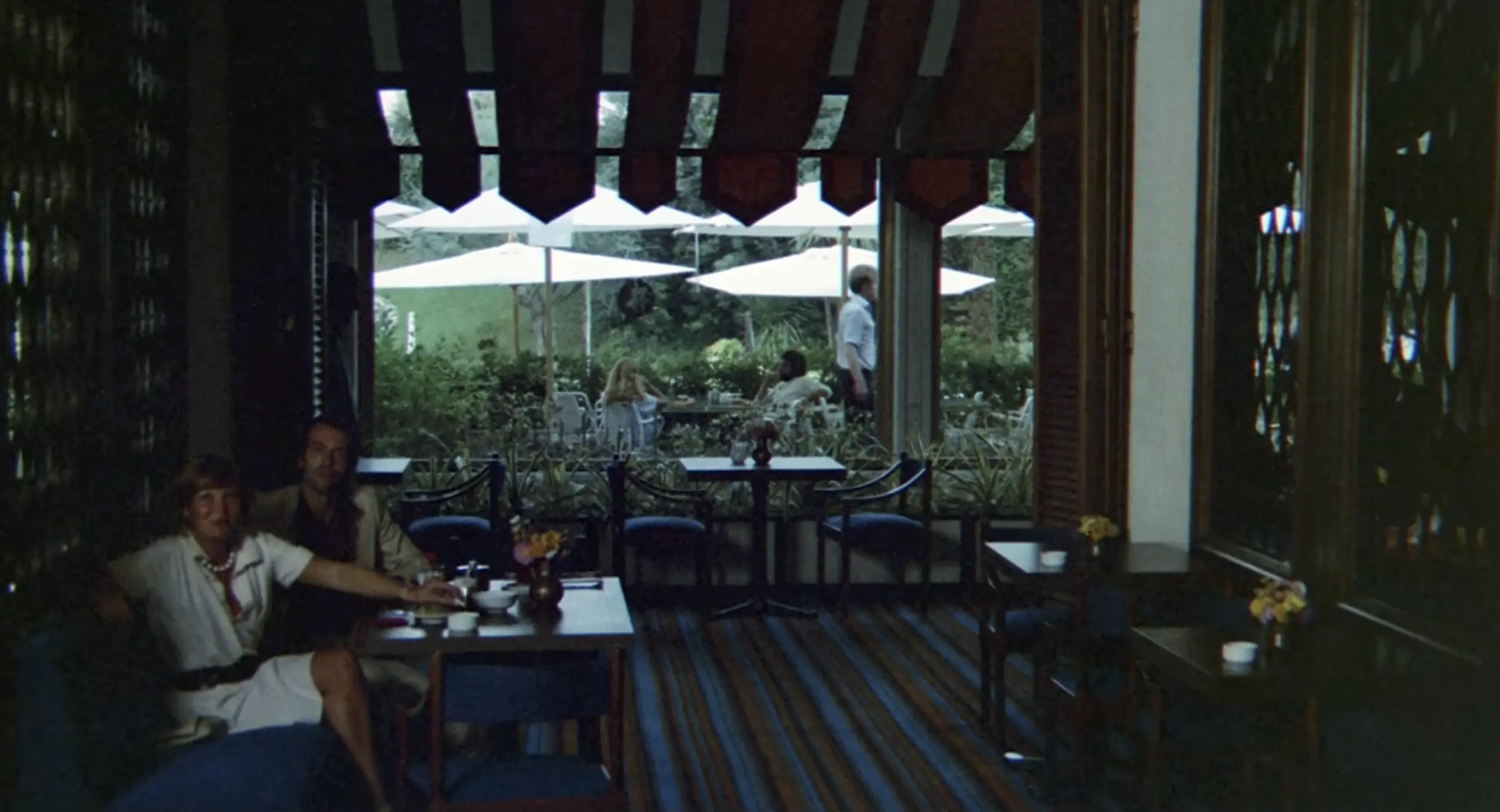
After all those games of seduction, interest and crossed glances, always anchored in a découpage overtly based upon the characters’ points of view, subjective shots, close-ups, shot/reverse shots, the film closes (or opens) with a wholly impersonal image, with no apparent point of view other than that of the camera, with the emotional point of view suggested by the music now serving as an ironic counterpoint, with the idyllic present now being invaded by our recollections of the past — the easy references or coordinates having exploded, an automatic recognition of things is no longer possible.
Not merely a plot twist, this massive Kuleshovian wager of re-signifying everything that came before through new context (and we could take the close-up of the protagonist staring at the woman at the beginning of the film and pair it either with a bowl of soup or a child-sized coffin, or the love of his life or his next target) engineers a complete change not only in what we see but also in our very way of seeing it: in our perception of the organization of an image, in our own point of view, in the film’s relation to the world and ours, all in these few seconds of a moving image frozen still. Elements previously hidden in the background, interrupted by the main narrative (notice the sound mixing in the airport, when he plays ‘All by Myself’ on the record player for her, and all the airport sounds and the announcement of a flight to Israel just immediately disappear from the soundtrack in the most jarring way possible), now resurface.
* * *
Risi’s film travels the exact opposite route of the TV advertisement Jean-Luc Godard made for Schick aftershave in 1971 (a couple of years before the first oil crisis, while Risi’s film came a couple of years before the second): a couple argue aggressively while a small radio in the background narrates conflicts going on in Palestine and Jordan; he wants to listen to the news; she wants to listen to music. Finally, the man puts on Schick aftershave and relaxes; his wife also relaxes thanks to the nice smell, and he turns off the radio; all the outside world disappearing thanks to Schick, all context eliminated, and there remain only the apartment, the happy heterosexual couple and the product (which could be Shick, alienation, the wife, all three of those), under the slogan: Pour être mieux dans sa peau (‘To feel better in your own skin’). Godard goes for irony, Risi goes for shock. These were the years of lead in Italy, and terrorism was creeping up on everyday life. Who wouldn’t enjoy some music on the radio to flee from it?
How to structure a short story? How to fit a world into seven minutes? Eliminate all that is excessive, open the biggest gaps possible and hide them, guide the spectator’s eye only where you want him to look, like an illusionist, provoke the most immediate responses through cultural and iconographic references, then push the spectator deep into the hole that was right next to him.
The film’s strength is such that, upon the first viewing, even the most absurd moments pass by unnoticed, such as that of the man pointing to the middle of the ocean on a map and saying that’s where he comes from. Amidst a sea of most evident signs, here’s one of many indeterminations, of many ellipses: the man from nowhere — this unknown and seemingly irrelevant country, where is it?
And that hotel, those gardens, that pool, that bright light, that purple swimsuit, ‘Ti amo’, the restaurant, the nightclub, the television, the cup of coffee: are all those signs really as innocuous, banal, harmless and self-evident as they may seem?
Whether in 1977 or in 2026, if someone tries to kill the leader of some Middle Eastern country, it begs the question: why? And if the weapon of such a crime is a portable record player, it is because things such as ‘All by Myself’ are real fucking bombs. It isn’t good that they drown out the noises and screams that so desperately make their way to us from outside.
Notes
Translated by Aden W. Hayes, in Arizona Quarterly: A Journal of American Literature Culture and Theory, 36, February 1980, 5–18 (pp. 7–8).