I fear that if I understand correctly what destiny seems to be hinting at, then soon there will arise a new generation of little ironies; for truly the stars augur the fantastic.
—Friedrich Schlegel, ‘On Incomprehensibility’
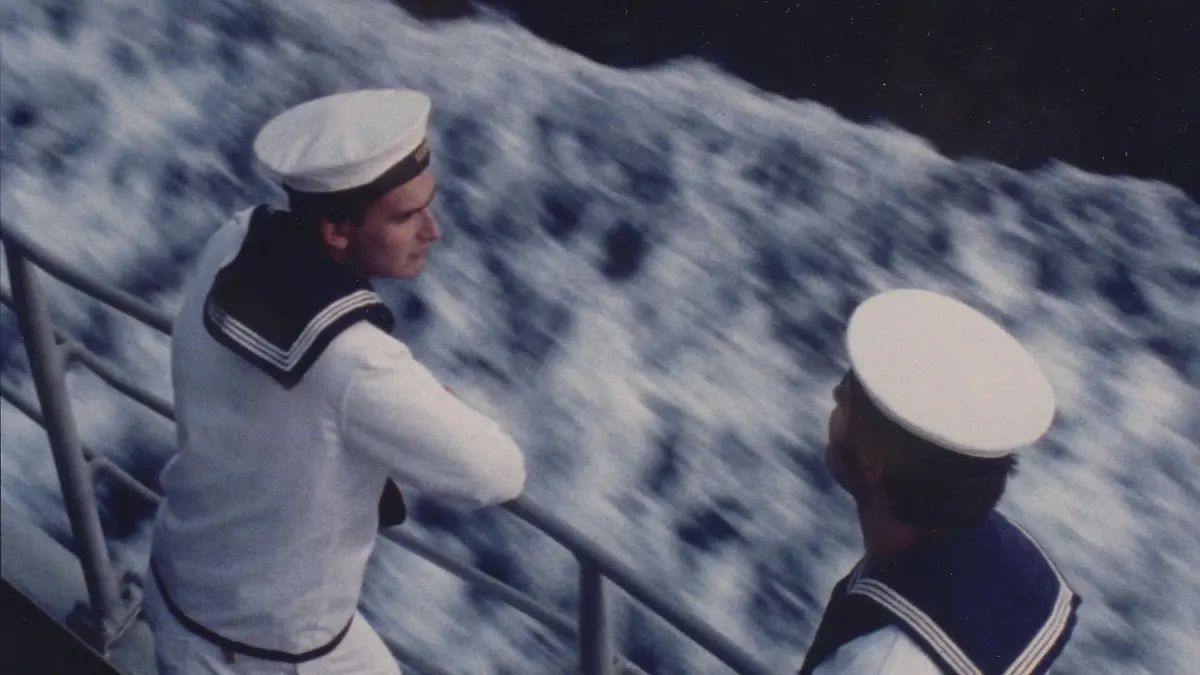
O Som da Terra a Tremer (Rita Azevedo Gomes, 1990)
Near the end of Rita Azevedo Gomes’s first film, O Som da Terra a Tremer, Alberto, a writer, bumps into an unnamed professor walking in the other direction, who is absorbed in a letter he has found in a book. The two exchange a glance, as if awaiting a spark of recognition that never comes. They continue on their respective paths, though not without each turning back for a second look. Alberto then notices a young man sitting on a bollard about thirty feet away from him, facing the sea. This man is a sailor, who may be called Luciano. He is a character in a book Alberto plans to write, has started writing, is forever announcing himself to be writing, called O Som da Terra a Tremer. It is the sailor’s letter that the professor was reading; he had found the book in which it was slipped when it was left in a café by a young woman who had received it as a gift from the sailor. On seeing her, the professor had been compelled to recount to her his beliefs on the essential and binding character of contingent encounters: ‘As someone I don’t know says: “Chances are the only things which don’t happen by chance.”’ The passage of encounters from the sailor to the girl to the professor makes it seem like the professor is also one of Alberto’s characters, or at least part of his fictional world, if it is possible that that world could include hitherto unmentioned characters, since he has not referred to him, or for that matter the woman, in any of the strange précis he has given his associates. Apparently Alberto, though sensing an import that surrounds them, falls short of recognising the professor or the sailor as part of his creation. Some time later (for it is now night) it is his turn to become subject to a failure of recognition. He passes Isabel, a woman with whom he has an ambiguous but profound relationship, who is at the center of the circle of ‘men of letters’ Alberto frequents, and whom he has abandoned, along with the rest of his regular life, for unclear reasons. Behind a black lace veil, as if in mourning, she regards him with the blank look that passes between strangers in the street, and carries on. He is so disturbed that he has to lean on a wall to steady himself before he can move. This is how the film ends.
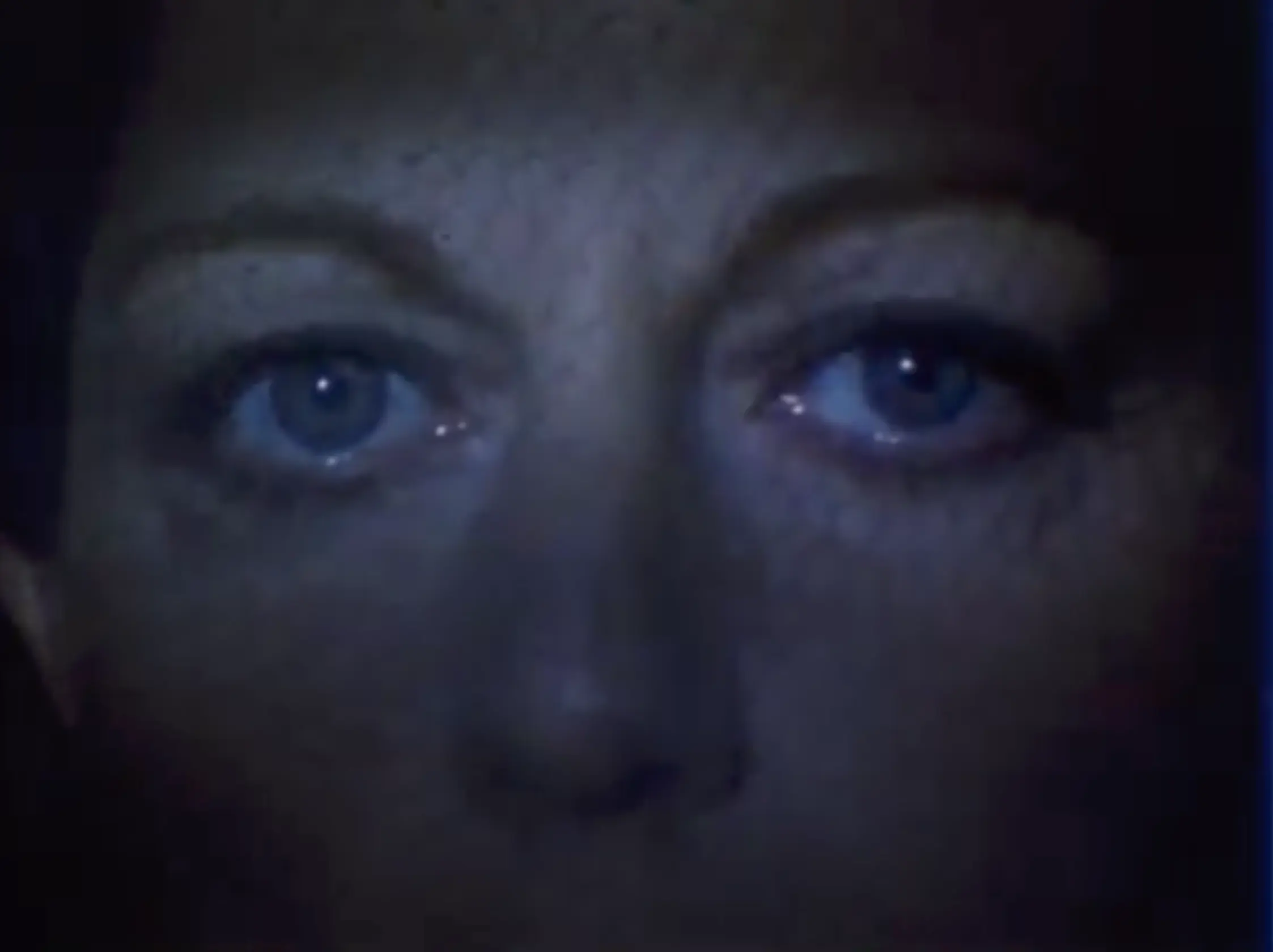
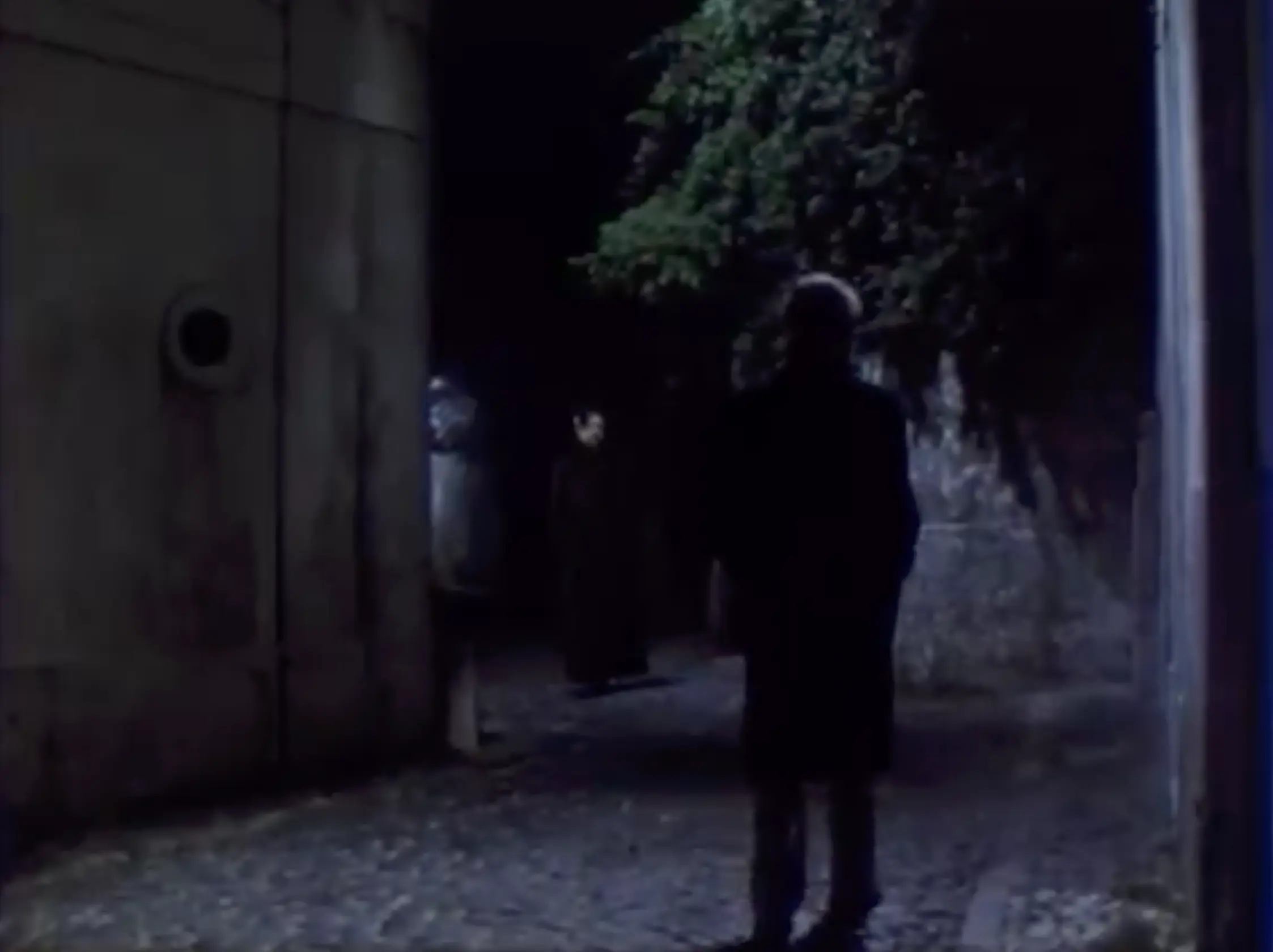
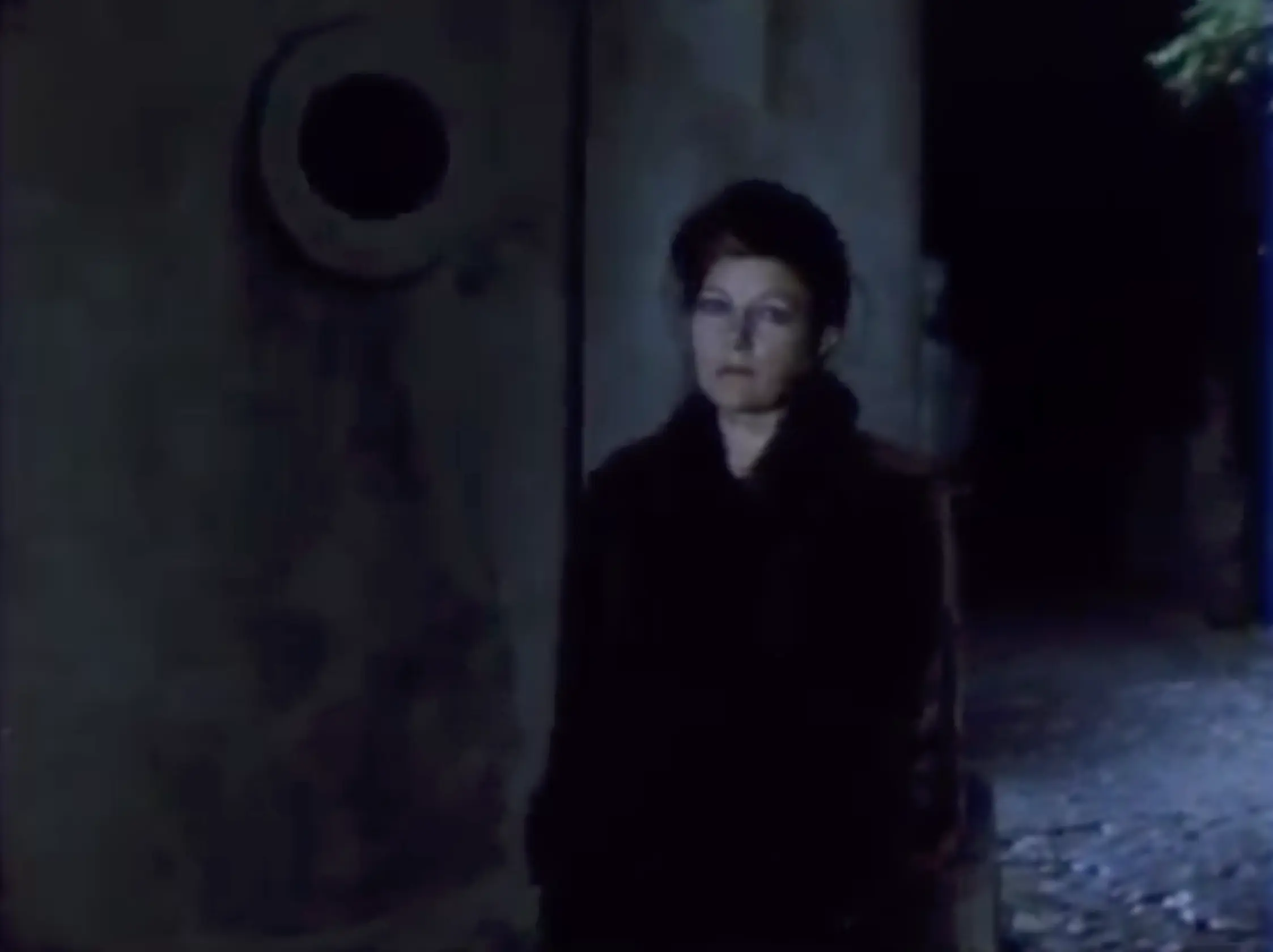
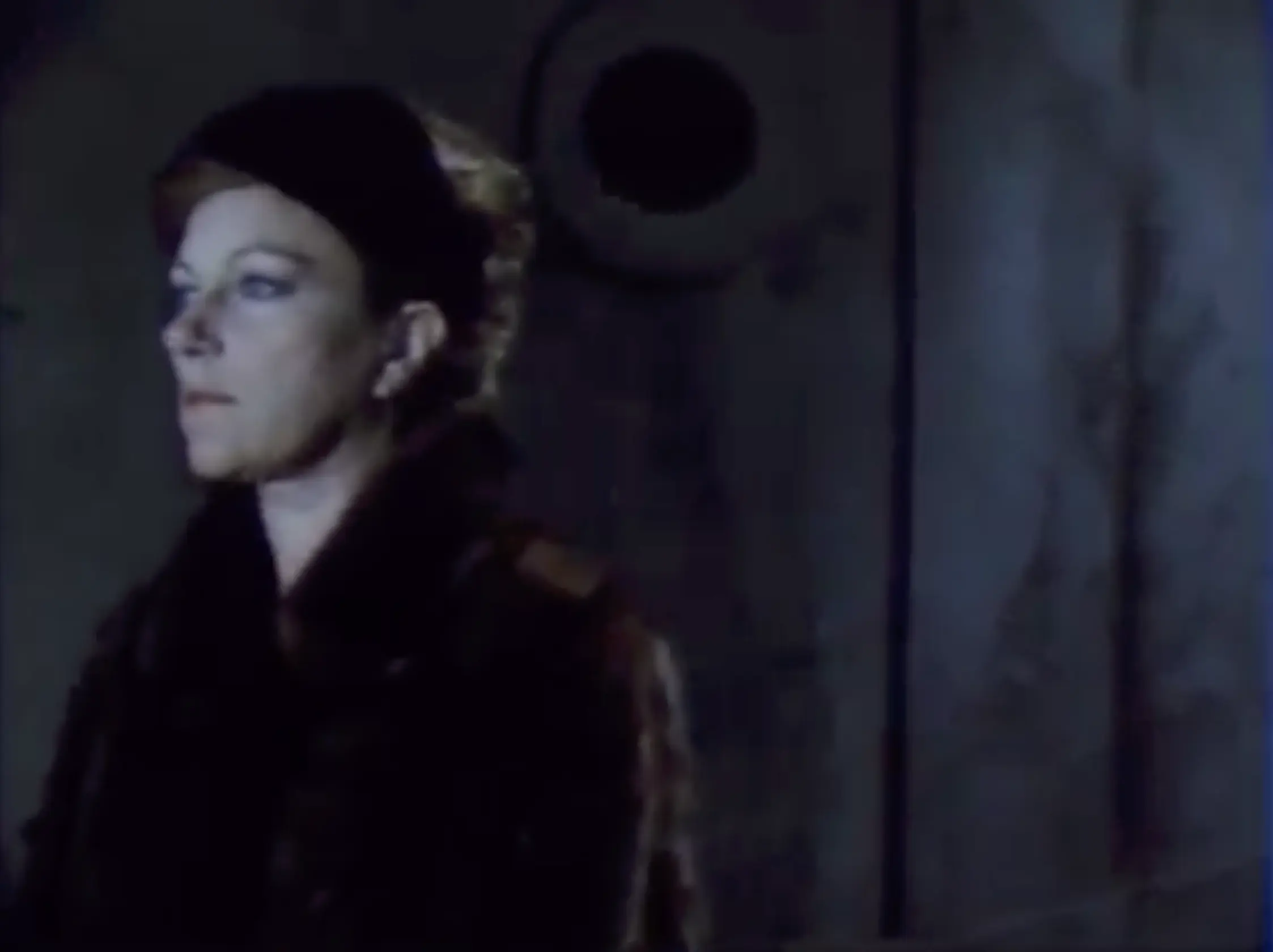
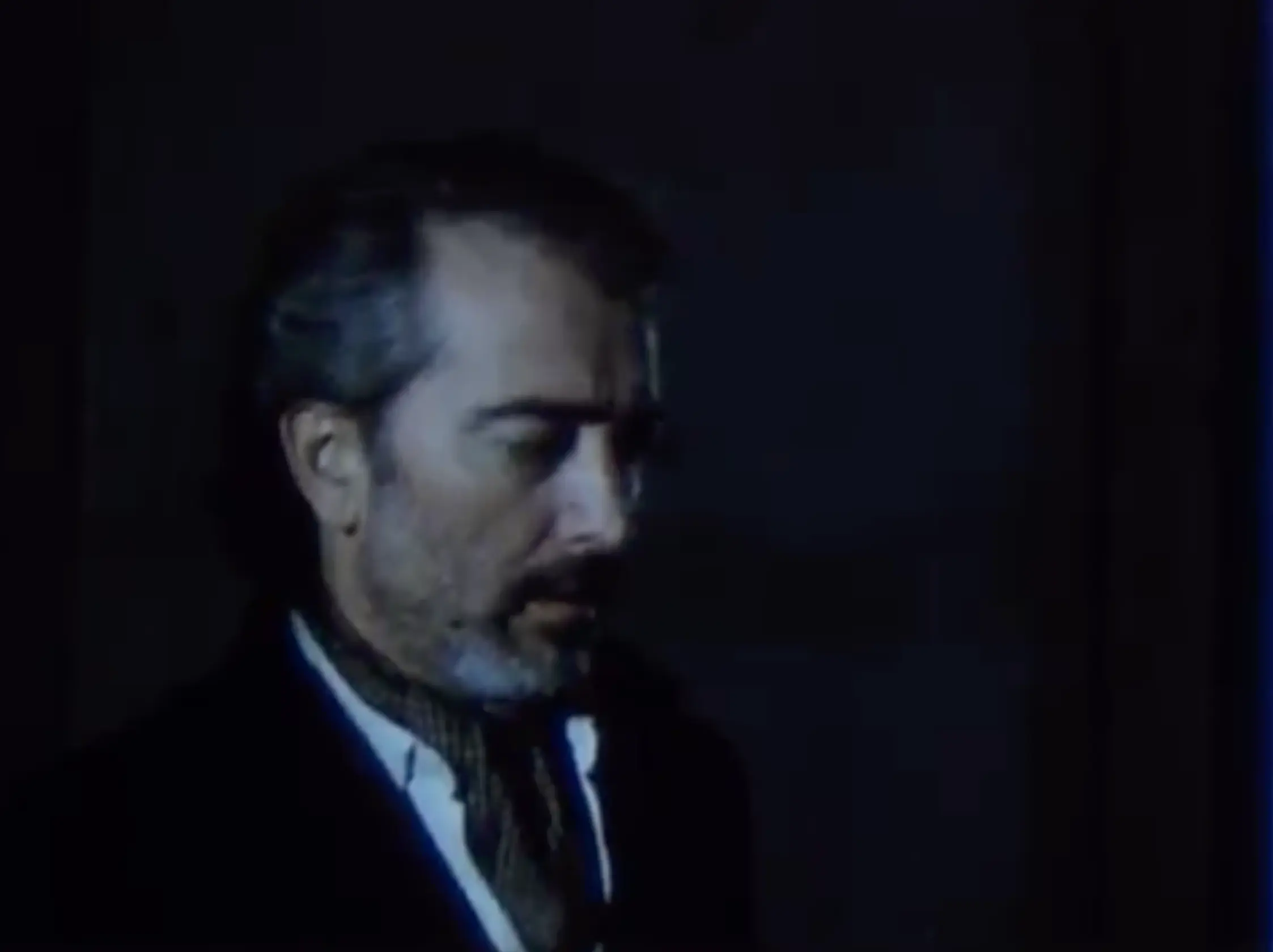
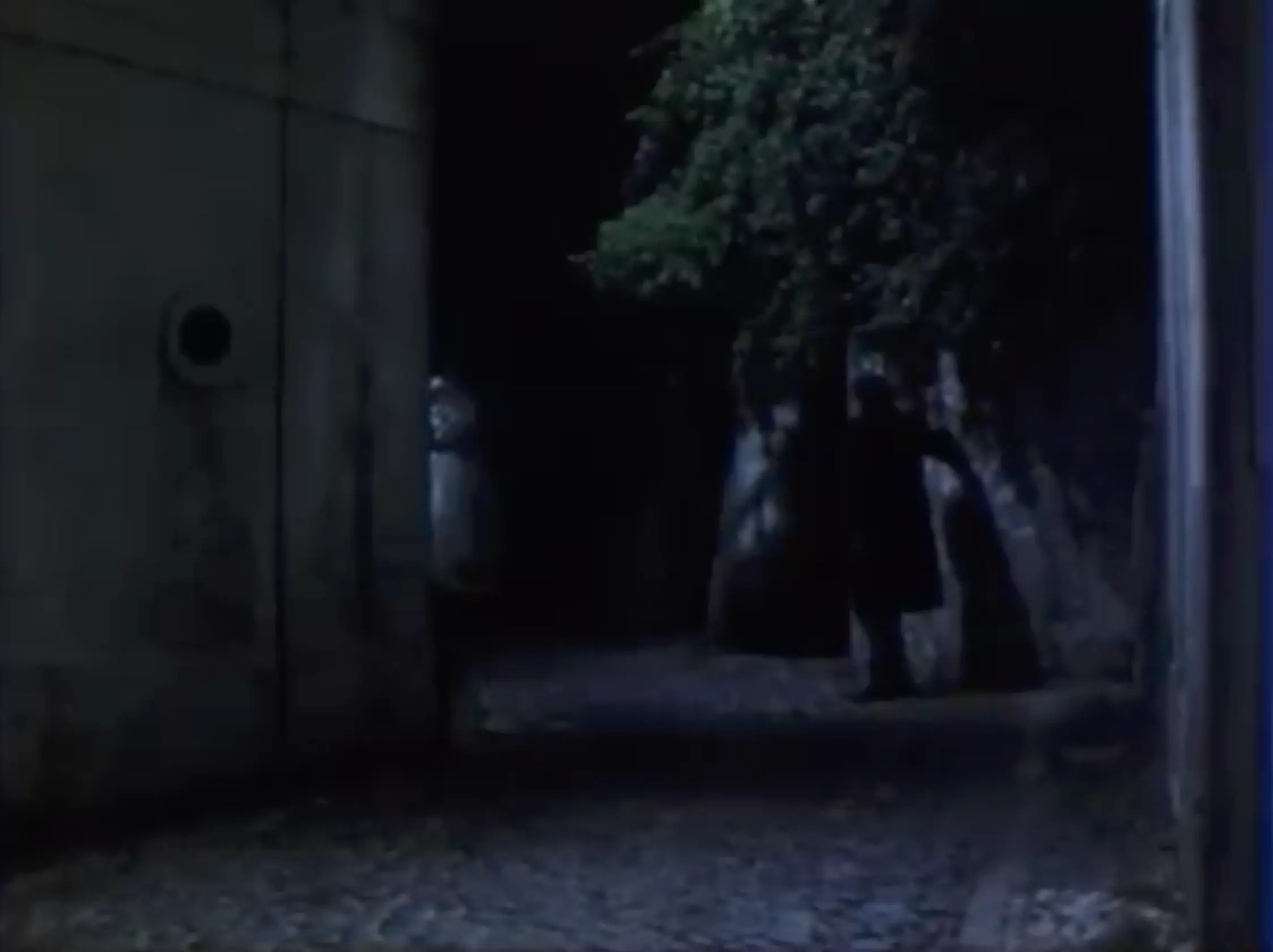
With these scenes Rita Azevedo Gomes inaugurates her cinema’s fascination for the reciprocal contamination of experience and representation, the no-man’s-land between the act of creation and the created work that seems to draw towards it the constituents of both by a siren song that in the same breath portends the dissolution of each in the other. The intensity of Alberto’s investment in his fiction seems to have erased his existence in reality, or in the first-order fiction, and plunged him into the universe of his own invention, or the second-order fiction, yet he is at the same time suspended between the two, moving among their respective constituents but alarmingly disconnected from both. Meanwhile, the sailor is stuck on land, looking out across the water; ‘I must leave tomorrow’, he writes in the letter that his silent beloved will never read. This is the same ‘tomorrow’ that Alberto intones over and over, in the hotel room he inhabits like a purgatory, before he is made to realize that the time in which he might have returned to his world, the world of Isabel, has already passed.
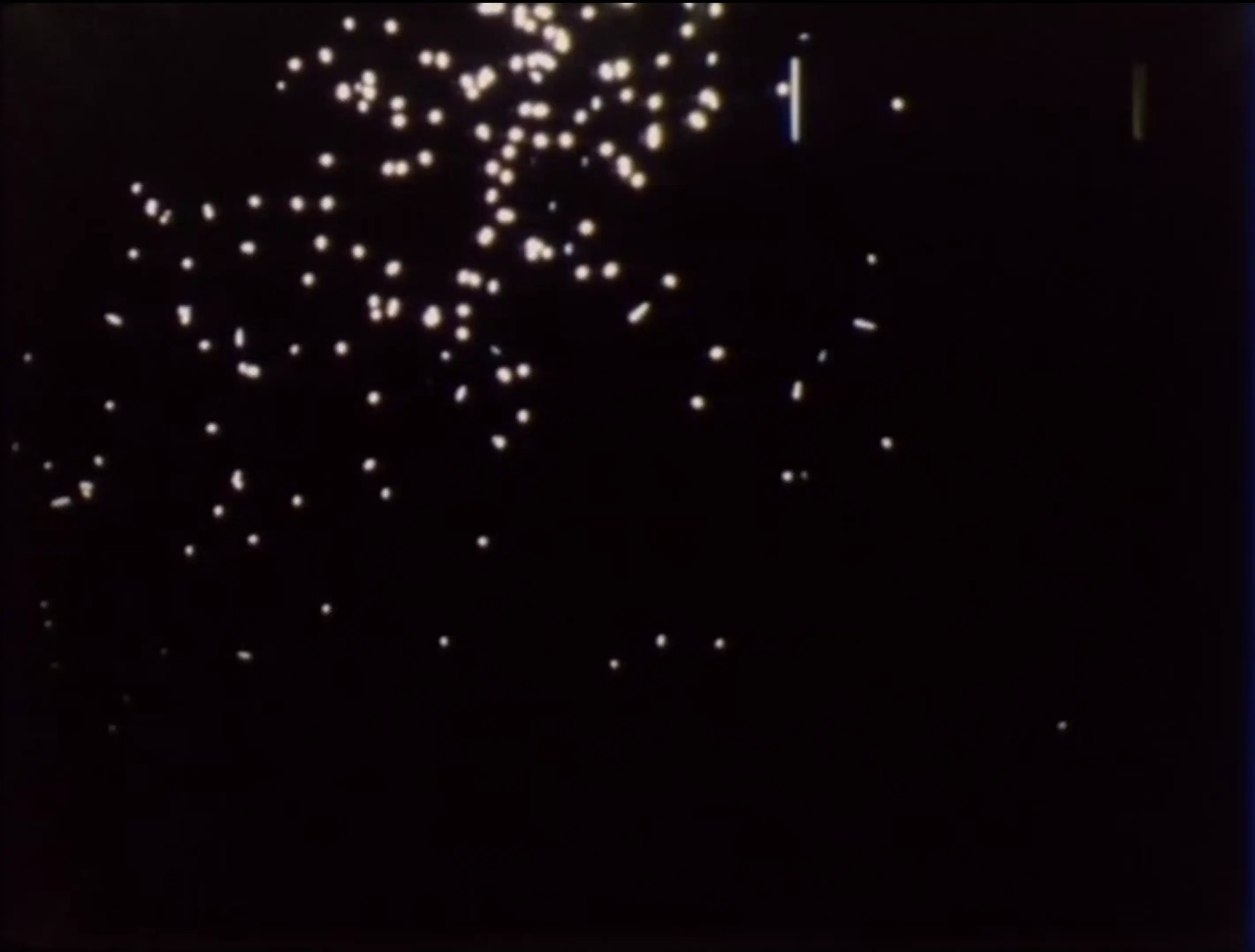
These fates represent the negative moment of a certain conception of the artistic act; its positive counterpart has been suggested by an earlier moment in the film. The central sequence of O Som da Terra a Tremer follows the sailor’s mysterious encounter with the girl, during a brief shore leave that takes him from an aquarium to a ‘ghost train’ (as João Bénard da Costa describes it) to a landscape of coastal salt pans, before, in its climactic moment, the sailor and the girl find themselves in a grotto. [1] He enjoins her to take his hand and feel it against her face. ‘But do you know it’s me?’, he asks. She lets go, and after a moment turns and leaves him. At this moment, he takes from his pocket a pile of salt he had earlier gathered from a great heap among the salinas. He throws it upwards, and many of the grains seem to stick to the ceiling of the grotto, forming what resembles a vault of stars, as if at that same moment the grotto had opened up to reveal the night sky. The image is held long enough that we might begin to perceive figures in the sidereal array.
I should like first of all to suggest that we might profitably let this moment refer us to a particularly famous constellation: the one that ‘perhaps’ appears ‘upon some vacant and superior surface’ at the end of Stéphane Mallarmé’s ‘Un coup de dés jamais n’abolira le hasard’, as the undecidable outcome of the shipwrecked captain’s final dice throw, the climactic figure of a poem that ‘poses the question what is a poem?’. [2] That association is suggested not only by the professor’s later paean to chance, but also and especially by the fact that the first part of the film, in which the writer regales his literary circle with the news of his work in progress, is an adaptation of André Gide’s Paludes, a satire of the Symbolist milieu around Mallarmé, and a book which the latter praised for its ‘precious, acidic drops of irony’, its ‘discreet, terrible bantering with the flower of the soul’. [3] Azevedo Gomes, with her strange combination of opulent materials and ascetic formal means, and above all with her absorption in the relationship between the formal and semantic elements of her images, is closer to the symbolists than any filmmaker of her generation, closer even than her predecessors Werner Schroeter and Carmelo Bene, with whom João Bénard da Costa usefully groups her. [4] Part of my point here is to place Azevedo Gomes’s work in the neighborhood of a post-romantic and modernist tradition that can be read off her choice of adaptations and subjects (Gide, Barbey d’Aurevilly, Musil, E. E. Cummings, Sophia de Mello Breyner Andresen, Jorge de Sena) but should be taken further into the discussion of the means and concerns of her cinema. In this way we can comprehend its poeticity in a more specific and accurate sense than is provided by the vague and often retrograde sentiments that generally circulate around the term ‘poetic’ as applied to cinema. Following that train of inquiry gives us one way of connecting the salt grain episode, which is the first climax of the story of the sailor and the girl, with its second climax, in which, after he has presented her with the aforementioned book and has himself left, a horse and rider bound across the frame behind her. Taking these two moments together encourages me to bring into the picture another equally suggestive poem that is a descendent of Mallarmé’s and is also occupied with the question of poetry’s actual means — the eleventh of Rilke’s Sonnets to Orpheus: [5]
See the sky. Is there no constellation
called 'Rider'? For this is strangely impressed
on us: this earthy pride. And a second,
who drives and holds it and whom it bears.
Is not the sinewy nature of our being
just like this, spurred on and then reined in?
Track and turning. Yet at a touch, understanding.
New open spaces. And the two are one.
But are they? Or do both not mean
the way they take together? Already
table and pasture utterly divide them.
Even the starry union is deceptive.
But let us now be glad a while
to believe the figure. That's enough. [6]
Rilke takes the lead of Mallarmé, who chose the constellation as the image of a chance event of pure formal meaning whose realization can never be assured. His figure’s undecidability is converted by Rilke into the uneasy conclusion in which ‘the starry union’ is ‘deceptive’ but all the same ‘enough’ to ‘believe [in]’ gladly for ‘a while’. The semantic complexion of the relation being called into question is put across quite explicitly by Rilke’s choice of the word ‘mean’ (meinen), while his ‘believe’ correlates with Mallarmé’s ‘perhaps’ as the ambiguous mark that contingency brands on association; the imprecise temporal circumscription of ‘a while’ rounds out the obscurity by specifying that this meaning (unlike the eternal symbol) will be subject to the unpredictable vicissitudes of becoming. It is hardly with reassuring confidence that we are being asked to put our faith in the figure; played out in miniature is the decadence from the organic necessity of romantic symbolism to its gratuitous, because adventitious, modern offspring.
To see how this Mallarméan–Rilkean constellation complex might relate to Azevedo Gomes’s film, beyond a basic parallel in choice of images, it will help to separate the two moments of the salt sequence in O Som da Terra a Tremer. First, the shot of the sailor throwing the salt grains cuts to the close-up in which they stick to the black ceiling of the grotto, taking on the appearance of stars. Then this shot is held for some time, so that the array of grains is able to become, to the eye of an intent viewer — but only perhaps — the figure or figures of one or more constellations. Now, the two phases — salt–stars, stars–constellation — rely respectively on two primitive elements of cinema: the cut and the duration of the shot. It is by the rhetorical-associative force of the cut, connecting images that are in themselves spatially independent, that the salt ‘becomes’ stars; it is by the rhetorical-temporal force of duration, conjuring form out of image, that the stars ‘become’ constellations. My contention is that, over and above any associations that may be accrued to stars or their putative shapes in themselves, what is symbolized here is a purely formal power of cinema to create symbols. For in the modernist lineage that connects Mallarmé to Rilke and, I am saying, to Azevedo Gomes, the constellation is the figure par excellence of figuration itself, in its extraction of a necessary and permanent form-meaning from the contingent arrangement of a given set of stars; [7] the empty sense of the constellation as such is the bare possibility of sense itself. In the vocabulary of linguistics, which may be clarifying in this case partly because it was brought so productively to bear on the modernist tradition, this equates to the extrusion of the paradigmatic — vertical relations of metaphorical meaning — from the syntagmatic — horizontal relations of metonymic contiguity, abstracted from any given sense. This is what Rilke thematizes by a successive figural analysis of the constellation first into the earthly horse and rider and then into their respective paths, ‘track and turning’, which are brought together by a process of understanding; the verb here is verständigt, which has to do with agreement or concord. [8] This process operates through ‘touch’; the German is Druck, which is more like ‘pressure’, that is, the pressure of figuration that makes of the horse and rider a signifying whole iconized in the constellation.
Though the transformation of the salt into the stars seems to stop short of the ambivalence Rilke evokes, the shadow this ambivalence casts over the second half of his sonnet produces a sober coloring for which we ought to be on the lookout in Azevedo Gomes’s cinema. This is an oeuvre aware of the threat of arbitrariness, the far end of which is allegorized in A Colecção Invisível, in which blankness can be enjoyed through association reduced to fiat, and imaginary untruth is made the preferable option. In this film, a blind man’s apparent art collection — in fact a collection of blank pages — proves to be, if anything, more enjoyable, through its perfect imaginary reproduction, than a real collection could ever be. On the other hand, the voluntarism of association is the source of tremendous energy of invention in her work; nobody who has seen A Conquista de Faro will forget the shot that takes up its last seven minutes, in which we are presented with the gradually defined contours of an image whose relationship to the foregoing is not at all clear, accompanied by a soundtrack that seems yet more removed. Like Rilke’s poem, Azevedo Gomes’s cinema does what it also calls into question. She has spoken several times of the feeling that for her accompanies cinematic creation, through which almost any element encountered seems as though it can be made to operate within the network of materials a film constructs, so that special vigilance is required to distinguish what actually belongs. This process does not just lie behind the films, but is both thematized within them in moments such as the professor’s discourse on chance, and figured within them by procedures whose temporal aspect has to be stressed in respect of the negative face of the Janus of artistic creation we have already glimpsed: dissolution. Duration, which seems to open an image up to a semantic array, is within the diegesis of O Som da Terra a Tremer the medium through which Alberto, who refuses and is then unable to return to the world of ordinary syntax (the ‘metonymy’ of his milieu, if you like), and the sailor, caught in the suspense of an unending fiction, are condemned to phantom existences in the atemporal desert of sense. They are both victims of the bad infinity of an incessantly repeated ‘tomorrow’. On this reading, one of the effects of the mysterious self-isolation plot that occupies much of the film’s second half, and which is based on Nathaniel Hawthorne’s story ‘Wakefield’, is to allegorize the entropy that time imposes on art, and most pressingly on cinema as the time-based art of images. [9] If the speculative character of Azevedo Gomes’s work lies in its union and disunion of the syntactical and the semantic — of image and sense — within it, time, the medium of syntagmatic relationships, exerts a downward paradigmatizing pressure, yet also secretes an acidic irony that eats at the ties binding elements to meaning. At its height this can be a paradoxically homogeneous process; in the course of her career, Azevedo Gomes will increasingly gravitate towards stereograms, where it is no longer a case of a unity that is imposed and then dissolved but of a simultaneity of creation and undoing of sense.
* * *
A Portuguesa is adapted from a Robert Musil story that can be understood in part as a series of deliberately frustrated attempts to arrive at ‘objective correlatives’ for emotions that remain opaque and not wholly embodied, which circulate only in ambiguous relation to the environments, characters and events that inspire and incarnate them, and which are attached still more ambiguously to their putative symbolic counterparts. Reconstructing the system (or counter-system) of these images in relation to the narrative would be the task of a different essay, and for my purposes it is enough to note that one of the main ways it works is by developing a series of animal images that uses the medieval setting to exploit an implied relationship with the bestiary, a refined system of moral allegory, that the story at the same time exposes to its own arbitrariness. In use and also in question already in Musil then (who memorialized Rilke as ‘great and not always understood’, as well he might) is the notion of a singularizing connection between image and meaning that is both powerfully evocative and fatally incomplete; its inability to ground itself is seized upon as the motor of the story’s apophatic effects. Part of what is going on here is a muted satire, by way of the apparently mechanical practice of medieval allegory it had supplanted, on the suprahistorical and totalizing ambitions of nineteenth-century symbolism, the sort of notion that advanced artists could not credit as having survived the War. [10] Put more schematically than the work itself comes across, the conceit of the three stories that make up Drei Frauen is that in each case a woman embodies, as in Hegel’s famous phrase (but not in the way he meant it), ‘the eternal irony of the community’, undermining the closure of the universe as understood by the respective male protagonists and so also the closure of the stories themselves as would otherwise be achieved by narrative structure and rhetorical tropes. In ‘Die Portugiesin’ the titular character is to the normal procedures of figural language what a strong magnetic field is to a set of floppy disks. I would like to go a little into just one of the networks of animal imagery in the story, the canine one, in order to see what Rita Azevedo Gomes takes from Musil and what she alters. [11]
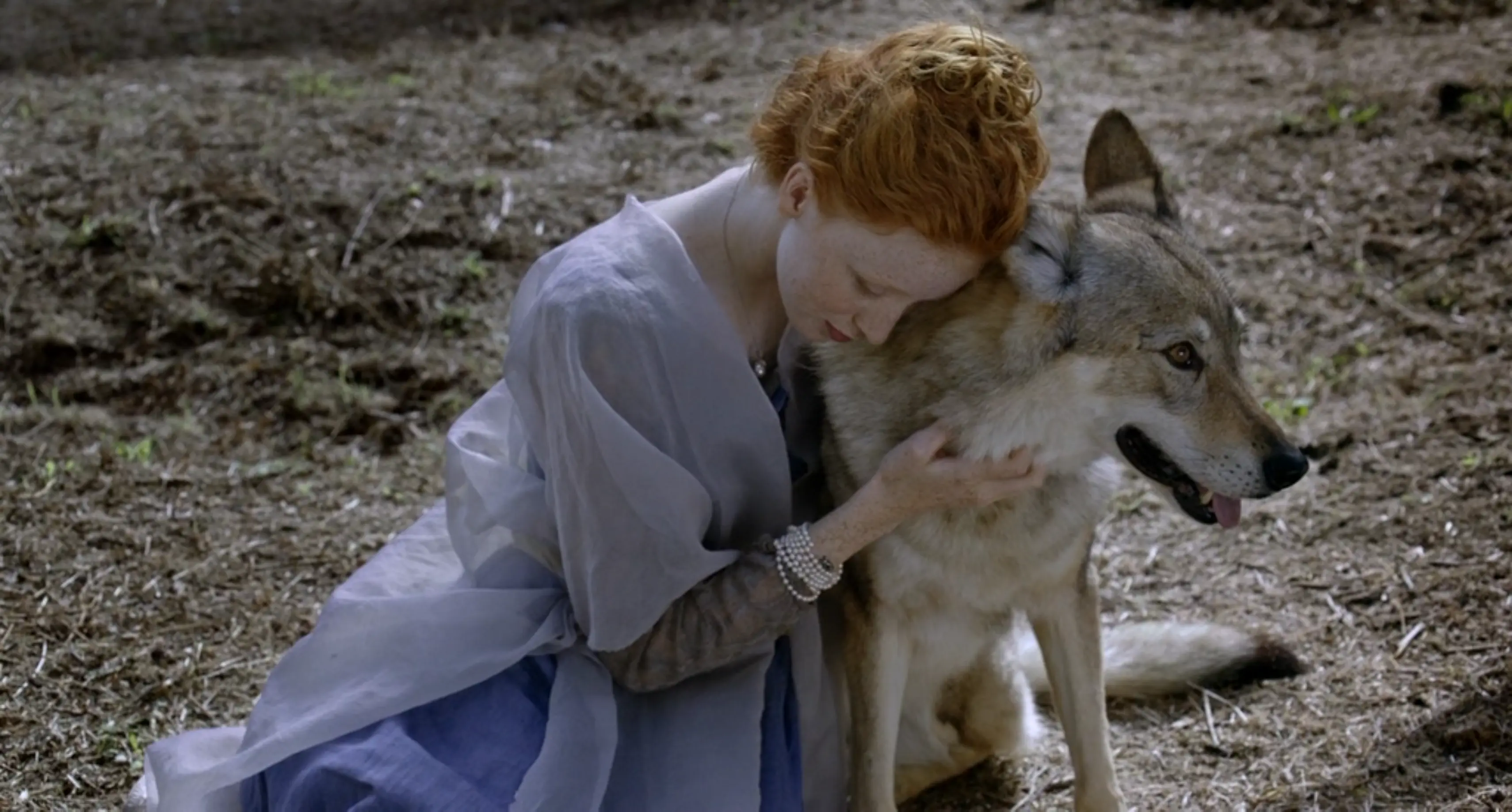
A Portuguesa (Rita Azevedo Gomes, 2018)
The bestiary topos is prepared by our introduction to a forest near the von Ketten castle, in which ‘there was the stag, the bear, the wild boar, the wolf and perhaps the unicorn. Further beyond, there was the realm of chamois and eagle. Unfathomed gorges harbored dragons.’ [12] The elision of any apparent distinction between real and mythical creatures is an indication of the presumed symbolic status of the ensemble, and at first it seems as though this land in which they are found might stand for Herr von Ketten himself, in a variation of the Fisher King archetype: ‘Often in her dreams of this country, whence came the man she loved, she had imagined it as being of his own nature’ (248). But this is only in the woman’s dreams. When she ventures into the forest, she finds that it ‘opens up before one, but its soul withdraws’; though she would ‘catch glimpses of animals’, ‘all the life had vanished’ from her experiences ‘as soon as [she] emerged from the forest’ (254). Some kind of blockage exists from the sense that one would desire to extract from nature and what nature gives of itself as sense. At the same time, however, a connection is drawn between von Ketten and the figure of the wolf, a member of the initial animal litany. We are told that Herr von Ketten ‘roamed like a wolf’ while at war (251), and that when his wife had children, ‘it seemed to her they were young wolves’ (254). In the next sentence, as if conjured by that metaphor, we are told that ‘Once she was brought a wolf-cub that had been taken in the forest’, which she loved and tended to, for he ‘reminded her of von Ketten’ in ‘the silent ferocity and intensity of his gaze’, a gaze which ‘said nothing’ (254). This seems reciprocal: von Ketten is like a wolf, to such an extent that his children can be called wolf-cubs, and the wolf is like von Ketten. Yet there is something problematic in the actual incarnation of the wolf. As long as it was the abstract wolf of figural language, the animal of the simile ‘like a wolf’, it remained subordinated to its concept within the bestiary, signifying the physical and moral content proper to the wolf within the Great Chain of Being — even if that content should include blankness: ‘saying nothing’ with one’s gaze. But a wolf of flesh is a concrete being, potentially irreducible to its bestial concept; what was supposed as vehicle to fix the meaning of the tenor is no longer itself fixed. It may even threaten to usurp the tenor. This is one way of understanding Herr von Ketten’s sudden decision, during his convalescence, to have the wolf killed, an event which nevertheless occurs inside the fog of senselessness that shrouds the whole story. On ‘gazing into those bevelled eyes [of the wolf]’, he finds ‘he could not stir’ (257), a moment that seems proleptic of the opacity of his wife’s own eyes a few pages later: ‘When he gazed into his wife’s eyes, they were like new-cut glass, and although what the surface showed him was his own reflection, he could not penetrate further’; the link is clinched by the carrying over of the cut glass image. The opaque, non-signifying gaze has passed from husband to wife: probably the wolf, as a figure that fixes a lack or blockage of meaning, has to be referentially capricious; but the possibility that for this reason it could be the common vehicle of a metaphor that related the couple beyond the lacuna of meaning has been destroyed by the killing of the real, concrete wolf. Two paragraphs later, upon the arrival of the lady from Portugal’s friend, we have this: ‘the lord of Ketten lay in the grass like a dog, filled with shame’ (257). This recalls another of the earlier martial descriptions of von Ketten: ‘he clung to the plan as a dog will cling to a bull’s ear’ (249). There, the main sense, ‘tenacity, stubbornness’, overrode the pejorative secondary suggestions of triviality (the dog is smaller than the bull) and inflexibility (the dog clings to the bull’s ear regardless of whether it has any hope of bringing the bull down). But now, ‘filled with shame’ leaves us in doubt as to how ‘dog’ should be construed. Where the wolf was unreadable because wild and independent, the dog is pathetically dependent on its human owners, barefaced, merely appetitive. The abasement of the figure clarifies the character of von Ketten, yet it remains grounded in the moral-allegorical mode whose undoing was the condition of its appearance; the dog becomes the remnant of this undoing.
Even in the context of an oeuvre that is unusually interested in animals, A Portuguesa is a positive menagerie, featuring horses, dogs, geese, pigs, cats, rabbits, a falcon, a vulture and, of course, a wolf. The way animals appear in the film is central to the question of figuration and the argument about the creation of sense by cinematic means. This is intimated early on. When the Portuguese woman arrives at the von Ketten castle, there is a two-minute shot of the entry courtyard, in which she is introduced by her husband to the staff before being escorted away. Once the staff has dispersed, only Pierre Léon’s elder servant and the mysterious, anachronistic choral passageira played by Ingrid Caven remain; the latter suddenly bursts into the first line of the Aeneid: ‘Arma virumque cano’ [‘I sing of arms and the man’]. [13] Throughout this sequence, animals are moving across the frame: horses are led away, a pair of pigs cross the courtyard, two dogs wander around before walking off, another runs from the background to the foreground, and a gaggle of inquisitive geese patrol around, resisting Léon’s shooing. These movements are in many cases more prominent in the frame than the narrative action, which is largely confined to the top right corner, in the rear plane. Crucial to the form of the whole film is Azevedo Gomes’s decision not to use techniques of focus or lighting to mollify the density of information provided by the high-definition digital image. Very often, especially in ensemble scenes like this early one, an abundance of characters, animals, objects and surfaces vie for the eye’s attention, and staging that would guide the eye away from the range of detail on display towards the focus of the shot is rejected in favor of business that is apparently superfluous to the narrative action. The result is an unorthodox and at times overwhelming equality across the pro-filmic field. One way of understanding this is as a further extension of the freedom that, on the Bazinian account, is offered to the viewer — required of them, in Bazin’s terms — by the deep-focus sequence shot. [14] On such an account, a large depth of field and absence of montage is taken to safeguard the solidity of the scene and the homogeneity of the time in which the action plays out. This species of shot then maintains a formal integrity that gives the viewer the freedom to draw out sense without being strongarmed by intrusive cinematic techniques that manipulate time and space to impose a singular meaning. Yet in this case the movement of the animals, placed on equal footing with the narrative action by the form, produces another temporality — or set of temporalities — that diverges from the narrative temporality without evidently complementing it. The effect can be called irony, as long as that isn’t understood to mean a stable dyad of senses, one contradicting the other, in the way the intended meaning of a sarcastic statement contradicts the surface meaning. Instead, a series of exclusive readings imposes itself: ‘The animals reveal, by their contrasting freedom from social concerns, the absurdity of the human business’; ‘the animals symbolize the base, appetitive interests that the humans cloak in ceremony’, ‘the animals are simply part of the realism of the setting, since a medieval castle would indeed be full of animals’, etc. To revisit the vocabulary borrowed from linguistics, these are the effects of the force of paradigmatization that accompanies the syntagmatic progression of the scene. But all of these possibilities carry the undertone of gratuitousness and of the interestedness that accompanies the projection of meaning onto images that withdraw from it into the brute facticity of their constituents, over the course of the same duration that seemed to provoke ironic meaning. So at the same time, an idea bubbles under the surface of all the previous: if the animals ‘stand for’ anything, it is the nonidentical element that seems to exceed the ability of the sequence shot to close in upon itself as a unit of cinematic sense; and yet this ‘standing for’ itself depends on a structure of sense that can only produce the nonidentical as its shadow. Present here is the larger species of irony that both feeds and feeds upon the very substance of the film.
This sequence establishes the mood in which animals are repeatedly encountered in the film, including in the important scenes in which Musil’s wolf is taken up. The wolf is first introduced as a cub that is presented to the Portuguese woman by the elder servant and the page, in a room in which she practices music and has stories read to her. Immediately prior to this, we have seen the woman’s son accompanying the estate’s falconer, a scene also watched by his mother, who comments: ‘He’s my son and he’s never seen the sea’. We are therefore primed for the oppositional theme of the inside (domestic) and the outside (wild), with the domesticated falcon cutting across the categories; there is a muted suggestion that the boy has himself been domesticated against the measure of wildness proper to the knight. Even the composition, a de Hooch sort of scene organized around a doorway through which we see a balcony overlooking the grounds of the castle, thickens this feeling of an inside-outside polarity. When the woman is given the wolf cub by the page, she says: ‘Is this the animal that scares you so? It is merely one of God’s creatures. He has eyes of fire, eyes made for night. He seems tame.’ The copyist arrives, and warns: ‘Appearances can be weapons.’ The woman asks him to continue his reading, from the Matter of Britain, but her Moorish servant interrupts: ‘They say when a wolf sneaks in to snatch a hen and gives a false step, making a noise, it bites its paw in punishment for its error.’ All of this is newly invented material, absent from Musil’s story. The point to make here is that everything that is said has the effect of rhetorically domesticating the wolf: it is recruited to a human moral category (‘God’s creatures’); subjected to blason (‘eyes of fire’); called ‘tame’ outright; assimilated, even in a warning of its potential danger, to a sententious platitude (‘appearances can be weapons’); and made the character in an apologue. The copyist, called on to continue his story, only manages one line — ‘“Only a fool wants what he can’t have”, said King Arthur’ — before a powerful gust of wind blows through an unseen set of shutters to the right of the camera, disturbing a set of curtains which billow wildly in the right of the frame, knocking pages of score from a music stand and driving leaves into the room, as we hear arrhythmic hand drumming on the soundtrack. The wind interrupts human speech, which domesticates, with a blast from the outside of its domestic space, which is also therefore the outside of its language. The wind is blank and opposed to the organization of sense: bearing its own ‘music’, it topples the pages of written music that order sound by a universal language. Yet this interruption, even in its blankness, remains rhetorical in structure and effect — in the context of the scene it can only appear as an anacoluthon. As in Musil’s story, the figural does double duty, constantly appearing in order to undo its own efficacy.
Film is deprived of prose narration’s omnipotence: we cannot be told directly, for example, that von Ketten is like a wolf, or that the wolf’s gaze ‘says nothing’. Literal figural language is confined to speech, hence the invention of dialogue like in the scene discussed above. What the film can show, which prose can only describe, is a real, actual wolf. Where Musil is interested in the wolf as a rhetorical figure that is disturbed by the presence of a living wolf — which itself can only be a linguistic creation — Azevedo Gomes is interested in the effect of the wolf on profilmic space and on the meanings that circulate in the shots in which it appears. Animals always introduce a metafictional element to the narrative film since they are irreducibly ‘documentary’ elements, both inside and outside the fiction. In the second scene in which the wolf appears, it is no longer a cub (a marker of the amount of time Herr von Ketten has been away at war), and has evidently become a companion to the woman. She crouches beside it and says to it: ‘You’ll always be a stranger.’ This may seem strange, since at this point it does seem as though the wolf has actually been tamed. But this line fans out into secondary meanings — not only does the wolf’s status as an eternal stranger reflect the woman’s own, but the wolf is also a stranger to the diegesis, never fully subsumed into the same fictional space as the characters. This is the basic tenor of the other scenes in which we see the wolf, appearing now as a kind of familiar of the lady from Portugal. In a scene featuring her and von Ketten that consists of a single shot lasting two and a half minutes, the wolf enters the room in which the pair are dining and chews on a piece of meat in front of the table as the couple finish their meal and leave. As in the courtyard scene, the form, which refuses to draw attention away from the wolf and towards the characters by cutting to angles that would privilege them, creates an equality of presented elements that seems, over the duration of the sequence shot, to call for something to be made of the wolf’s presence — for example, ‘the wolf symbolizes the undercurrent of wildness and independence in the woman, indicated here by the action of her batting away von Ketten’s attempts at physical intimacy.’ Yet as before, the impassiveness of the form undermines the attempt at drawing out a sense from the scene in this way; the temporality the wolf incarnates in the frame is its own and seems reflective only of itself, and the slow dolly-in that gives the wolf even more prominence in the frame only emphasizes this. As in Musil’s story, the wolf appears to symbolize a blockage of symbolic meaning, but where Musil appropriates and subverts the tropology of allegory, metaphor and simile, Azevedo Gomes relies on purely cinematic means: composition, staging, camera movement, focus, shot length. When von Ketten has the wolf killed, he liquidates the unreadable contingency it embodies and the aberrant temporality it introduces by reducing it to the condition of an object, the wolf’s pelt as simple prop. It then shares the same status as the prop in the cinema we are more used to, where objects are allowed to rest in their presumed semantic consistency: that is, as an emanation of the authority that organizes the visual field for the purposes of representation. Here, the pelt is a metaphor for lordly dominion over nature.
Where the constellation scene from O Som da Terra a Tremer uses a cut followed by an extended shot to put semantic pressure on an image, converting it into a figure of figuration, in A Portuguesa, sequence shots exert this pressure while at the same time resisting the ends to which that exertion might be put. This is at once an exacerbation and a dispersal of the binds of meaning that are usually manipulated by ordinary cinematic rhetoric. Azevedo Gomes gives us paradoxical figures of figuration running aground on the hard rock of the nonidentical, which art, because it represents, cannot produce among its elements. In every case this relies on an unusually intense attention paid to what duration does to sense: in the frame, becoming effects an entropic loss of sense at the same time as it induces the creation of sense from what increasingly seems to appear independent of any rhetoric into whose service it may have been pressed. That all of this itself depends on cinema-rhetorical maneuvers, and can only be thus, is a contradiction that is in Azevedo Gomes’s cinema productive rather than inhibiting. Whether these paradoxes of meaning are allegorized in ‘counter-figures’ like the wolf, the wind, and the phantom writer, or practiced in the temporal realization–derealization of the shot’s figurative possibilities, it is never a question of simply mastering the irony that is produced by the permanent and indestructible specter of the cinematic figure, of a certain framework by which it could be controlled once and for all, nor is it a question of whether its uncontrollable proliferation could only lead one to assume a position of tragic resignation or comic distance. Irony, in the large sense that forms the spine of the great Brontosaurus of post-romantic art, is not a way of phrasing a truth (about the world, about art, about irony) that would be independent of it. It is itself true. At the same time, and for the same reason, this cannot be asserted as a truth, but only discovered in the work — in each shot as it unfolds and resists closing in on itself. For Rita Azevedo Gomes, the time of cinema is the time of this discovery, and the beauty of the contradictions to which it gives form is the riven beauty of what is.
O Som da Terra a Tremer (Rita Azevedo Gomes, 1990)
Notes
In program notes for the June 2004 Cinemateca Portuguesa series ‘Os Malditos do Cinema Português’, translated in this issue.
Justin Clemens, ‘Syllable as Syntax: Stéphane Mallarmé’s Un Coup de dés’, Filozofski vestnik, 37:2 (2016), 131–149 (p. 132).
Stephane Mallarmé, ‘Lettre du 21 juillet 1895’, Correspondance, vol. 7 (Gallimard, 1982), p. 241. The phrase ‘reciprocal contamination’, which I use above, is taken from Mallarmé’s text ‘Restricted Action’; see Divagations, trans. by Barbara Johnson (Harvard University Press, 2007), p. 218. His full phrase is ‘the reciprocal contamination of work and means’, which is extremely apposite to Rita Azevedo Gomes’s work as I understand it.
In flagrant contravention of the ban on biographical anecdote, the author can confirm that Rita Azevedo Gomes’s apartment contains at least two portraits of Arthur Rimbaud.
A month after completing the Sonnets, Rilke paid tribute to Mallarmé as ‘the most sublime, most compact poet of our time’. Rainer Maria Rilke, Letters, trans. by Jane Bannard Greene and M. D. Herter Norton, 2 vols (W. W. Norton, 1969), 2: 304.
The translation is M. D. Herter Norton’s, from Sonnets to Orpheus (W. W. Norton, 1962), p. 37.
I am using the terms ‘figural’ and ‘figuration’ in the sense they are used in the context of rhetorical and literary analysis. I would not be confident to say how far my use overlaps with Nicole Brenez’s ‘figurative analysis’.
Claude Neuman’s French translation has accordées; Les Sonnets à Orphée (Ressouvenances, 2017), p. 51.
The reader will have noticed that I am playing somewhat fast and loose with the distinction between images as the basic literal units of cinema and images in the sense of figures or symbols; my point is that Azevedo Gomes’s work worries at the proximity between literal and figurative as specifically manifested in cinema, and the tendency for this distinction constantly to articulate and disarticulate itself. Thus every image-unit is inescapably a potential sense-unit.
These habits of mind were still bothering Hans-Georg Gadamer several decades later, who arrived at the same idea as Musil: ‘The basis of aesthetics during the nineteenth century was the freedom of the symbolizing power of the mind. But is this still a firm basis? Is the symbolizing activity not actually still bound today by the survival of a mythological and allegorical tradition?’ Truth and Method, trans. by G. Barden and J. Cumming (Seabury Press, 1975), p. 72.
The other major animal image is the kitten at the center of the story’s final movement. This kitten is present in Azevedo Gomes’s film but strongly de-emphasized compared to the story: the Portuguese woman’s last line in the story — ‘If God could become a man, then He can also become a kitten’ — is altered in the film to ‘If God took human form, He could also take the form of a wolf, or a cat, or my cousin Lobato who’s on his way to Bologna’. This has the advantage of carrying the canine network, which as we will see Azevedo Gomes emphasizes, through to the film’s conclusion, and the bathetic final clause is congruent with the tone her screenwriter Agustina Bessa-Luís draws out of what remains largely implicit in Musil, but there is arguably a loss here in respect of the story’s transferral of animal-symbolic cathexis from canine to feline, which does much to suggest the sliding of symbolic material and the regeneration of opacity, as it were. Incidentally, Musil’s line is a paraphrase of an aphorism of Novalis: ‘If God could become man he can also become stone, plant, animal, and element, and perhaps in this way there is a kind of continuing salvation in nature’ (Novalis, Philosophical Writings, ed. and trans. by Margaret Mahony Stoljar (State University of New York Press, 1997), p. 161). This connection presents yet another rabbit hole this essay has to step over.
‘The Lady from Portugal’, trans. by Eithne Wilkins and Ernst Kaiser, in Robert Musil, Selected Writings, ed. by Burton Pike (Continuum, 2005), 245–266 (p. 248). Subsequently cited parenthetically by page number.
There is not space here to discuss the role of the passageira in the film, but one of the things her delivery of these words does is to draw attention by inversion to what is missing from Virgil’s line: animals and women, which the film will ‘sing’.
‘Obliged to exercise his liberty and his intelligence, the spectator perceives the ontological ambivalence of reality directly, in the very structure of its appearances.’ André Bazin, Orson Welles: A Critical View [1958], trans. by Jonathan Rosenbaum (Acrobat Books, 1991), p. 78.