‘Is this movie any good?’, one of the patrons asks Simone Barbès in the film’s first act, set in a porn theatre. ‘That depends on what you like’, she replies. ‘Adventure, color, movement, frenzied action?’
Simone Barbès ou la vertu, Marie-Claude Treilhou’s debut feature, is a triptych following the eponymous protagonist at her job as an usher at a porn theatre, then at her post-work decompression at a lesbian nightclub, and finally in a car with a man who picks her up while she’s walking home — and lets her drive. But these parts do not exist as a beginning, middle, and end, or even as a necessarily straightforward three-part narrative. Rather, they stitch together to make a topography of nighttime, of distractions, of doing absolutely anything to avoid being on your own.
It is, in a sense, an anti-adventure film — not because there’s no strong plot or narrative, but because of the pervasive feeling of repetition throughout. Comparisons to Chantal Akerman are inevitable, particularly Je tu il elle (1974), with its three-act structure, queer female protagonist, and extended car journey with a man; but the most compelling part of the two films’ bedfellowship is that both feel like we are watching an infinite loop, giving the sense that all of this is going to keep happening again and again, forever. This isn’t one night in Simone’s life, this is every night, and though the neon signs for tobacco shops, hotels, pharmacies, and wedding dress outlets flicker on and off at the start, while the streetlights turn off at the end, the sense persists that the conclusion of the film is just a brief interval of costume changes before it all recommences, exactly as before.
What makes the first act of this film so irresistible is that it could so easily be bad: few directors could pull off a mise en scène as on the nose as a porn theatre with an essentially entirely male clientele (the only woman who enters is a carer for an elderly man), adorned with giant lit-up eyes on the walls spanning the entrance and lobby, and soundtracked with noise from the screening rooms: moans, sighs and filthy, clichéd dialogue. Simone Barbès is not voyeuristic; none of this is a spectacle. And that is where the success lies. If the patrons are condemned, then it is only with a shrug. The background noise truly does become background — we see and believe how Simone and Martine get so used to it, as we do too.

Original illustration by Kate Sianos
Treilhou worked for a period as an usher in the cinema where the film was later shot. Speaking of the movie much later, in an introduction to a new restoration at New York Film Festival in 2020, Treilhou’s recollections elucidate what is happening here: ‘I wasn’t in that cinema to observe anything, I was there to make a living.’ [1] As the background noise of the porn films, initially jarring and disconcerting, fades to an ambient drone, Treilhou zeroes in on the mundanity of every minimum wage job: sighing while you wait for your shift to finish, distracting yourself with the intricacies of your co-worker’s romantic exploits, the tediousness of getting paid a pittance while you’re reprimanded by men for not smiling enough. The snatches of dialogue we hear from the films — ‘you like that, don’t you’; ‘take it, take it’ — take on a secondary meaning. You can get used to almost anything, but only because it’s rarely that different from what you’ve seen before. Simone Barbès is a film that confronts the specificity of the working woman’s experience. Treilhou appears to have felt a distinct lack in the feminist — or so-called feminist — features that came before her. She interviewed Akerman in 1976 and appeared troubled by her insistence that Jeanne Dielman (1975) could have been about any woman, of any class. ‘Aren’t you afraid,’ she asked, ‘— in spite of this insistence on realism — of abandoning the tangible, which is different for every woman, depending on the place she occupies in the social hierarchy, and of producing an abstraction, The Woman, without upending the order that has trapped her in said position?’ [2]
The listlessness that comes with entrapment stalks Simone even to a place where she should feel comfortable: the underground lesbian nightclub, protected by a password rather than a ticket stub. She observes the bartender performing a spell to ward off evil. ‘What could I ward off?’ she muses. ‘I could ward off things in general.’ This part contains some of the visual highlights of the film: musical numbers of varying genres that contain more than a pinch of Rivette; a choreographed sword-fighting scene that feels disrespectful to even blink during. But almost immediately, we begin to feel stifled by the similarity between this setting and where we have just been: the words ‘I dream of a strange love’, sung over an unexpectedly haunting accordion, start to sound the same as the sex noises, or at least to hold the same emotional resonance. More and more men begin to seep into the space. And the courtship rituals, here highly mediated (by red flowers and waiters wearing red bowties), make us begin to wonder whether we miss the transparency of ticket stubs and explicit commerce. The women working here, too, are subjugated: one of the waiters is sent out coldly and callously by her boss to check if the coast is clear after the security guard stumbles into the room, shot. Gender appears, and both capital and violence snap industriously at its heels.
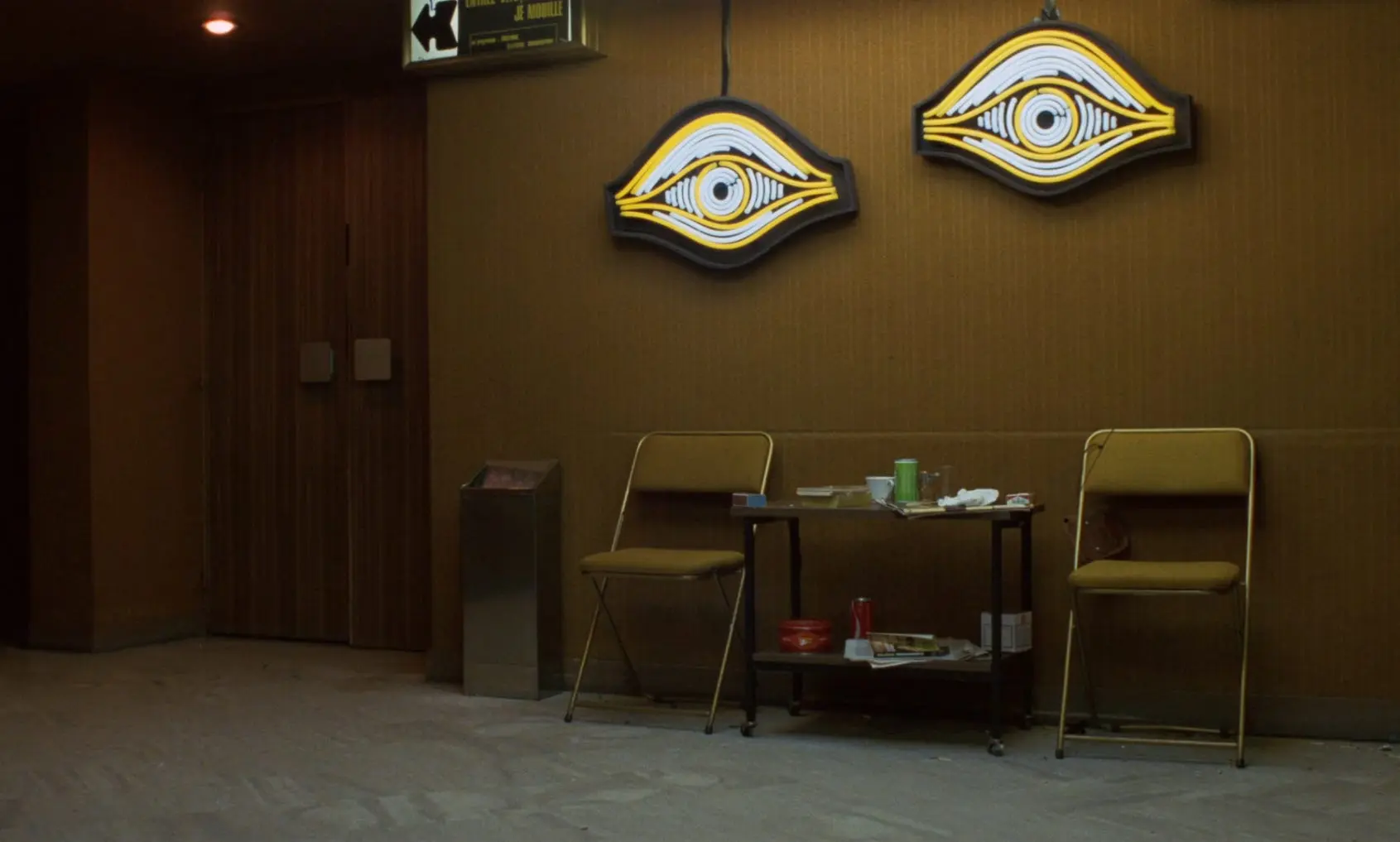
Simone Barbès ou la vertu (Marie-Claude Treilhou, 1980)
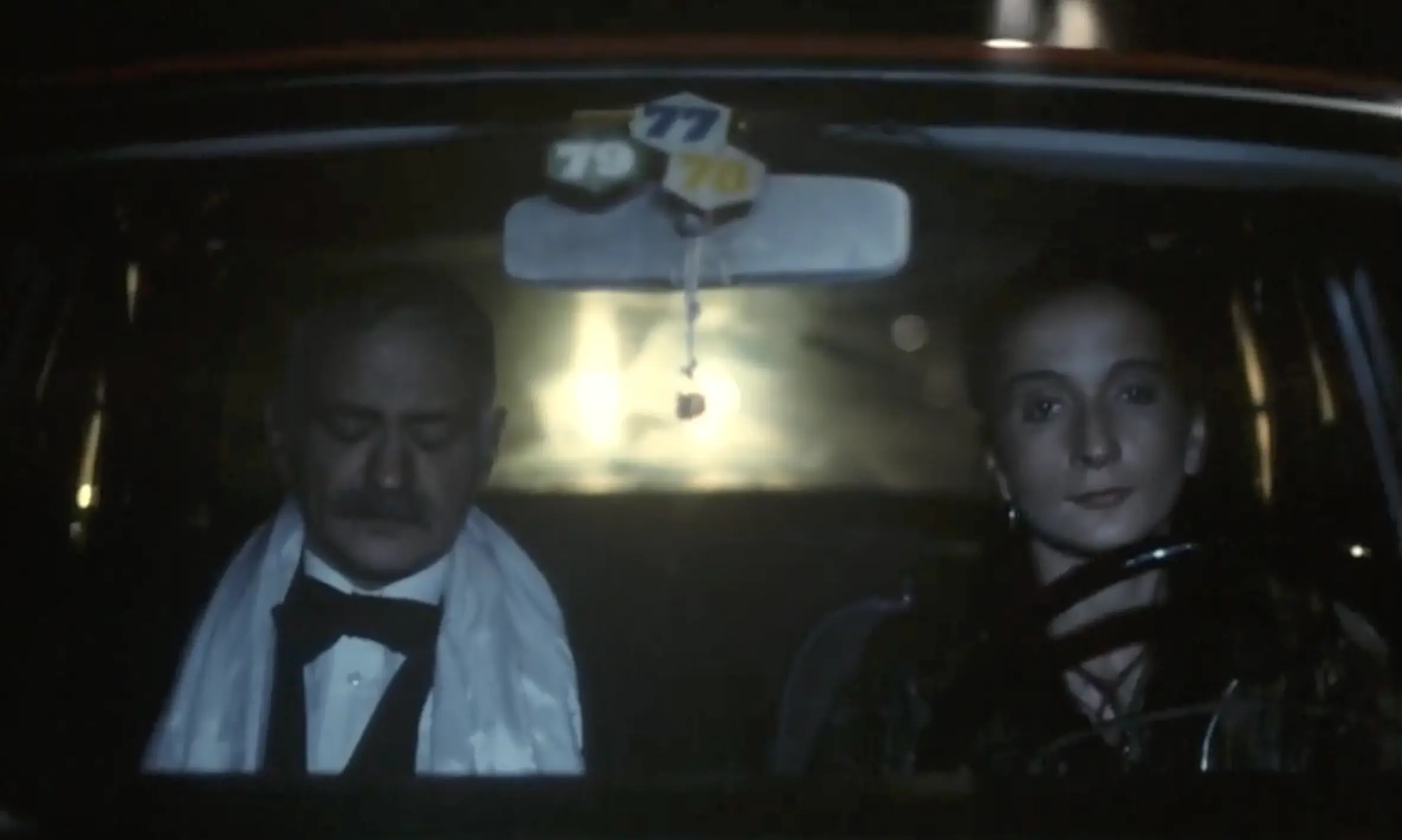
When Simone is picked up by a strange man on her walk home, she is initially resistant. He offers to let her drive and she acquiesces. The initial conversation creates a universe — entirely fictive, completely fantastical — where this could be a dangerous situation for him. The dialogue throbs with a desire to exchange the shackles of gender roles: ‘I’ll buy you a drink,’ Simone says, ‘I’m a great conversationalist, I’m very witty.’ He demurs, but she isn’t having it: ‘I’d like you to be my guest.’ Even in this car, where we know these characters will stay, all is arbitrated by capital, by exchange, by an awareness of how subtle the balance of power can shift once you owe someone anything, especially between a man and a woman.
In the car, the pair lie to each other, they tell the truth to each other. Everybody knows that there is nothing more dangerous than two people who love each other in an enclosed space, but here we see that there is nothing sadder than two people in one who don’t necessarily like each other but feel sick at the thought of being on their own. Mutual alienation creates a soft intimacy between them, through the dialogue, of course, but more through what is not said, by the glances, by the overt passes the man makes that slowly and simultaneously dilute and concentrate to invoke silent tears in him. All the more impressive, then, that Treilhou directed this scene lying flat on the ground, in the backseat of the car, unable to see anything: ‘I did it all by ear,’ she said, ‘but also by trusting them.’ [3] This last act is perhaps most fruitful in harnessing the power of visual language. It works through hesitations, delivery, charged gestures and furtive sidelong looks. The moment, this relationship between two characters who have been trying to ward off ‘things in general’, feels so fragile that we hold our breath as the sun comes up, afraid the intensity of the light could shatter it.
The virtue in this film’s title could be many things, and will probably change and transubstantiate with each viewing. But at its heart, I think, the virtue here is fiction, fantasy, storytelling. In the car, in the idiosyncratic creation of intimacy through mistruths and misleads, Simone tells her companion (and us): ‘A woman of fantasy, that’s me.’ Earlier in the film, the ushers, Treilhou said, ‘are trying not to fall into total despair by acting out a fantastic comedy… and that’s really the only solution, to play or to act… the whole film, in a sense, is an extension of that’. [4] Molière is referenced and quoted throughout, at times with great respect, at other times as the (literal) butt of a joke. The entire film feels like a response to his epigram: ‘I prefer a convenient vice, to a fatiguing virtue.’ [5] Convenient vices abound in this film, but Treilhou, before we even see the first shot, nudges us to think about the virtue. Amid the stifling, suffocating feeling that this tediousness will trundle on and re-introduce itself after each dawn resets, the virtue we watch, nestled carefully within swathes of explicit vice, is certainly fatiguing — and undoubtedly the preferable option.
Notes
Film at Lincoln Center, Marie-Claude Treilhou Introduces the New Restoration of Simone Barbès or Virtue | NYFF58, 5 October 2020, https://www.youtube.com/watch?v=yTThR5ob1mM.
Marie-Claude Treilhou, ‘Chantal Akerman: “La vie, il faut la mettre en scène…”’, Cinéma, 206, February 1976, 89–93 (p. 92).
Anne-Katrin Titze, ‘The imposter’, Eye for Film, January 2021, https://www.eyeforfilm.co.uk/feature/2021-01-05-marie-claude-treilhou-on-a-scene-with-ingrid-bourgoin-and-michel-delahaye-in-simone-barbes-or-virtue-simone-barbes-ou-la-vertu-feature-story-by-anne-katrin-titze
Marie-Claude Treilhou Introduces…
Molière, Amphitryon, trans. by A. R. Waller (2001), available at https://gutenberg.org/cache/epub/2536/pg2536-images.html