Jean-Christophe Bouvet: He also played on fragility, on febrility, to counter virtuosity — there’s nothing worse than virtuosity, you need wrong notes. […]
Damien Bertrand: Vecchiali created a manifesto of the sketch: the line must be quick.
Pascal Cervo: It’s the movement, it’s the breath that counts — because when you stop, you die. [1]
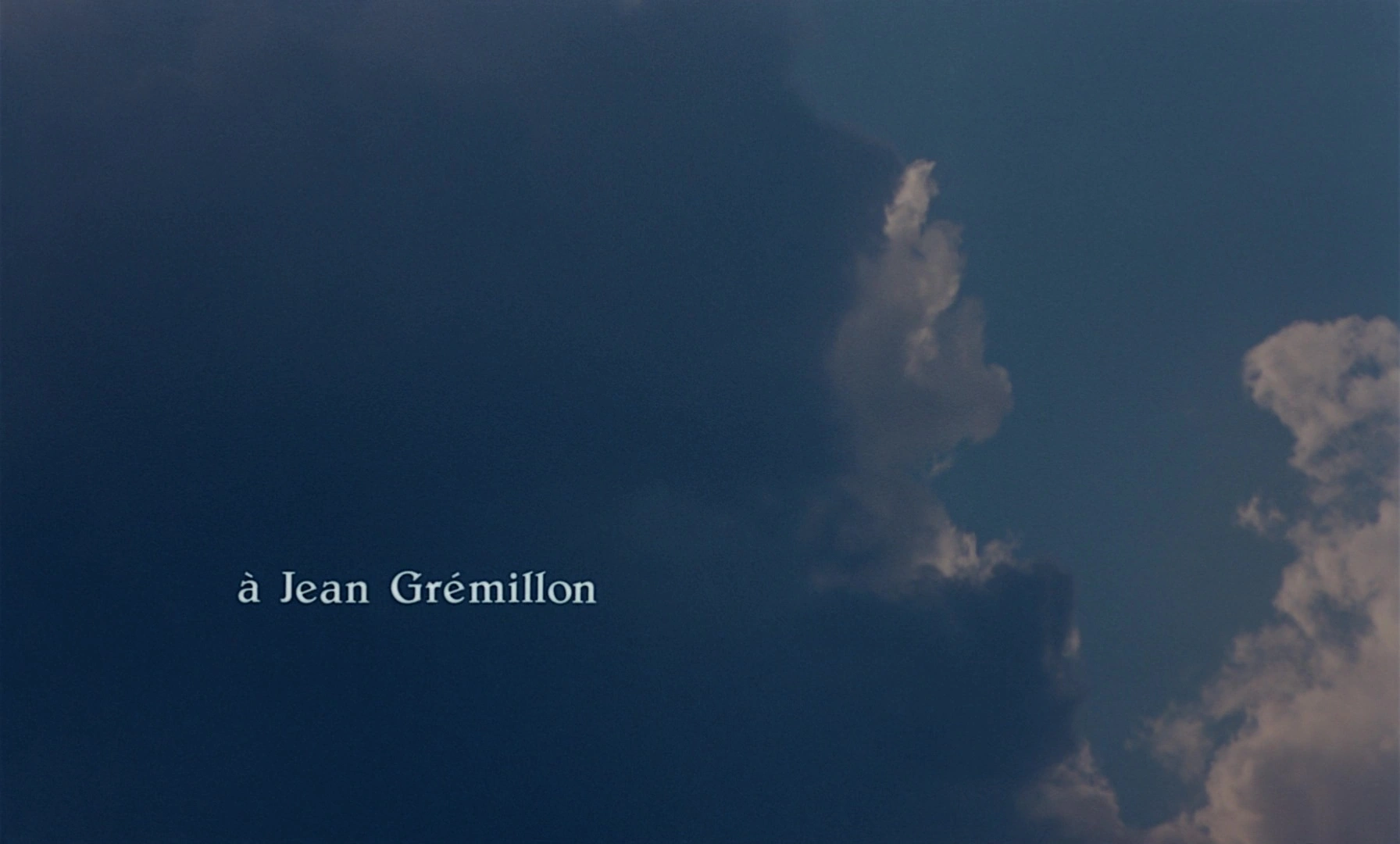
Corps à cœur shares a number of characteristics with Vecchiali’s other (sort of) hit, Rosa la rose, fille publique. Both films are revival populist melodramas modelled on Vecchiali’s beloved cinema of the 1930s (Corps à cœur is dedicated to Jean Grémillon, Rosa la rose to ‘Danielle Darrieux and Max Ophüls, Dora Doll and Jean Renoir’). Both make use of economically yet luxuriously orchestrated sequence shots, a signature of Diagonale house cinematographer Georges Strouvé (assisted by Renato Berta on Rosa). In their opening reels, both delight in the fine and unobtrusive movement of the camera through and around places and people, first summoning a collective, then making it move, leaving the viewer with the impression of having observed a dance that has carefully mapped (paced out, even) a particular space in order to construct a social world. Both films then follow their somewhat schematic melodrama plots to the same ending or near-ending, involving a death marked by the intrusion of light. Neither conclusion wholly comes off; both have a touch of bathos. The triumphant false notes here might be a corollary of the bottle universe side of Vecchiali’s transformative mise en scène: having turned the real world into a closed world, the light that is intended to pierce the drama can only arrive as mannerism. Even the players, otherwise excellent, stumble in these final purportedly tragic scenes. What is intended as fate, as the natural, necessary consequence of the characters’ inner motives, instead appears as artificial, extrinsic, even pushy. We see the hand of the director, not the unfolding of a situation.
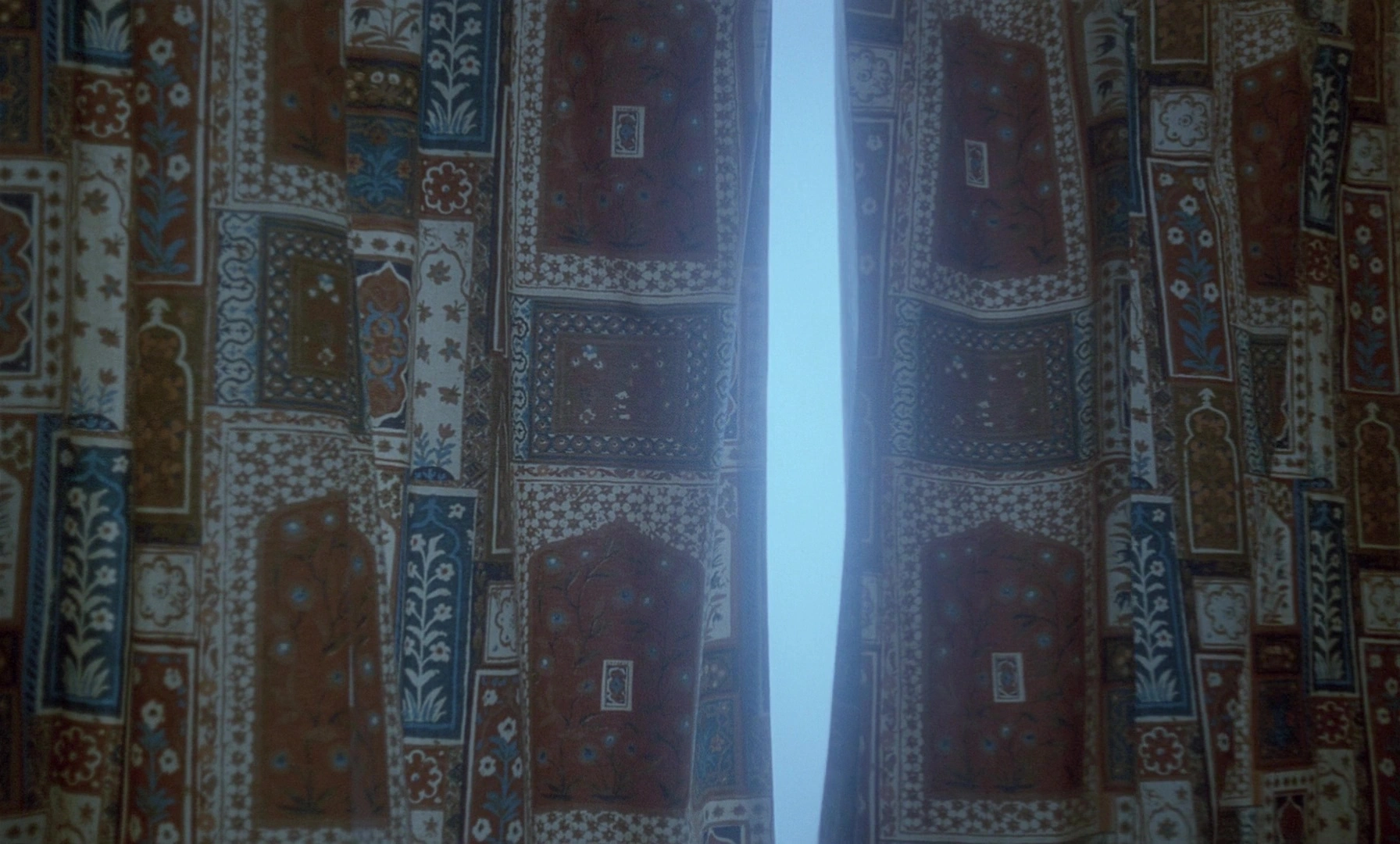
Corps à cœur (Paul Vecchiali, 1979)
The pair Corps/Rosa exemplifies what could be called the Vecchiali Problem: here is a filmmaker of the first rank, whose films in some nagging way fail as works. At least, their potency is undeniable at the level of the sequence, but rather uncertain on the level of the whole, and they tend to evaporate rather than conclude.
There is an irony here. Vecchiali’s fetish term, which he preferred to ‘mise en scène’, was écriture filmique. As is proper to a category of poetics, this had a ‘you know it when you see it’ character, but involved a symbiosis between whole and part. ‘People often ask me, what do you mean by ‘cinematic writing’? It’s close to undefinable, but it’s when we can say that each shot in the film depends on all of them. We cannot remove a single shot from the film, because that would completely destroy the film.’ [2] It is thus curious that Vecchiali so often made films where precisely the interest of the parts exceeds that of the whole. With the luminous exception of Once More, Vecchiali never produced a film with the unbreakable internal unity which he claimed as the only register of a true cinematic work. What he did produce was a way of filming and a collective ethos, which lashed together a group of extraordinarily talented people through technique and taste. What one sees in these films is above all this technique and its winsome results. ‘Plot’ becomes a scaffolding, a set of rails for the camera; ‘character’ a bulwark against the comédien drifting towards psychology, expression, interiority — in short, towards acting. These films need plot and character in order to get things moving, in order to have something to shoot, and to give a certain constraint (for without constraint, as Vecchiali insisted again and again, there is no freedom). This does not mean that it is then clear what to do with the pieces you have set up; yet a film must have an end.
Nowhere is this problem more apparent than in Corps à cœur, shot in and around Vecchiali’s home at 33 Rue Danton, Kremlin-Bicêtre. Corps à cœur is a film of abundance, abundance won from thrift and collective desire. At 126 minutes, it is the longest Diagonale film. Capacious in scope and style, it takes pleasure in extraneous elements and is the only Diagonale picture that really gets to roam. What it is not is a film of the kind of harmonious necessity indicated by Vecchiali’s desire for cinematic writing: you will not convince me that one could not cut a single shot from the languorous twenty minutes of holiday footage in the south of France near the end without ‘destroying the whole’. The narrative is an ingenious construction, but primarily for reasons of economy; as Vecchiali relays (or mythologises), the genesis of the scenario lay in the affordances of his immediate environment; there was a garage next door and a pharmacy down the street who would let him film for free, so Hélène Surgère would play the pharmacist Jeanne/Michelle and Nicholas Silberg a mechanic who lived in Vecchiali’s house. A love story at low cost and maximum ease. [3]
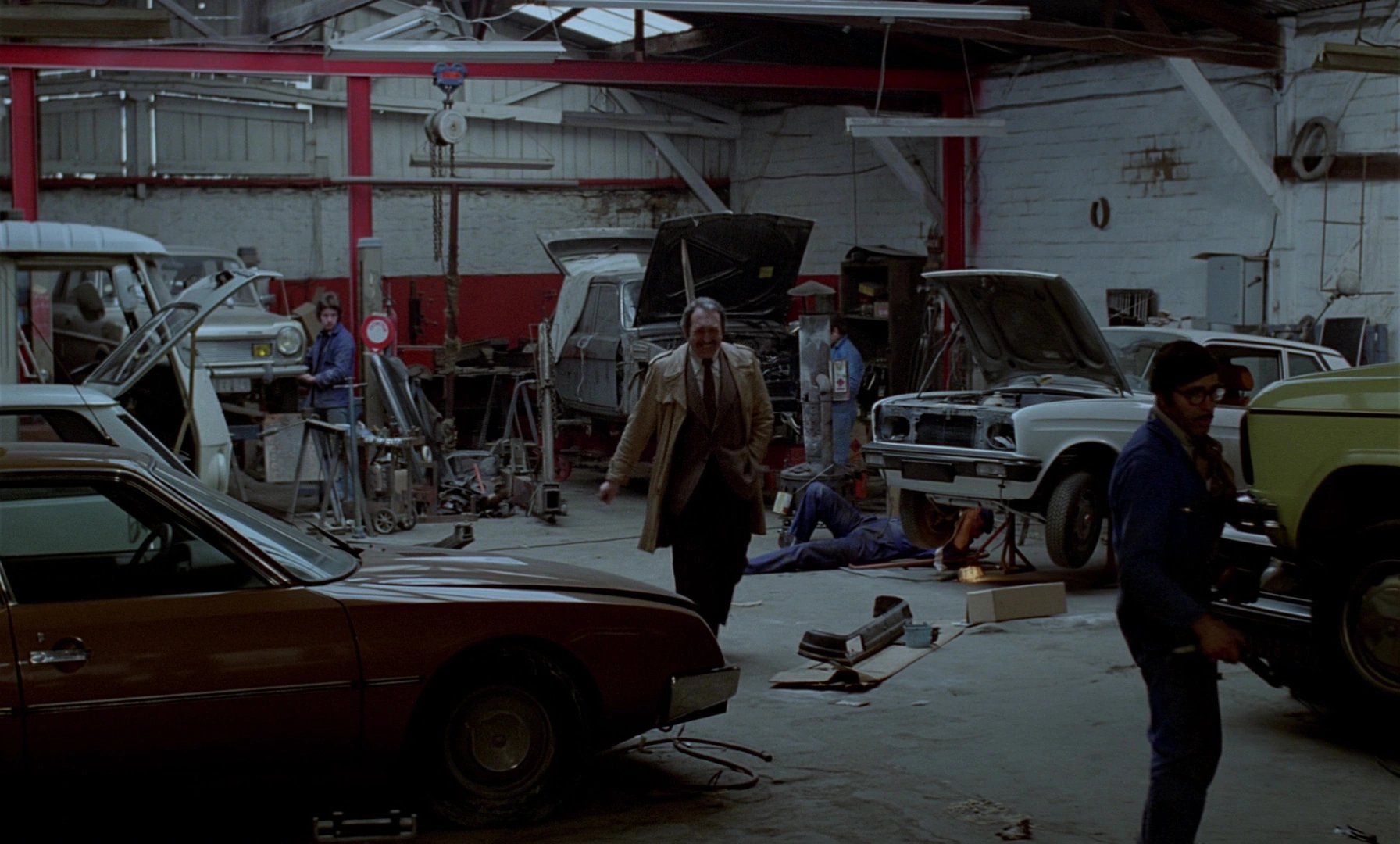
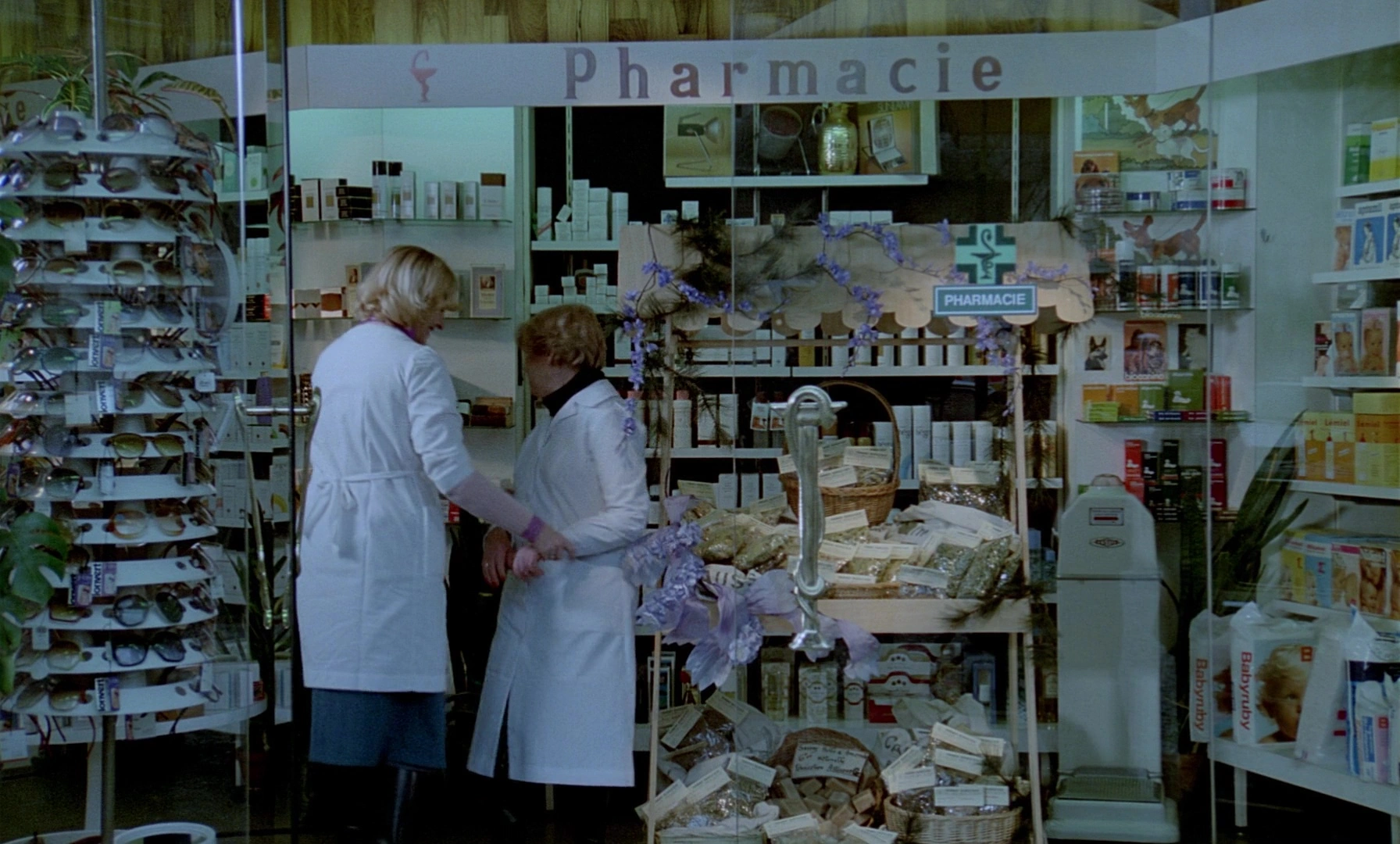
This narrative of the production of Corps à coeur does not sit entirely comfortably with the evident importance that Vecchiali attached to his central ‘tragedy’, which he imbued with many details from his personal life (the scene where Silberg’s Pierrot comes on too hot and heavy with Surgère’s Jeanne/Michelle and is rejected was drawn from a failed conquest of Vecchiali’s own, while Pierrot’s relationship with his mother dramatizes Vecchiali’s own family history). But perhaps Vecchiali’s cast could see very well what was being produced in the interstices of the explicit scenario. Surgère never liked the character she plays in the film, the mercurial and morbid Jeanne/Michelle — ‘I found her to be an idiot, an idiot. And her desire to die, I found stupid. Stupid!’ — but accepted the script as a way for the film to traverse what it had to:
A love story leaves the viewer behind. Love stories aren’t very interesting, you know? Ultimately it’s always the same thing: it works or it doesn’t, that’s all there is to it. It stops there. So I said to him [Vecchiali] that, since we’re making a film about a love story or at least about a couple, what matters is everything that surrounds this love story, everything that throws it into relief… Many directors — especially young directors today, in TV and so on — focus everything on the central characters, whereas in fact it’s the secondary characters that give a film flesh. It’s not those who are at the centre of the close-ups who make a film, it’s everything that’s outside of the close-up. Which is to say that a film is equally made up of the décor, the back alley, or the table. Think of Bresson, where an apple on a table can have more importance in a dialogue than the eyes of the person that speaks the phrase. You know? That’s the cinematic relation. [4]
Here the actress intuits something that was at the core of Vecchiali and Diagonale’s conception of cinema, or rather their practice of it: films have a background (have an environment, have extras, have weather) in a way that no other art does. Once it is grasped that the relation character-background is ‘the cinematic relation’ par excellence, points emerge which stand aside from didactic intention: for example, space is never a mystery in Vecchiali’s cinema — it is already there, available, which is why the sequence shots can traverse it.
Vecchiali was able to orchestrate his environment such that a composition emerged from the surroundings in which he lived and worked, through sequence shots that demanded a kind of artisanal cunning, and which served to multiply the relation character-background into character-actor-background, a more complicated exchange, and more fecund.
He’d transformed his street, which was an alley, and even the whole of Kremlin-Bicêtre, into a cinema set and was making povero, artisanal cinema there. He made everyone act: the greengrocers, the baker, everyone! And he did it with immense virtuosity. In Kremlin-Bicêtre, with mostly non-professionals, he managed to do Ophüls! These crazy, masterful reel-long sequence shots. Everyone learned a lot by watching him do it. Besides, there was no question of redoing a shot two or three times, there was no money to pay for the film or to extend the shooting plan. [5]
This technique imposed great rigors, and Vecchiali’s actors often recall their struggles with his intricate floor markings and highly prescribed shot set-ups, with barely the film needed for one take. But for Vecchiali, this very anxiety produced a laudable effect:
You can't imagine what sequence shots are like for them [the actors], what with all the positions and movements they have to memorize. [...] Rehearsals lasted six hours, and filming two. In the sequence shot — and this is what makes it interesting — the actors are kept so busy that it prevents them from speechifying. They are careful not to cast a shadow, not to do this or that, and their anxiety is communicated to the character. […] The dichotomy between the character and the actor is strong in the sequence shot.’ [6]
The comment is à propos of Once More, but applies to many brilliant moments in Corps à cœur; a sequence like the incredible crane shot that travels up to the roof of Vecchiali’s/Pierrot’s house for the mother’s birthday dinner properly stops the heart, both on a technical level (‘how did they pull it off?’) and narratively; one believes in these characters at the same time as one marvels at the players. In short, Vecchiali’s technical rigor, his insistence on ambition and craft, helped to produce what Pascale Bodet has called an effect of ‘metamorphosis’ in Vecchiali’s cinema, a flickering between different regimes of playing, and moreover between the actor as actor and the actor as character. [7] The viewer is likewise brought to flicker between living with the characters and taking pleasure in the acting body, internal to the duration of a shot. Thus as Pascal Cervo observes: ‘There are ellipses inside of certain sequence shots, and I take a real pleasure in watching the actor change state, in seeing the illusion of the character reform before my eyes, in seeing them disappear and come back…’ [8] The specificity of Corps à cœur is that one sees the same flickering with respect to both a collective body and a place. Just as the Vecchialian sequence shot exhibits a superimposition between actor and character, here the shooting locations themselves oscillate between being real places and sets. The achievement of Vecchiali’s mise en scène was to have discovered a secret fulcrum point, almost paradoxical, between an objective eye on bodies and space and the subjective gaze of his roaming contemporaries, between the stage and the street. Whence a certain genius of the middle distance.
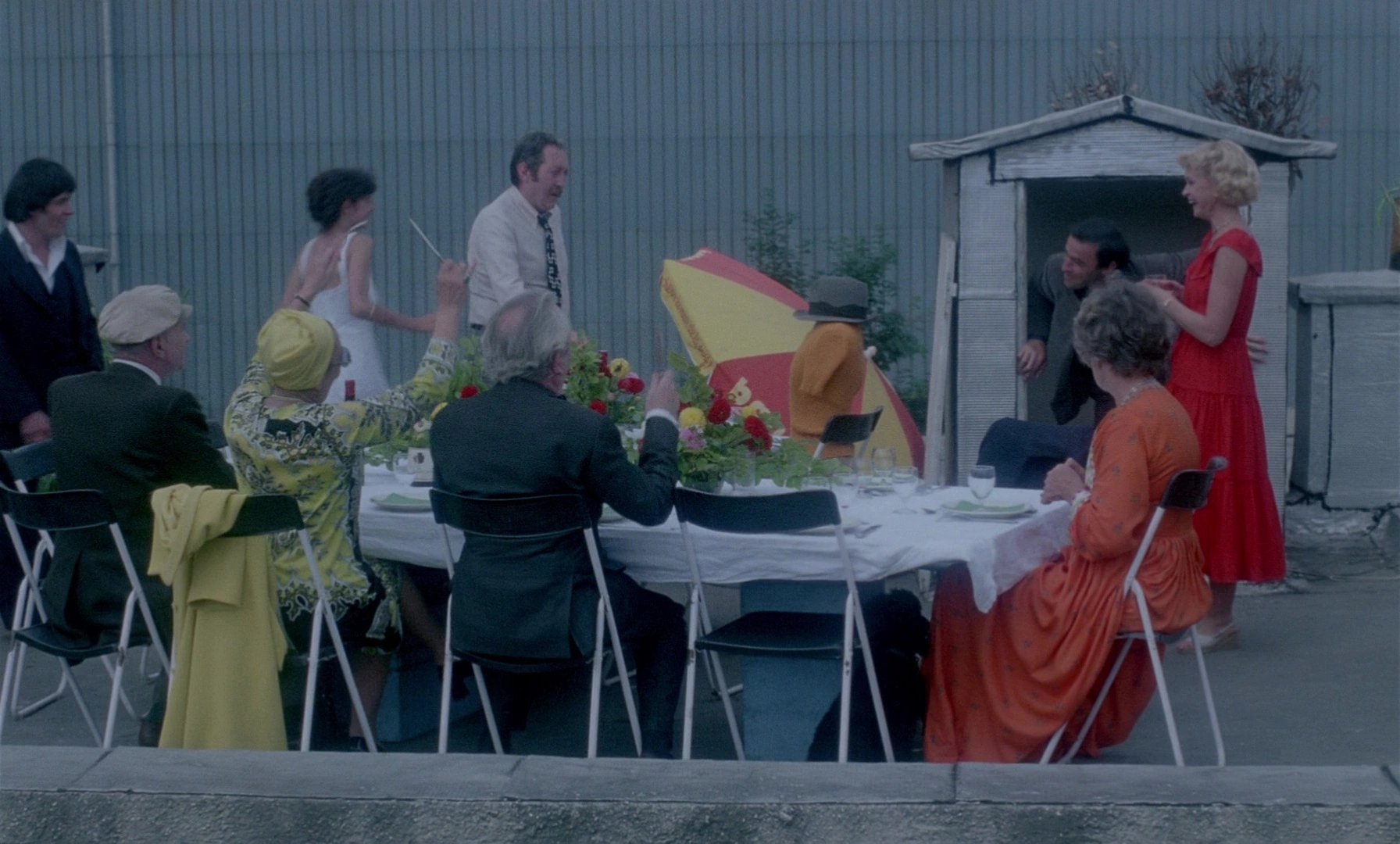
Corps à cœur exemplifies the aesthetic tensions inherent to this method. Vecchiali starts from where he is (always a virtue), and the alleyway behind his house serves as an aperture through which to film the world. But rather than any documentary effect, the result is to turn this real place into a stage. It is as if he has transmuted his own most intimate space and that of his neighbors, friends and collaborators, into something like the perfect back alley set of Preminger’s The Man with the Golden Arm. Vecchiali’s operation consists in cinematizing: he is thrilled to mount a little travelling that goes from the garage next door to his home into the alleyway where he lives; but the gesture here is not to bring the world into his house, it is to turn the garage and adjoining street into a set. That is, the very shot which tracks back from the ‘outside’ to his home is, in fact, a way of extending his private domain.
Now, what is the virtue of this gesture, to have made one’s own lived environment into a set, one’s backyard into a backlot? In Vecchiali’s tribute to Grémillon, which reads as a kind of manifesto for Diagonale, we find the following imperative: ‘To regurgitate instances of life. To redirect them. To make the most of emotions, even the most negative, in order to help the actors to make a spectacle out of them.’ [9] A curious idealism: emotional encounters exist in order for them to be transformed into cinema. Indeed, that is the reason to be alive, for the imperative continues: ‘To wear out your life, film after film, searching for the secret of images.’ [10] Here we should make note of what Vecchiali himself often seemed to refuse to acknowledge: the 1970s was not the 1930s. This act of obstinacy structured his life and work, and Corps à cœur displays both its tremendous efficacy and its limits. In the ambition to produce ‘Grémillon in a garage’, there is an active refusal to admit that one is travelling in the opposite direction from that ‘working human being’ to whom the film is dedicated. Grémillon was faced with sound stages and had to find his way to the vitality and emotion of life as lived. Vecchiali started with real streets in a real suburb at a real time, had to construct all the artifice that was simply part of the lifeblood of thirties cinema, and then try to get from that reconstructed artifice to the vitality and emotion his idols had created within it. It is at this last step that Corps à cœur stumbles, and one could suspect that what it stumbles over is history, that mute terrain which Vecchiali made it his business not to countenance. For the world is not only a stage, and to believe that it is is in some measure to lose the world.
If this were all, it would be a sad tale. But the account is not so settled; Vecchiali’s refusals, his blind spots even, are what allowed these films to exist; ‘Let’s talk History later… much later!’ [11] For all that Skorecki was correct to gripe that Diagonale productions tended to only show ‘a real film studio installed in a fake house’, [12] we can hear in this same judgment a famous definition of poetry. Rather than shooting fabricated gardens with real films in them, for Vecchiali the cinematic operation is to turn a real garden (or suit, or lover) into a filmic object. The failure of the ‘tragedies’ in these films is of course connected to this auto-cinematizing ambition; yet if the fatal conclusions they project do not entirely move us, the vitality they show is real. This is to say that these films proclaim themselves to be obsessed with death, but what they show is life. And under a condition: life = filming. Note: not ‘life = cinema’. No, Vecchiali seeks an originary identification of living with filming, to unite them in one activity. Vecchiali mounts films that end in death because he wants to show this identification between filming and living, and thus to have the unity of a film be like that of a life. But, profoundly, he is not a filmmaker who believes in death; whence his propensity to have characters walk from one film to another, to intimate a transfilmic (and thus sempiternal) existence. His desire is that they can always be picked up again, that they remain on the other end of the phone. There is no pathos of finitude here. Thus the curious conviction that emerges is that films do not end, any more than life does.
So it is not true, as I said at the start, that Vecchiali was a great filmmaker who failed to make great films. No, what he did, perhaps despite himself, was fail to make works so that he could make films. Or rather, so that he could film. What is at stake here is an original conception of cinema as a way of life, in contradistinction to a conception of the completed cinematic work. Cinematic writing becomes a register of economy, not totality or completion. Shooting fast, for example, can be essential to preserving the purity of the line drawn by the camera; that a film is integrally composed does not mean it is laboured, quite the opposite. It is thus proper that the conclusions of these films register as shrugs, for all that they really intend to say is: life — making films — continues.
Notes
‘Des points des rendez-vous’, in Paul Vecchiali: Once More (Éditions de l’œil, 2023), 101–128 (p. 128). An extract is translated as ‘Meeting Points’, in this issue, and a full translation can be found at https://narrowmarginquarterly.com/text/meeting-points.
La Cinetek, Paul Vecchiali à propos de Morocco de Josef von Sternberg, 7 June 2022, https://www.youtube.com/watch?v=HitF0KKkBcQ.
See Mathieu Orléan, Paul Vecchiali, la maison cinéma (Éditions de l'œil, 2011), p. 83.
Jérôme Raybaud, Entretien avec Hélène Surgère sur Paul Vecchiali, conducted 17 July 2009, published 18 November 2021, https://www.youtube.com/watch?v=FXgs6RppgM4.
Interview with Marie-Claude Treilhou, conducted by Eric Biagi and Andrea Inzerillo for Queer Sicilia Film Festival, 2021, https://www.another-screen.com/simone-barbes-or-virtue.
‘Le branle des évidences (2)’, La Lettre du cinéma, 19, Winter 2002, 20–55 (p. 29).
‘Des points des rendez-vous’, p. 122.
Ibid., p. 111.
Vecchiali, ‘Les deux mondes’, ACinéma, 276 (December 1981), 40–41 (p. 40); translated in this issue as part of ‘Diagonale on Grémillon’.
Ibid., p. 41.
Ibid., p. 40.
See Louis Skorecki, ‘Chansons, chansons’, Cahiers du cinéma, 319, January 1981, 47–50 (p. 49); translated in this issue as part of ‘On C’est la Vie !’.