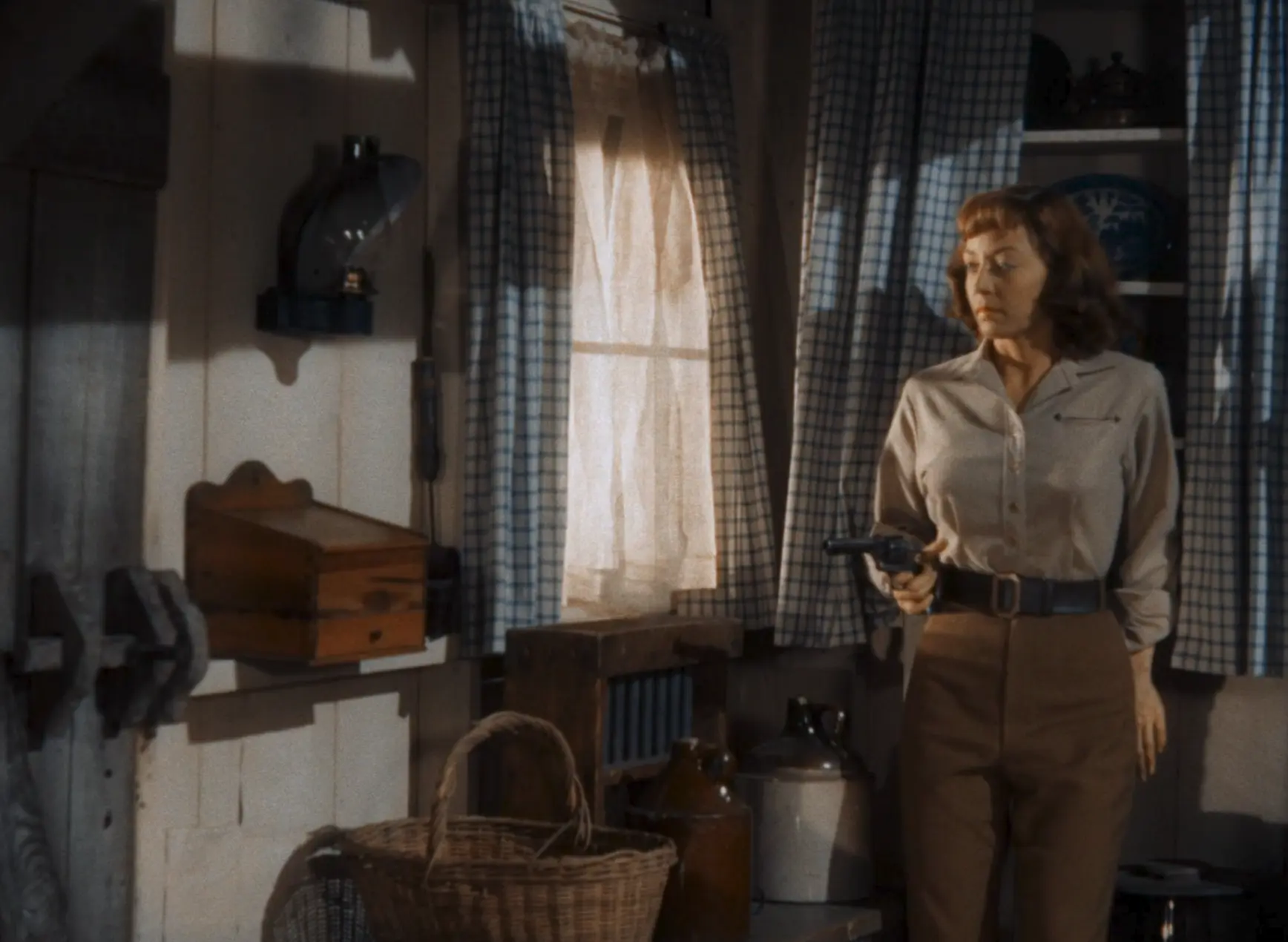
Hellfire (R.G. Springsteen, 1949)
Often the westerns of R.G. Springsteen are stories of those living badly, of men loaded with alcohol, sore at the world, and passing through life as though already dead. These films are also often Christian parables of redemption: simple tales of a bad man’s transformation into a good one. At the beginning of Showdown (1964), Bert (Charles Drake) starts a drunken brawl over a game of poker. Subsequently chained by the neck, along with his longtime friend Chris (Audie Murphy), to a pole in the center of town, Bert is filled with shame and regret. He promises: ‘This is the last time. You hear? No more drinking and gambling. When we get loose tomorrow, we’ll head north and get a good job. A man can’t get much lower than this.’ Chris: ‘Have to work at it.’ The penitent man’s vows are the clichéd remarks of many a drunk promising for the umpteenth time (and certainly not the last) that they will change, and things will get better (a remark frequently met with skepticism). At the end of the film, Bert is shot in the back yet dies with some degree of pride, having just redeemed himself in his friend’s eyes. In these films, salvation is earned through action, forgiveness received only by virtue of the things one does. The possibility of redemption is thus mixed up with the Protestant’s faith in good work and self-sacrifice. Despite their overt moralism, Springsteen’s films identify the transcendent with the immanent, the spiritual with the material: one unearths the divine in deciding to act in a secular world that offers no clear guidance. In this, they returned Americans to an older tradition for which redemption could be found nowhere but in the world itself. Light shining through a windowpane and onto a jug pouring milk. Hollywood’s Vermeer.
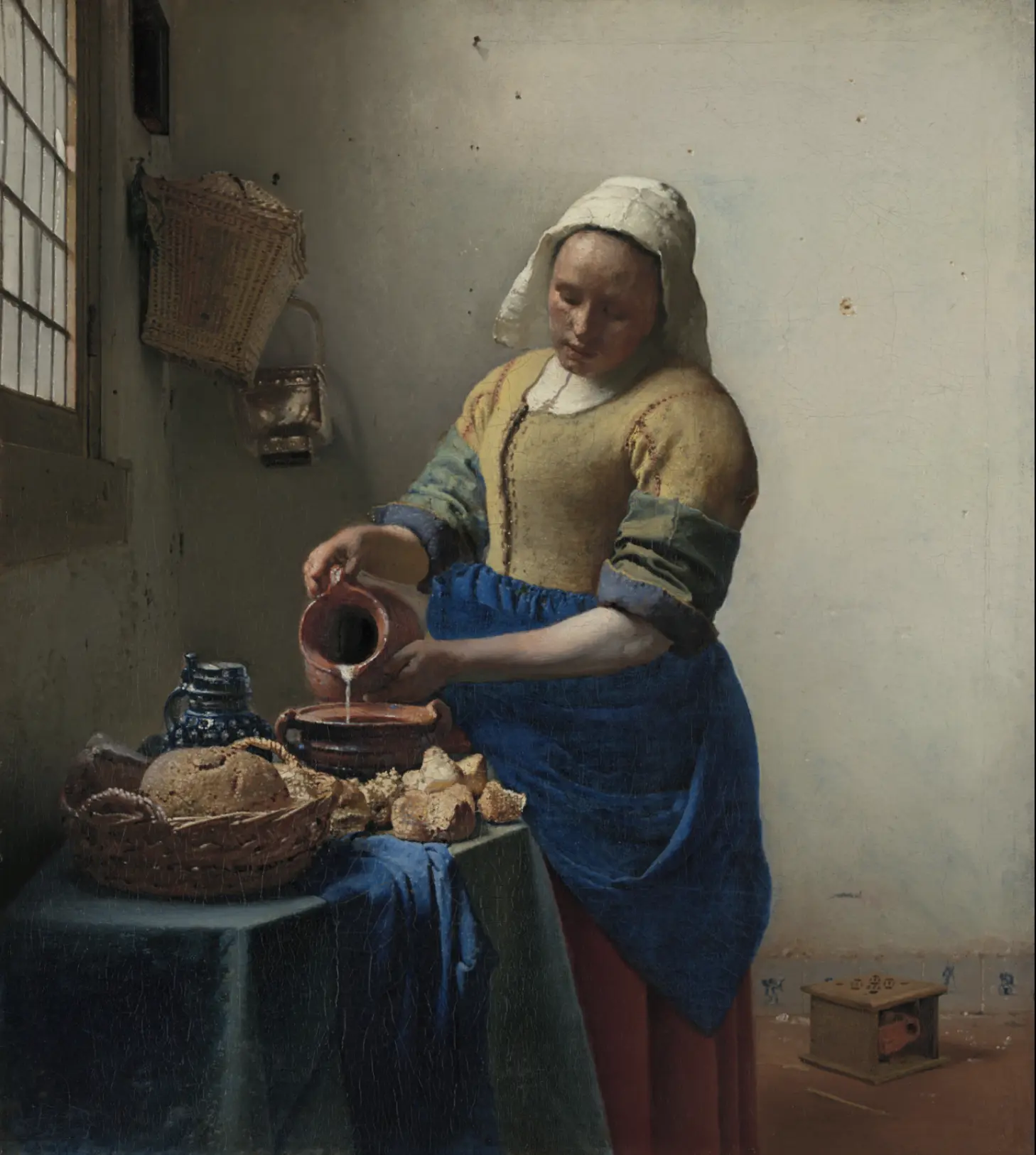
Het melkmeisje (Johannes Vermeer, c. 1658–1660)