The mountains are still here but Eurydice isn’t. [1]
—Cesare Pavese, ‘Inconsolable: Orpheus and Baccha’
Some notes on Budd Boetticher’s Ranown cycle.
First, perhaps more than anything these are great pedagogical films. They impart lessons both narratively — ‘Don’t hurry’, ‘Take responsibility for your own enjoyment’ — and cinematographically — ‘Genre has a liberatory function; there’s so much it allows you not to say’, or ‘Write the scene to fit the rocks and not vice versa (which is impossible anyway)’.
Second, taken together, they may be the paramount cinematic exemplar of the form of the series, and thus pose compositional problems that are serial in nature: the relation between the canon and the row, its transformation or inversion, etc. A full analysis of the cycle would have to draw on resources that are musicological as much as cinematographic.
This allows the cycle to concern itself with the relation between variable and permanent elements on a different level from that afforded by a single work and its internal logic. For example, it is important that between films every player changes except for Randolph Scott. [2] Of course, the other figures that appear are similar enough that one has the impression, often, that they have popped up in prior entries, but the resonances come from repeated dialogue and scenarios, or are of the order of resemblance (similar types of player). These are the variable elements with respect to which both Scott and the natural environment (the rocks) are rendered as material constants.
The effect of this is a resonance with the Neoplatonic doctrine of the ‘double act’, i.e. a formal distinction between internal activity (say, that in virtue of which fire is fire) and external activity (the emanation of the heat of the fire towards its environment). The cycle performs an analogous stratification with respect to the concept of rhythm: we are presented with both intra-filmic rhythms local to each entry in the series (with attendant technical questions, e.g. around montage, here beautifully handled of course, or dilation–contraction) and an inter-filmic rhythm proper to the refrains and refractions of certain pieces of dialogue and set (not to mention ‘themes’) between the different entries in the series, or on the level of the cycle as a whole. It is the second inter-filmic rhythm which is unique to the Ranown cycle.
How then is this series arranged? There are different divisions that one could make, but here we will follow the obvious, linear (chronological) one, such that the series is formed in three segments:
One could quibble with this arrangement, not least because there is contestation as to which films are to be properly included in the cycle. The westerns that bear the name ‘Ranown’ are made from conjunctions of up to five key elements: Randolph Scott in the lead, Budd Boetticher directing, Burt Kennedy scripts, Harry Joe Brown handling production, and Lone Pine as the setting. But strictly only entries 2, 5 and 6 contain all of these, and sometimes Decision at Sundown and Buchanan Rides Alone are not counted as members, such that the core of the cycle is reduced to the four lonely trail westerns Seven Men From Now, The Tall T, Ride Lonesome and Comanche Station (the only entries officially scripted by Kennedy, who also did an uncredited rewrite on Charles Lang’s screenplay for Buchanan). We shall nonetheless consider the cycle as six films pleasingly divided into three segments of two, and follow convention and Boetticher’s judgment in excluding the orphan of the series, Westbound (1959).
If these films have, justly, become so celebrated that they have assumed an almost totemic character for contemporary cinephilia, if they can seem less like an example of the B western than its fulfilment, it is because over the course of the series they perform, through repetition–variation, a gesture of self-abstraction: the very demonstration of constraint that is the signal advantage of ‘B’ or genre filmmaking is achieved internally to a single work. This achievement is inseparable from an industrial position, a relation to work, now increasingly precluded. The Ranown westerns represent four years of grace commencing with the twenty-third film of a career, [3] a possibility afforded by the classical model of Hollywood production which has been most essentially lost today. What follows is an attempt at the task imposed by the Ranown cycle: to consider each of the entries as parts of a larger whole.
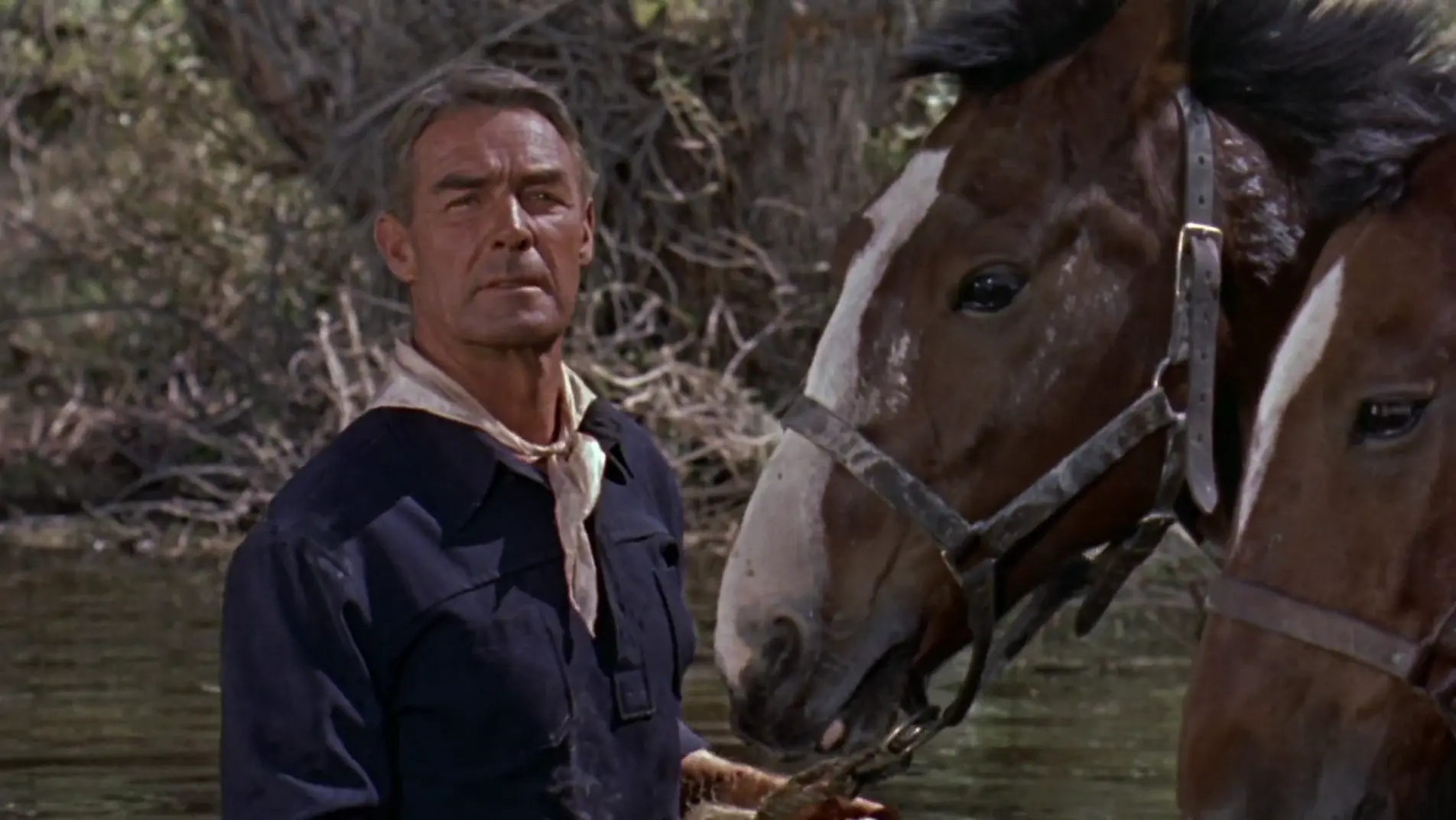
Seven Men From Now (Budd Boetticher, 1956)
I
The first segment (Seven Men From Now, The Tall T) already establishes the essential thematic and formal constituents of the series.
On the thematic level, the core of the research program carried out by these films will concern the relation between a particular natural environment and a social circulation that is not so much homoerotic as homosocial. Doubtless, of course, love is at work between Scott and his primary antagonists, and the complexity of this fatal relation gives the films much of their power, but the tension at stake is not sexual; it rather concerns the rapport between different planes of consistency that can be applied to the company of men, viz. those of the social bond and the Law (both of which are governed by — competing — norms), and that other more solemn fundament that is Nature (which has no norms). The function of the one woman who appears in each entry in this segment will be to throw light on this homosociality through the exhibition of its limits. It is crucial in this respect that the solitary female should be an ‘older lady’, either implicitly (Seven Men From Now and Gail Russell’s wrenching backdated performance) or explicitly (The Tall T and Maureen O’Sullivan’s spinster), and that they will be put into relation with a creaking Scott protagonist that is past marrying in that his true love is already deceased. While these will be the only two entries in the cycle to hold forth the possibility of romance (this vanishes from the later entries), said romance will have nothing to do with reproduction, and thus the possible consummation at stake is not tied to a projected future. This refusal of origin plays off another important thematic element, which is that each film (and this will be true for all six entries in the cycle) begins après coup: they commence after some crucial event that will only be partially explained, such that the first minutes of the film feel like the setup for a flashback that never comes. [4]
On a formal level, the first segment establishes a paradoxical proposition: these are chamber westerns, especially when they’re in the open air. They will each concern a limited set of characters who traverse a narrow, circumscribed space, which functions as such even when that space is, say, a whole plain. For all their expansiveness, the Ranown films are thus inevitably somewhat claustrophobic, in that the exteriors through which they pass have no outside. The space of the second half of The Tall T is exemplary here: by oscillating between reverse shots which show all the grandeur of the location and then focusing in on the shabby circle of rocks around which the characters pace (and the interior of the interior, the shack), the natural environment is rendered as a stage; one feels that there is no ‘behind’ to these objects, that as soon as one stepped around them there would be sawdust instead of a desert. This relation between exterior and stage, as well as a certain continuity between the western and the costume drama (an evident link that is rarely brought forth in cinema-critical discourse for gendered reasons) as much as the ‘history film’, shows clearly why Straub–Huillet’s films are quite related to these works. Qua chamber western, they also bear an important proximity to Dreyer. In any case, the justly celebrated ‘coffee in the wagon at night’ scene in Seven Men From Now only shows, by contracting the space, that all of the exteriors were also enclosures (a political theme).
The after-the-fact character of the films’ narratives is tied to the essential wrongness of Scott’s protagonists, who cannot leave a past that will be revealed in speech only late in the running. In this respect Seven Men From Now establishes the matrix for the rest of the cycle, not least by introducing the foundational characteristic of the various figures that Scott will play: they are stuck, literally — held captive, in the desert without a horse, in jail, forced to travel with unwanted companions — and ultimately figuratively — in the past, with the dead. Throughout the film, as will be the case for all the Ranown westerns, the characters that surround Scott inveigh upon him to move, and all his gestures are of refusal. The unity of the first segment is then given by two climactic scenes that end their respective films by juxtaposing this stuckness with the death of a more mobile antagonist who has earlier saved or spared Scott’s life. Indeed, holding the first two entries side by side, we already see the adumbrated nature of the figure that Scott will play throughout the cycle: he is static, pathologically so, but can move from entry to entry; his antagonists on the other hand possess greater mobility within each entry but are trapped on the plane of the single film, where Scott will ultimately pin them, like butterflies. Boetticher later claimed this to be the basic scheme of the cycle, even if his description fits some entries more directly than others:
All the films with Randy Scott have pretty much the same story, with variants. A man whose wife has been killed is searching out her murderer. In this I can show quite subtle relations between a hero, wrongly bent on vengeance, and outlaws who, in contrast, want to break with their past. It’s the simplest relationship that exists in the western, but also the most essential. [5]
The final shootout in Seven Men is the clearest expression of this wrongness. It also establishes a schema both geometrical and ethical that will be reprised throughout the cycle: Scott and an accidental antagonist-companion will find themselves on either side of an object of desire (person or cash) which for the former represents the past and for the latter the future, and in all but one iteration Scott will slay his antagonist to prevent them from getting at it (more on the exception below).
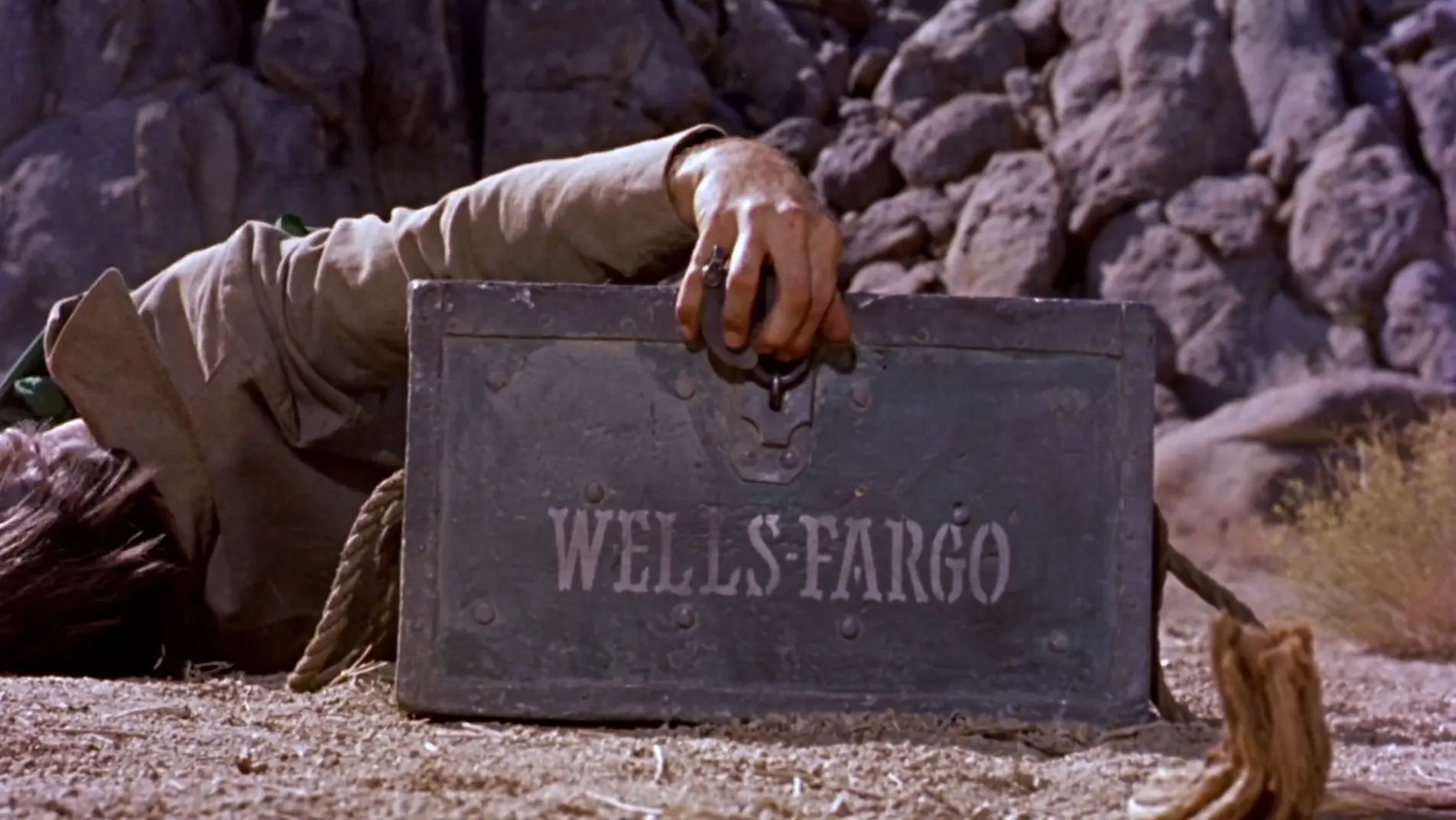
It is worth considering the first appearance of this scheme in detail. Scott’s quest for revenge has brought him to a point of desperation, stuck in a clearing of boulders with an injured leg and only his rifle for a crutch. Nevertheless he has with him a lure: a Wells Fargo lockbox containing some twenty thousand dollars stolen in the hold-up that claimed his wife’s life as collateral. He refuses the possibility of rescue and decides to wait and set a trap for the surviving two of the six robbers from the gang he has been pursuing throughout the film: Payte Bodine and an unnamed henchman, who will certainly return to claim the box. He waits. After some interstitial scenes, we return to the clearing to see how this plays out. In the event, Scott is saved by Lee Marvin (the film’s primary outlaw) and his friend Clete, who have shadowed Scott hoping to steal the lockbox after the anticipated showdown with Bodine and his men. Marvin shoots Bodine, and, in a mysterious act of exuberance, also Clete, so as to proceed to a solo confrontation with Scott.
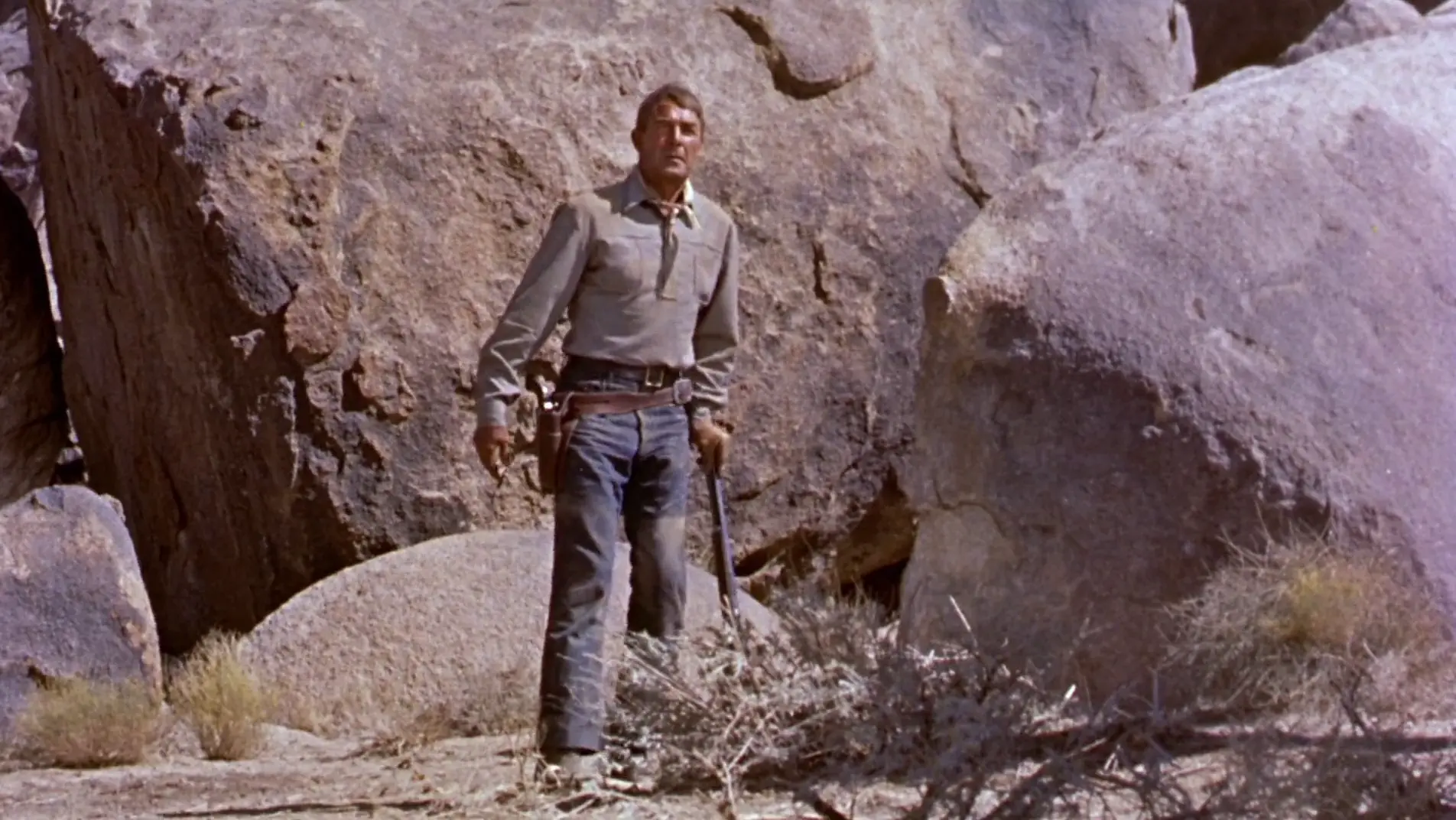
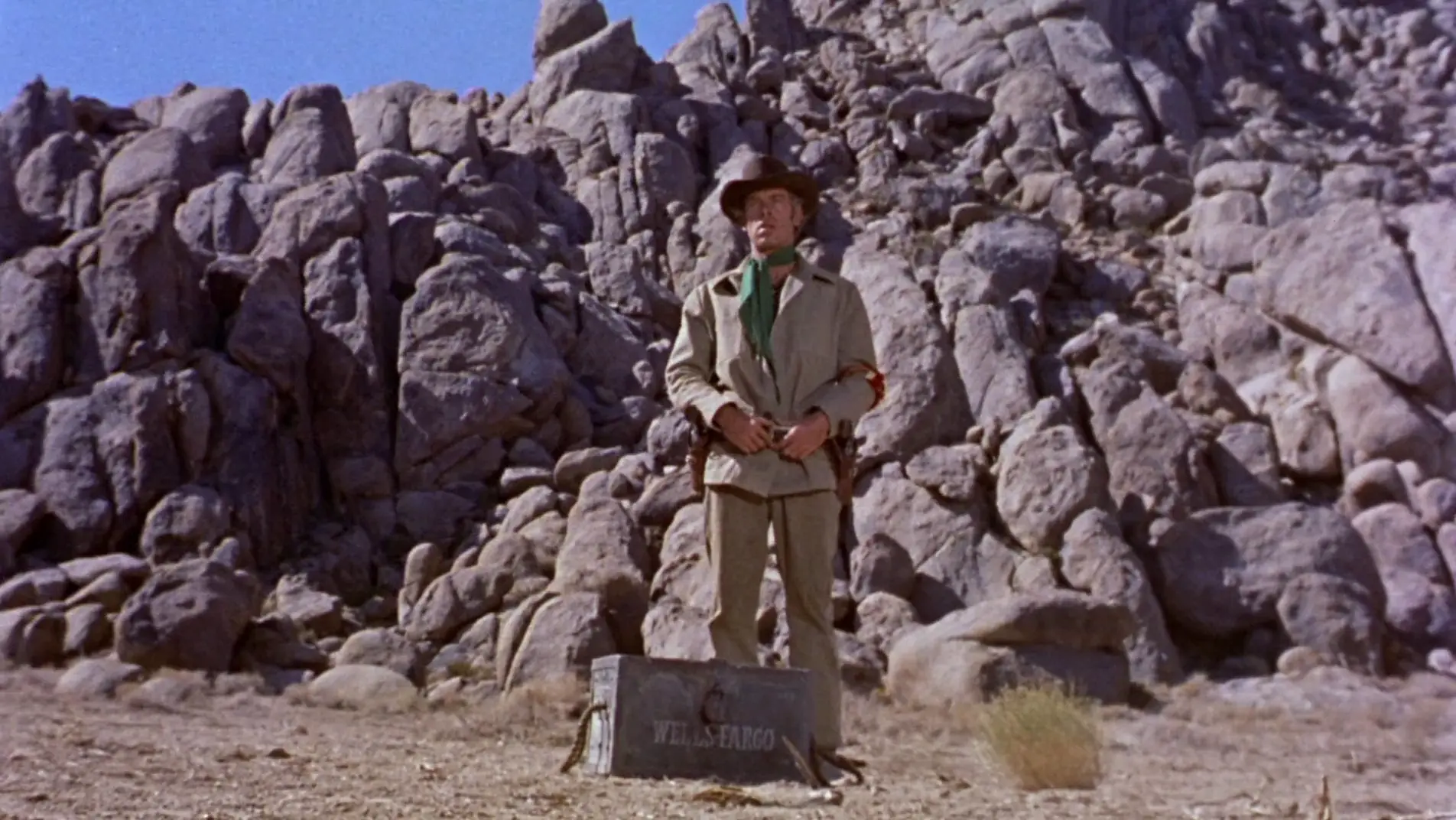
We know how this will go: Marvin, the Seventh Man, as the opening song has told us some seventy minutes earlier, ‘will die’. The moral situation here is, however, ambivalent. Marvin has just saved Scott’s life by vanquishing the real villains of the piece, his wife’s murderers. He now wishes to claim the spoils, admittedly stolen, but not by him. Scott will defend the same, but cannot exactly do so in the name of the Law, as he is no longer the sheriff, not to mention that Marvin has committed no crime. What we are given to understand is that the felt necessity that Scott prevent Marvin from getting to the money does not come from his legal authority, nor certainly from a desire to protect Wells Fargo’s pocketbook, but because it is vital that nothing good can have come of his wife’s death, that no one can profit from it, that no future can issue from it. Marvin recognizes well the absurdity of this situation: ‘I don’t suppose there’s a way of getting at this box aside from going over you?’ The response is only a blank expressioned counter-shot; we get the message. Scott here is a rock to be traversed, and he understands his immovability to be a brute natural fact. But this is a lie: he chooses not to move, and to gun Marvin down.
Cinematographically, everything is calibrated to prevent an interpretation of the fatal event as justice served. Indeed, the four minutes or so that run from Marvin’s shooting of Bodine to his own downfall are as precise and tragic as any other sequence from Hollywood’s late classical period. The liberty of Marvin’s gestures — the little skip he makes descending from a rock, his lighting of one cigarette from another hanging in the lips of his dead friend, his louche resting of his thumbs on his belt — are contrasted with Scott’s static lean on the rifle. One the image of freedom, the other of finality. Rhythm is crucial to achieving this effect. Marvin is given a modulation proper to a protagonist: long and short shots, space to breathe, action and repose. He strides out into the clearing and Scott appears with a ghost train lurch. Throughout the conversation that follows, Henry Vars’s hungry, nostalgic score — the first major opportunity for the ‘Polish Gershwin’ after years in émigré purgatory — is placed in the sequence such that its central six-note refrain always resolves on Marvin, and not on our putative hero.
An essential move is then made in the arrangement of Marvin’s death. By not seeing Scott shoot, we have a terrifying impression of Scott’s speed, especially when contrasted with his static posture; the counter-shot with a smoking gun only comes after we see Marvin stagger backwards, his palms open in complaint. [6] It is partly as a consequence of this that we experience the event as Marvin having been shot unarmed, that is, shot down, whence his pure shock, his little trip (the doubled edit here especially brilliant and modern), but also the condemnation the viewer feels towards Scott. As John Winn has observed, it is impossible to take Scott’s side in this affair.
In The Tall T, we find a variant of this ethical dispositif, in which Scott kills his opponents to defend money/propriety after the main action has been completed. This repetition of the basic confrontation, however, introduces an important variant, ripe with mythological connotation, which will echo in various ways through the cycle: in the dividing of the two figures by the object of desire, one will have his back to the other, and it is in the act of turning that they will perish.
The buildup to the confrontation mirrors the final scenes of Seven Men, but at a different pace, with the last forty minutes of The Tall T’s seventy-seven being set in a single clearing. This time the lure is O’Sullivan, who is the subject of a kidnapping plot. Richard Boone’s Frank has ridden off to fetch the ransom for her return, and left his companions on guard, both of whom are then killed by Scott through deceptions (seduction, a trick of the ear). In this sequence, Scott appears as something close to a slasher villain, picking off his prey and dragging them back to his lair. Much as with Marvin in Seven Men, Boone then returns with the ransom in a wide shot, the sole character in The Tall T besides Scott who is allowed to straddle the horizon in this manner. The protagonist and the antagonist belong to wider spaces than the rest of the cast. The buildup to the final confrontation again inverts viewer identification, momentarily making the ‘villain’ into the protagonist. [7]
Whereas the confrontation between Scott and Marvin could be read as that between sad and happy affects, here matters are more complex. Boone has saved Scott, towards whom he expresses a touching, wounded desire for approval, and even companionship. At the same time, he has earlier in the film participated in one of the most shocking events in the cycle, the killing of the ‘station man’ and his son, and the dumping of their bodies into a well. He has kidnapped a woman and expressed distaste for her probable murder, but not much intention to prevent it. He is both a less redeemable and a more poignant figure.
Stepping into the circle carrying the cash, Boone finds his companions dead and is surprised by Scott from behind. Scott instructs him to drop the money and turn around; he does the former but not the latter, reasoning correctly that Scott will not shoot him in the back. Thus he carefully mounts his horse to ride off. We see in the slackening of Scott’s shoulders a crack in his recalcitrance. He is willing to let Boone have a future, on condition that it not come from ill-gotten profit.
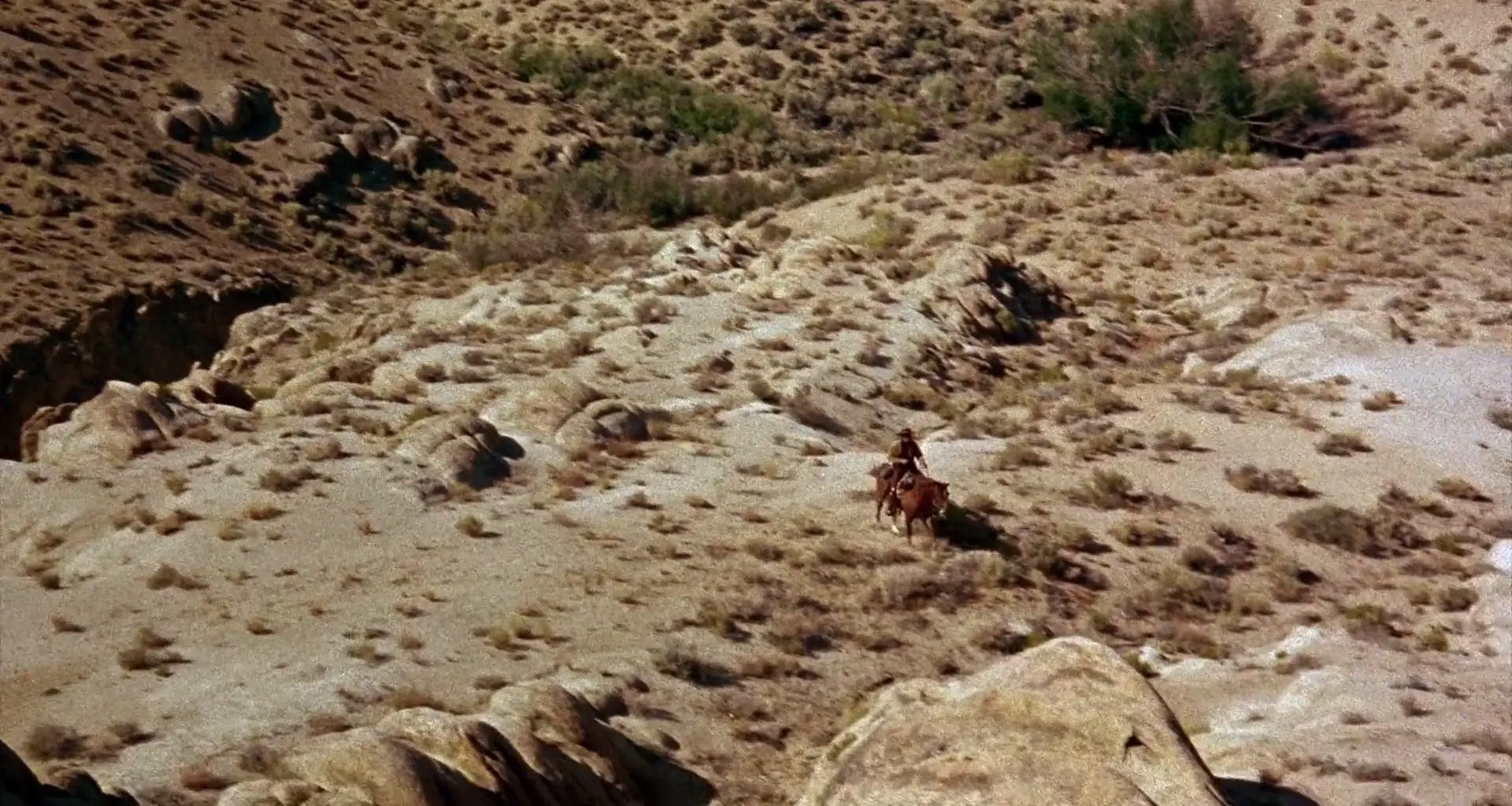
The Tall T (Budd Boetticher, 1957)
Yet the laws of genre as much as character dictate that the knot at which our figures have arrived must be cut, not untied. Boone reaches the ridge and hesitates, contemplating his fateful turn. In an earlier exchange, he has spoken of the desire to abandon the outlaw life and start a farm, a classic reverie in which the audience has little faith. He now seems to imagine that the money will allow him to do this, and in doing so he tricks himself. He was given the opportunity to walk out of hell and into a future that would really differ from the past, but he chooses not to take it. Like Pavese’s Orpheus, Boone’s Frank sees the sky and turns around not to see, to try and remain as he was. Scott shoots him for this, and he is blinded, rendered mad, a staggering animal in the twilight hell of the shack, and dies. His last word is to cry out for Scott’s character Brennan, whom he does not see again. Scott has also chosen to remain in hell, and yet ‘despair not…’, for, as the wholly savage final line has it, ‘…it’s gonna be a nice day’.
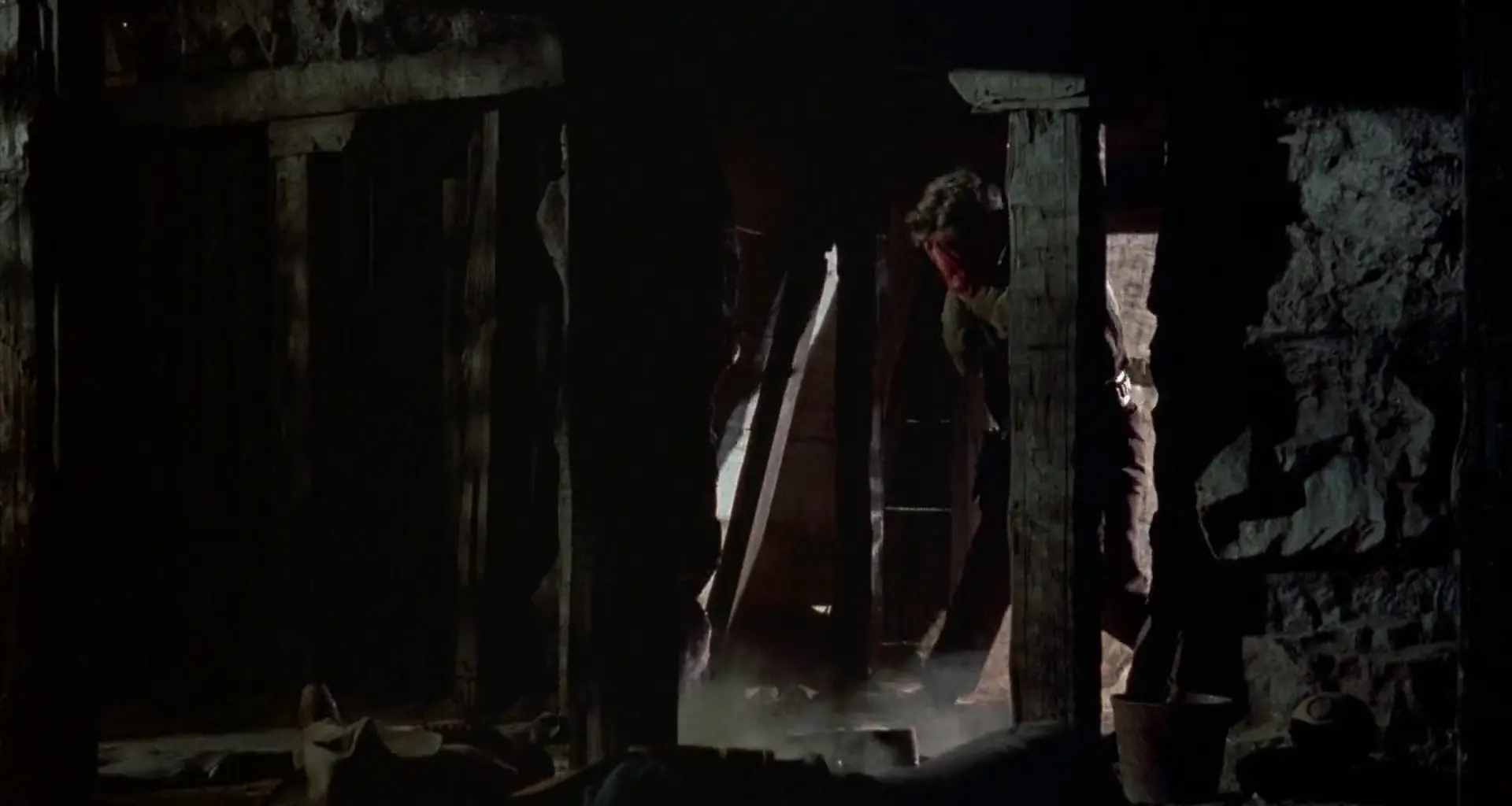
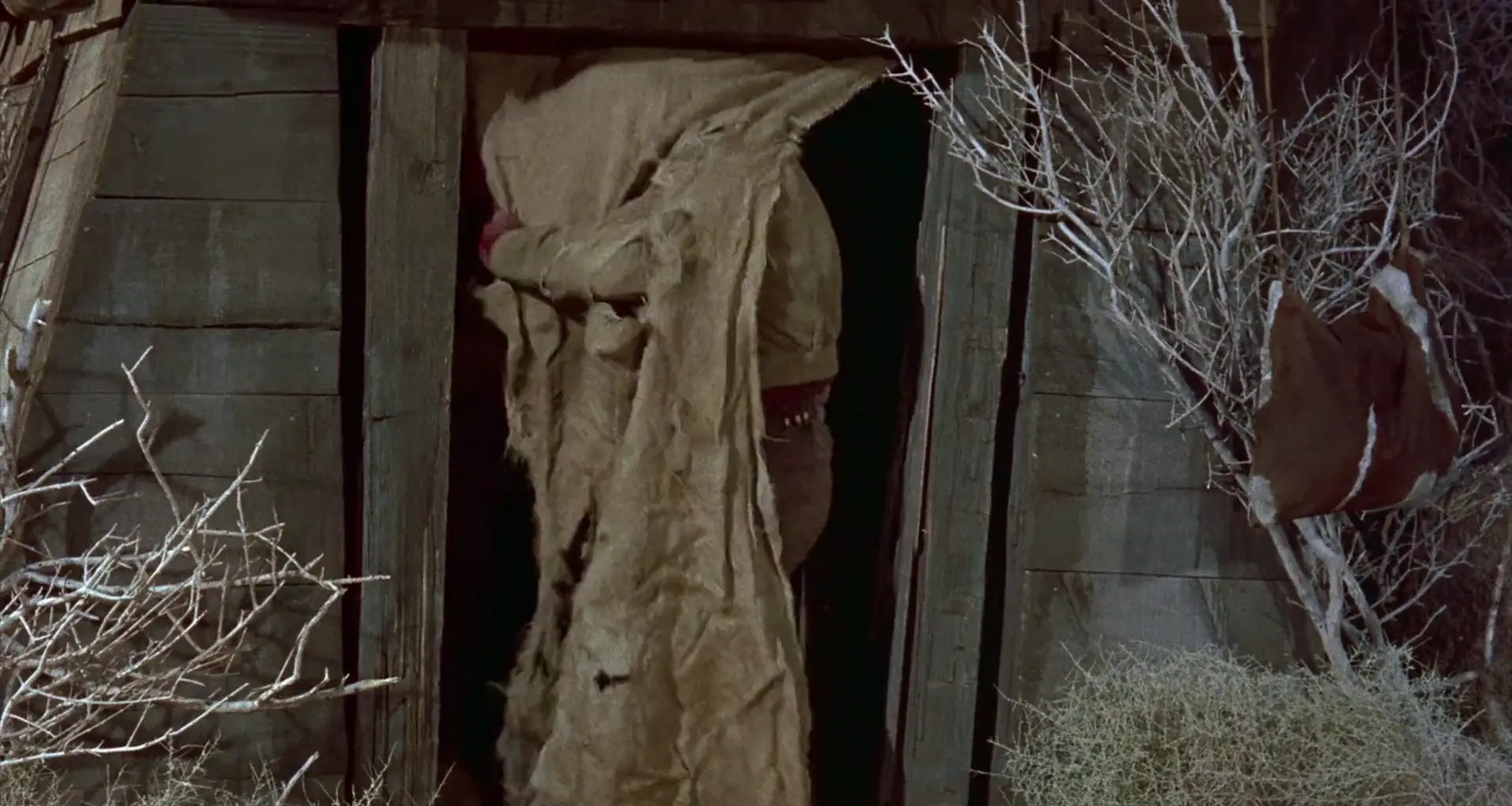
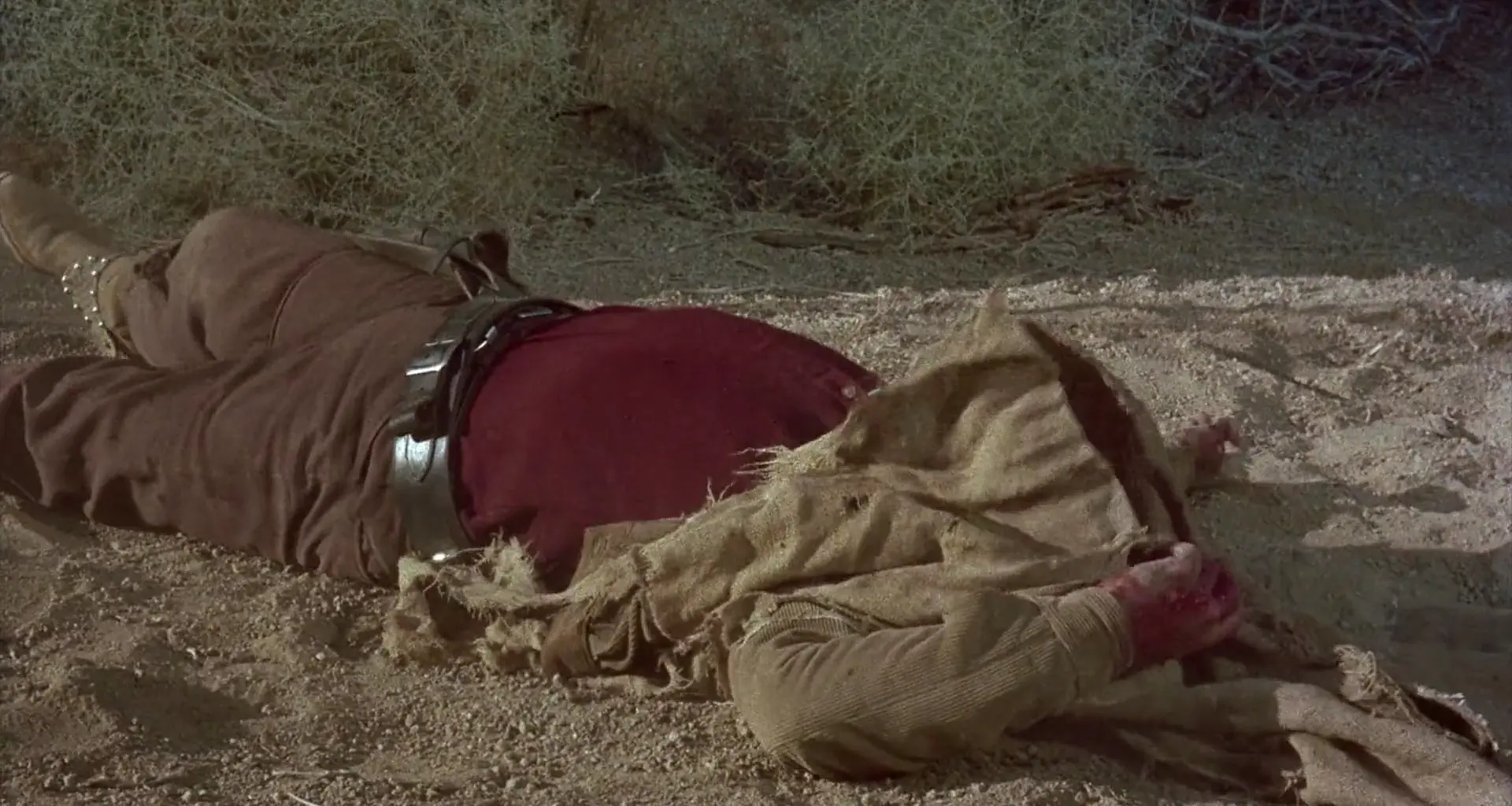
Taken together and alone, Seven Men and The Tall T would already stand as two of the finest westerns of the 1950s and a tremendous advance on Boetticher’s earlier works in the form, such as The Cimarron Kid (1952) and Seminole (1953). They belong to a class of films from the final period of the B western — Sherman’s The Last of the Fast Guns (1958), Arnold’s No Name on the Bullet (1959), or Ludwig’s The Gun Hawk (1963) — which integrate the genre by showing its bones. Their strength comes from the rigor of their limitations, from what they choose not to say, rather than any programmatic ambition. Films of narrative precision and natural splendour, they are ethical plays without a lesson. Their emotional force comes from the abruptness of their resolutions, arms stretched out with nothing to grasp.
II
The entries that compose the middle segment, Decision at Sundown and Buchanan Rides Alone, initially appear as much weaker than what preceded them, in that by moving into town they not only retreat to conventional interiors for most of their runtime, but crowd them with people, whereas these films are at their most potent when they place the smallest number of bodies in the largest possible spaces. The middle segment nevertheless traces the contours of the chamber western by providing said interiors as a counterpoint to prior expanses, and while the entries that form it are less successful as individual films, they are a crucial lento within the cycle as a whole. In gross, they are both films of deprivation (loss of the horizon, of the deeper time of rocks and trees, of the motion of horses) that are also the political entries in the cycle, in that they reckon with the coming of a post-West social modernity and the dawning of an associated wrong life.
Decision is the loneliest of the cycle, and the least dialectically complex. Its role lies in producing a variation where Scott’s lost love was not so great, where she betrayed him, and in which his quest for vengeance is most wholly misplaced. Indeed, it is John Carroll’s antagonist Tate Kimbrough who here is redeemed and rides off into the sunset, whereas Scott is left in the shadows, unreconciled. Whereas this didacticism makes Decision the least pleasurable entry — at once desperate and distracted, too caught up with busywork, compositionally a little unfocused — Buchanan has a distinguished lightness, manifest in the switching of locations and allegiances, slipping in and out of jail (and back again and again), which is thematically doubled by an interestingly disabused perspective on the family. There is a beautiful detail that speaks to this when two of the cronies employed by one of the Agry brothers and then outsmarted (temporarily) by our heroes are tied up in a shack by the loosest of knots; evidently they could shrug this off in an instant, but they don't. In this film (family) ties can be accepted for a moment but just as easily refused. This lightness is at the same time sadness, insofar as in hurrying from one place to another (from the town to the country, from the roof to the sky, from brother to brother) with a certain speed which has as its condition the refusal to be bound, the work casts a melancholy eye towards the ethical maxim of the classical western: don’t hurry. All the coming and going — the absurdity of leaving a space and returning to it carrying news from offscreen, popping in and out of doors — marks a subtle shift in genre from Kammerspiel to drawing room farce, whilst on the other hand death becomes associated with haste.
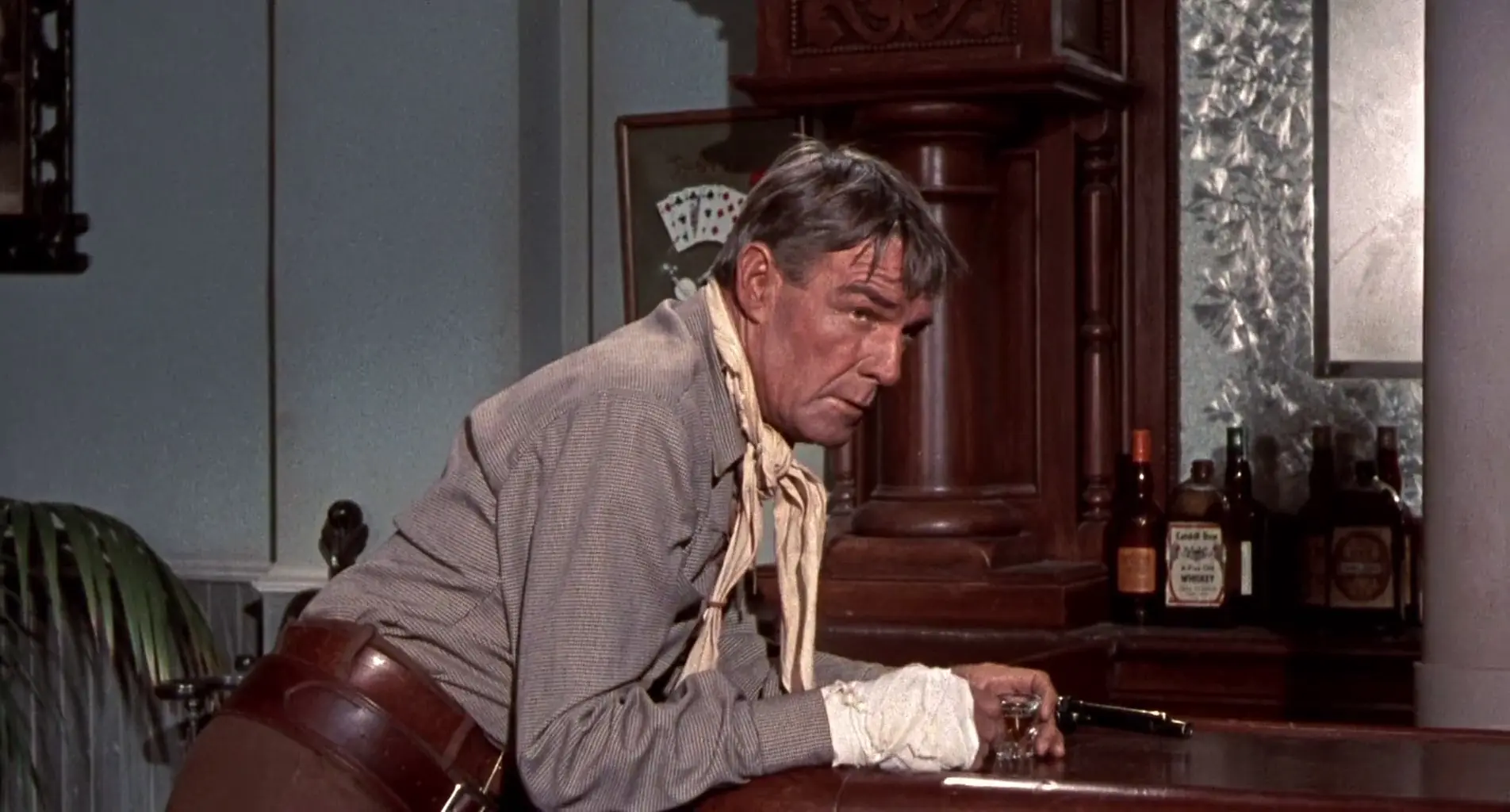
Decision at Sundown (Budd Boetticher, 1957)
III
It is with the third segment that the inter-filmic nature of the Ranown cycle comes to the fore. Without Ride Lonesome and Comanche Station we would have four (or five) fine films with certain shared production elements, but not a unified work. [8] By adding two films that are more or less direct remakes of Seven Men From Now, this final segment produces a situation in which every entry can now be perceived as throwing off elements which land in others. It is only from the standpoint of this aforementioned gesture of self-abstraction that the cycle can be understood as a series of variations on an initial matrix.
Indeed, the degree of overlap between Seven Men, Ride Lonesome and Comanche Station makes it tempting to propose a different organization of the cycle which makes these entries the core and the others peripheral or minor variants. However, a profound and specific set of sympathies exists between Ride Lonesome and Comanche Station, which serves to unify them. Each of the last two entries feels like a further radicalization of the formal aspects of the preceding four. Both films begin wholly in situ on the same location at the foot of the Alabama Hills, and neither contains a single interior in their runtime. Both were also shot on astonishingly fast schedules: Boetticher claimed twelve shooting days in each case. [9] The pressure of this timeframe perhaps explains why the repetition of settings between the two is so pronounced, to the extent that that an early shot is repeated as Scott rides through a singular rock passage at the opening of Ride Lonesome and out of it again in order to properly initiate the drama in Comanche Station. Finally, and crucially, these final two entries mark the transition to CinemaScope, and with it a dramatic shift in compositional constraints.
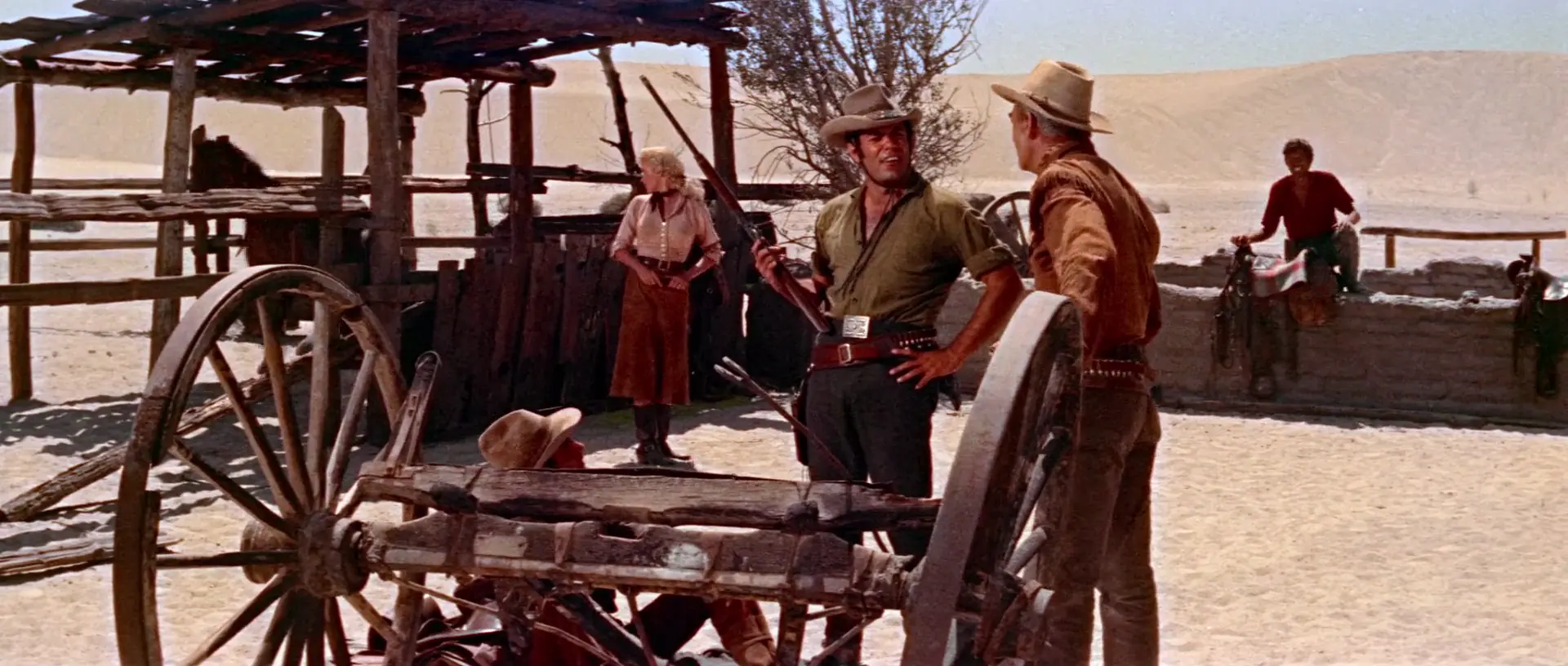
Ride Lonesome (Budd Boetticher, 1959)
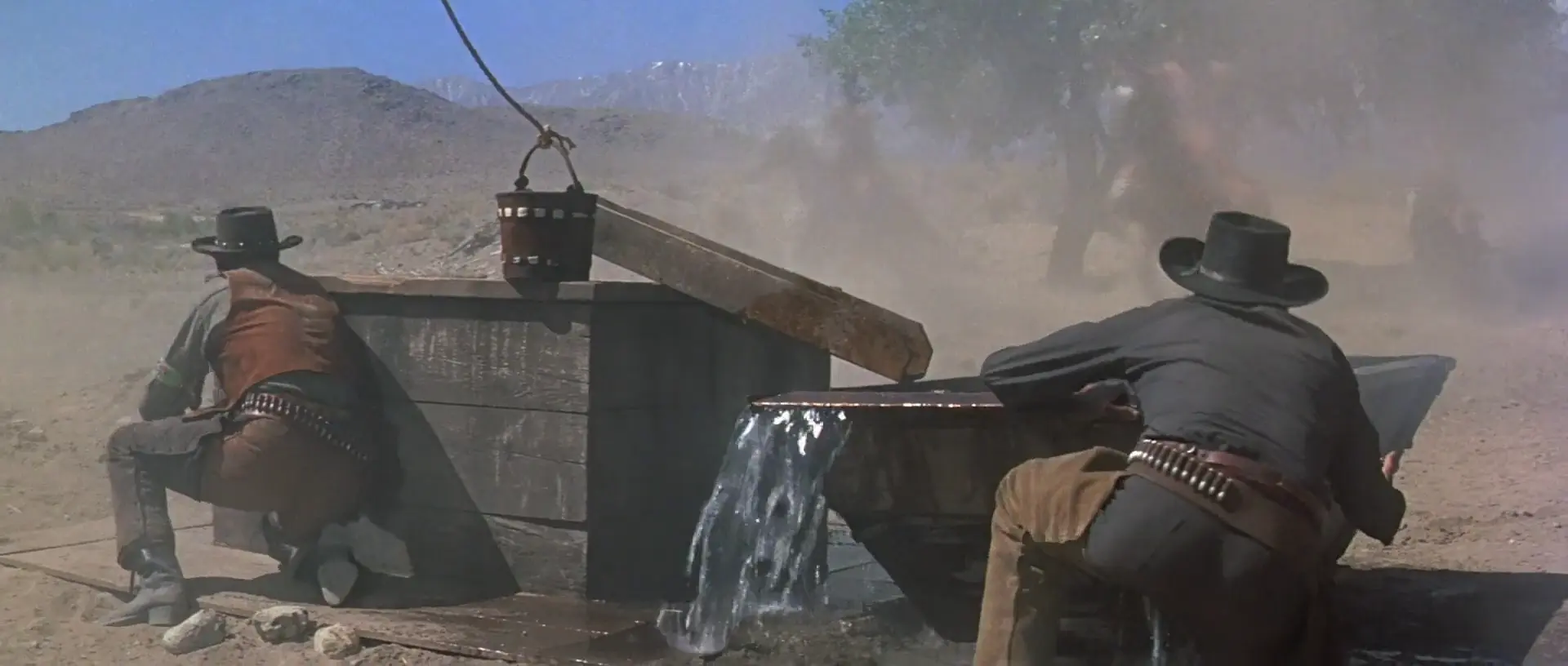
Comanche Station (Budd Boetticher, 1960)
The aspect of inter-filmic variation which is realized by the final segment functions on two levels: plastic and narrative. In terms of narrative, Ride Lonesome’s skeletal vengeance plot leads to an astonishing moment of redemption, albeit not for Scott. Here we have another variant on the central matrix of the shootout discussed above with respect to Seven Men and The Tall T, but with an inverted outcome. Pernell Roberts, occupying the Marvin role, has accompanied Scott in his transporting of James Beast’s minor outlaw Billy John back to Santa Cruz to be hung, a mission which is revealed only to be a trap to bring out Billy John’s brother Frank for a final confrontation, in revenge for the latter’s earlier hanging of Scott’s wife. Thus Billy John is of only pragmatic interest to Scott, whereas to Roberts he holds an essential promise: the authorities have offered a pardon to any man who brings him in, and Roberts is on the run for crimes that he claims he did not commit. Thus Billy represents Roberts’s one chance at departing from the outlaw’s path. Roberts helps Scott in his revenge plan, luring Lee Van Cleef’s Frank to the same clearing where Scott’s wife was hanged, but knows that afterwards they shall be placed in confrontation over who should bring Billy John to the gallows. Under conventional cinematic assumptions, we would expect the patent asymmetry of stakes to mean that Scott, the nominal hero, would collaborate with Roberts, but the viewer of Seven Men From Now has seen him gun down his companion without regard for such considerations.
A dreadful tension thus pervades the final scene, especially once Van Cleef falls, and the exact standoff situation we have seen in earlier entries begins to unfold. Before descending from his horse for the anticipated shootout, Roberts repeats Marvin’s earlier rhetorical question: ‘I don’t suppose there’s any way of getting Billy from you, aside from going over you?’ The music and framing presage the same climactic violence from previous variants. By this point in the cycle, we fully expect Scott’s intransigence to lead Roberts to his end. And then, in a unique moment of inter-filmic catharsis, Scott decides to let Roberts live, and parlay Billy John into a future. The effect is startling: it is because we watch the scene as a repetition of the ending of Seven Men, expecting Scott to refuse a future and shoot Roberts as he did Marvin, that there is a fantastic relief in his choosing to relent. Through Scott’s decision to spare the antagonist, the remake subverts the scheme from the earlier entries. The release is immediate and palpable, and Roberts throws his head back in laughter in a pose that mirrors Marvin’s shock at having been shot. Roberts’s near-final line then stands as a thesis statement for the film: ‘Funny ain’t it, how a thing can seem one way and then turn out altogether something else?’
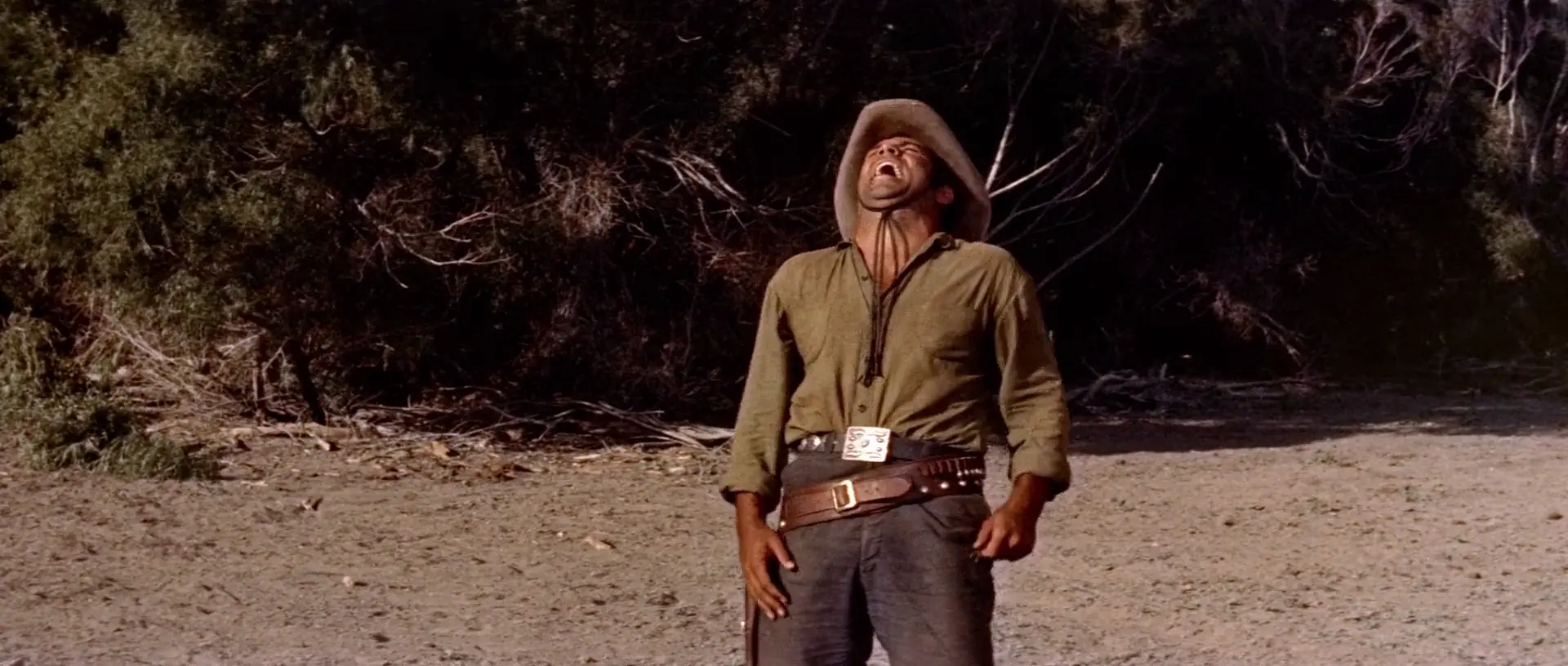
Ride Lonesome (Budd Boetticher, 1959)
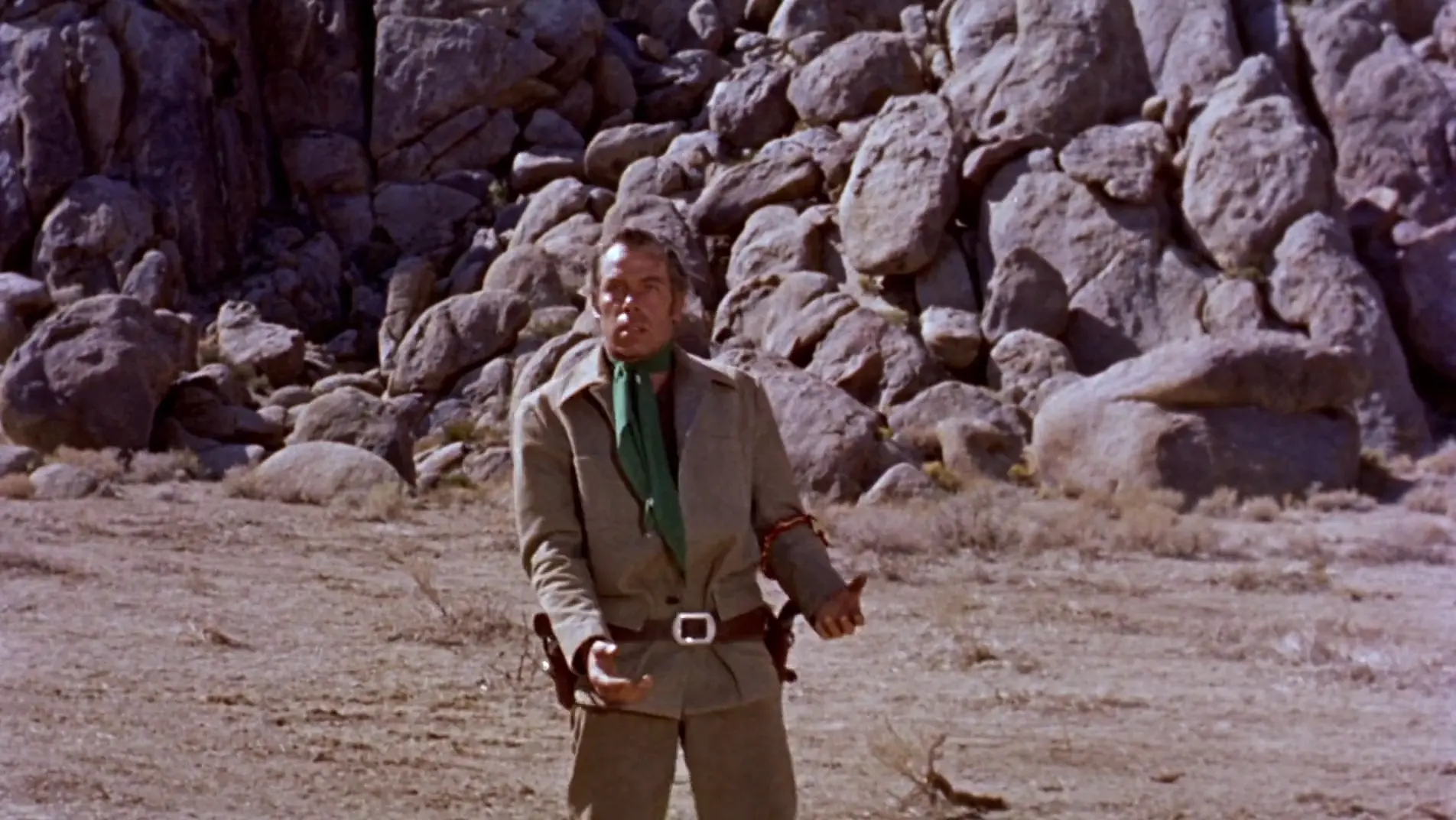
Seven Men From Now (Budd Boetticher, 1956)
The narrative inversion here is not independent of the profound cinematographic development in the transition to CinemaScope: it is as if the characters have suddenly been allowed a new dimension of mobility. With more lateral space, Scott can simply step aside. It is also proper that the inter-filmic level of the cycle arrives here, for a vital cinema-critical resource provided by the Ranown cycle is the opportunity to witness the direct reworking of material in the two aspect ratios, which allows the entries from this final segment to repeat the scenarios and settings from the first segment while approaching them with new compositional concerns. Most immediately this is felt in the way that the transition to a wider frame allows a different découpage technique; the early scene with the Mescaleros circling and our five protagonists defending a desert ruin and all arranged in a line would not be conceived that way in a format with less lateral space. Indeed, only five years after The Robe, and far from the industrial concerns of such historical epics, the degree of compositional integration of the technology in these two low-budget westerns is startling, with both Ride Lonesome and Comanche Station making brilliant use of tableaus with multiple sight lines and points of interest. This is of great historiographical interest, in that the switch to CinemaScope within the Ranown cycle doesn’t line up with either its technical invention or its industrial employment (the cycle is dated from 1956–1960, whereas ‘Scope was already introduced in 1953 and widespread in the genre by the debut of the cycle). One has the impression that the earlier entries in the cycle already compositionally integrated the CinemaScope effect in a restricted manner, all the better to demonstrate its efficacy in the final segment. [10]
Ride Lonesome also contains an address to a path not chosen in this technical transition. It is by now well-documented that CinemaScope was the US cinema industry’s integration of the innovation of Henri Chrétien’s much earlier Hypergonar apparatus (or The Big Angle, a fine name for a western). What is less commented on is that Chrétien’s original proposition for the development of the ‘large screen’ was supposed to be biaxial, such that one could anamorphically stretch the image either horizontally or vertically. Chrétien initially proposed a screen in the form of a medical cross, such that depending on the production the film could be framed for projection in either extended landscape or portrait. The extension of the latter axis of course now appears to us as almost unthinkable, and the Ranown cycle seems to register the genesis of the choice of the studios to back horizontal over vertical extension, for widescreen over ‘tallscreen’. [11] This choice for the wide over the tall appears to us as necessary — somehow demanded by the local conditions of the form as it had been developed — but it is only retroactively received as such. One sees in the prior state of a medium primarily those potentials that were eventually realized, whereas those that never reached a next stage of development remain invisible. Thus we experience pre-mid-fifties cinema as already anticipating the vista, the tableau, a certain apotheosis of ‘classical’ mise en scène as much as a whole corresponding tradition around political landscape, but it is harder to focus on the ways in which the never-to-pass tallscreen was equally latent: it would have finally been possible to envision a portrait (close-up) of the whole body, a leap towards monumentalized Bressonian or Dreyerian portraiture. There are spiritual overtones to this choice in the conjuncture: the decision for the horizontal orientates film towards the view of man and the environment (a materialist path, then), as opposed to a vertical orientation towards the figure and the sky, towards God (tradition of religious art, of sculpture). This spectral bifurcation in cinematographic history is reckoned with in the astounding final shot of Ride Lonesome, in which Scott burns the ‘hanging tree’/cross on which his own future has perished. There is something of a farewell here both to bodies that will never appear and to an uncomposed space outside of the frame that will from now on make its cinematic appearance only marginally, with the final vertical pan up said tree/cross taking stock of what was foreclosed. And, above, the sky, the screen.
A perfect conclusion to the cycle, if a little neat. And then Comanche Station. The final entry surely stands as one of the most formally radical of all westerns: at once ecstatic and elegiac, it cements the musicological character of the cycle as a whole by producing a finale in the proper, operatic sense, recapitulative in the way that all finales are. This dizzying, mysterious film is almost entirely made up of direct repetitions and citations of the earlier entries, on all levels (dialogue, scenario, frame, sets), which are now fully codified as leitmotifs. The echoes on the level of script stand out first. We again get exact quotes from earlier films — ‘I never could have enjoyed spending that money if I’d done you that way’ — and recurring dramatic arrangements — Claude Akins redoes Lee Marvin’s innuendo-filled infidelity speech from Seven Men From Now in order to tell us that this is closing the cycle by returning it to the first entry. But this rendition now takes place not in a wagon while sheltering from the rain but around a campfire in the open air; the gesture serves to show how the formal device of the chamber western has been fully internalized.
The most shocking moments, however, come from returning to locations from the prior entries whilst displacing them. For example, we have a breathtaking return to the burned hanging tree from Ride Lonesome, but now the clearing is flooded, and the montage is arranged to show an adjacent river where there was none last time we visited this space. Or the final moments of the film, which take place in exactly the location where the station master and his son were murdered in The Tall T, but now a child runs out of the doorway from which Boone emerged in the earlier entry. The mountains stand invariant behind, the same trees sway in a new breeze. At stake here is not simply a question of ‘same set, different season’, but a fragmentation of previously explored spaces. The rather Plotinian stratification of times (intra- and inter-filmic) that is central to the cycle now interfaces with natural history, whence a certain glacial emanation of the profilmic. Thus what is consummated above all else in Comanche Station is how the use of Lone Pine as the basis-constraint for the cycle allows the inter-filmic rhythm that is proper to it to intersect with the rhythm of something hors-film.
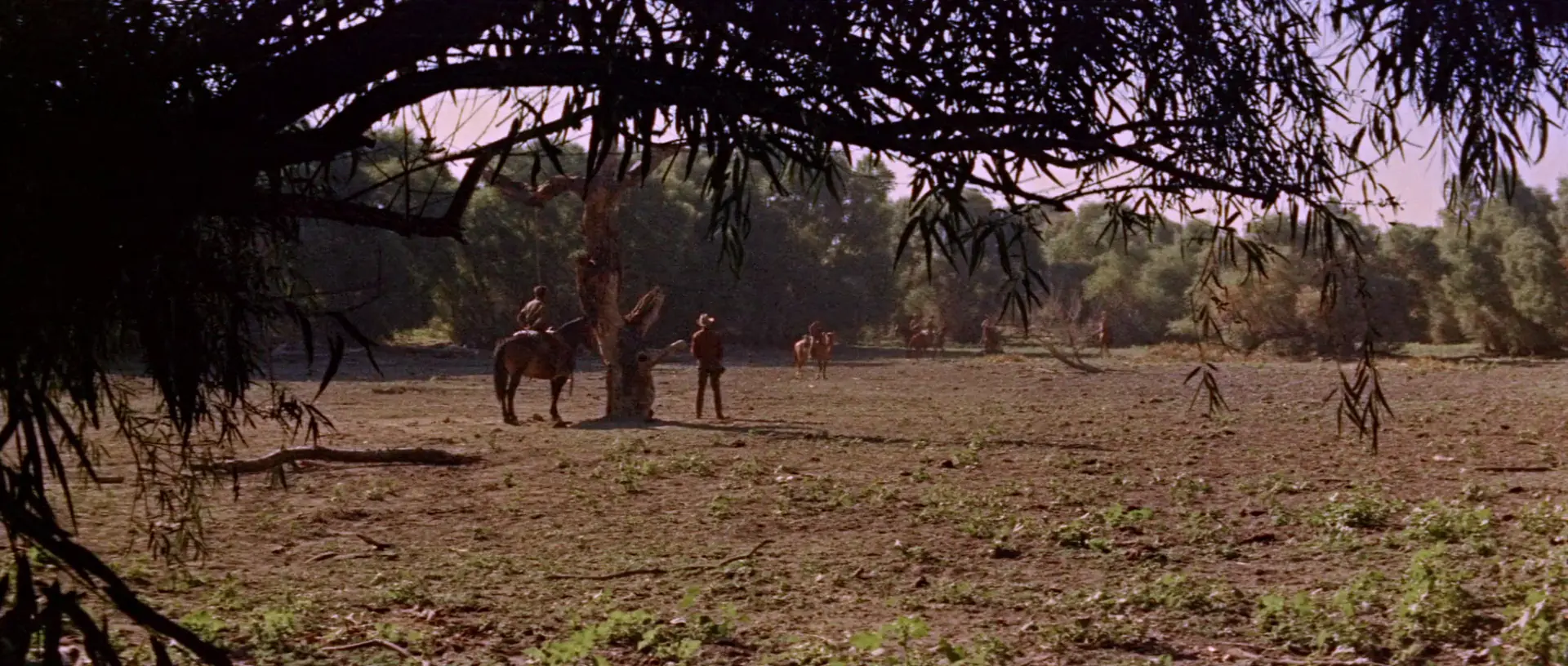
Ride Lonesome (Budd Boetticher, 1959)
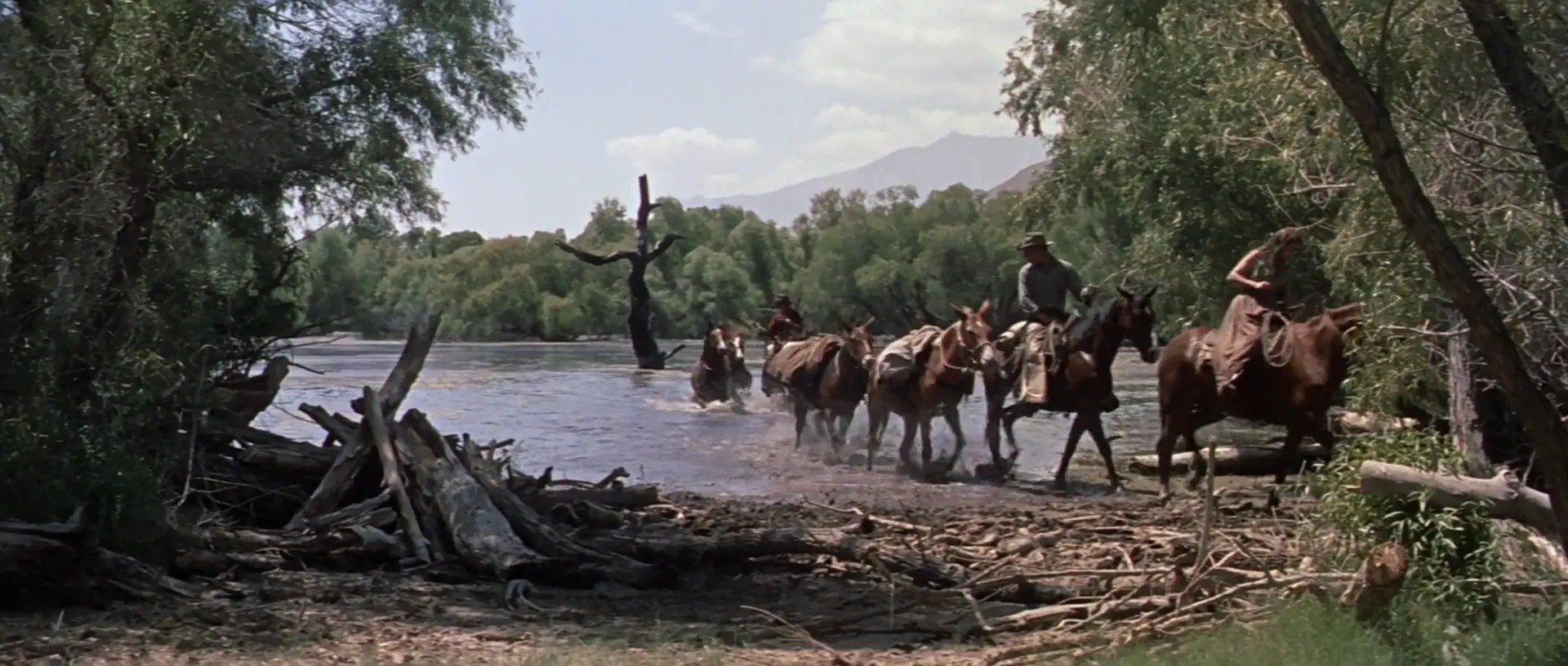
Comanche Station (Budd Boetticher, 1960)
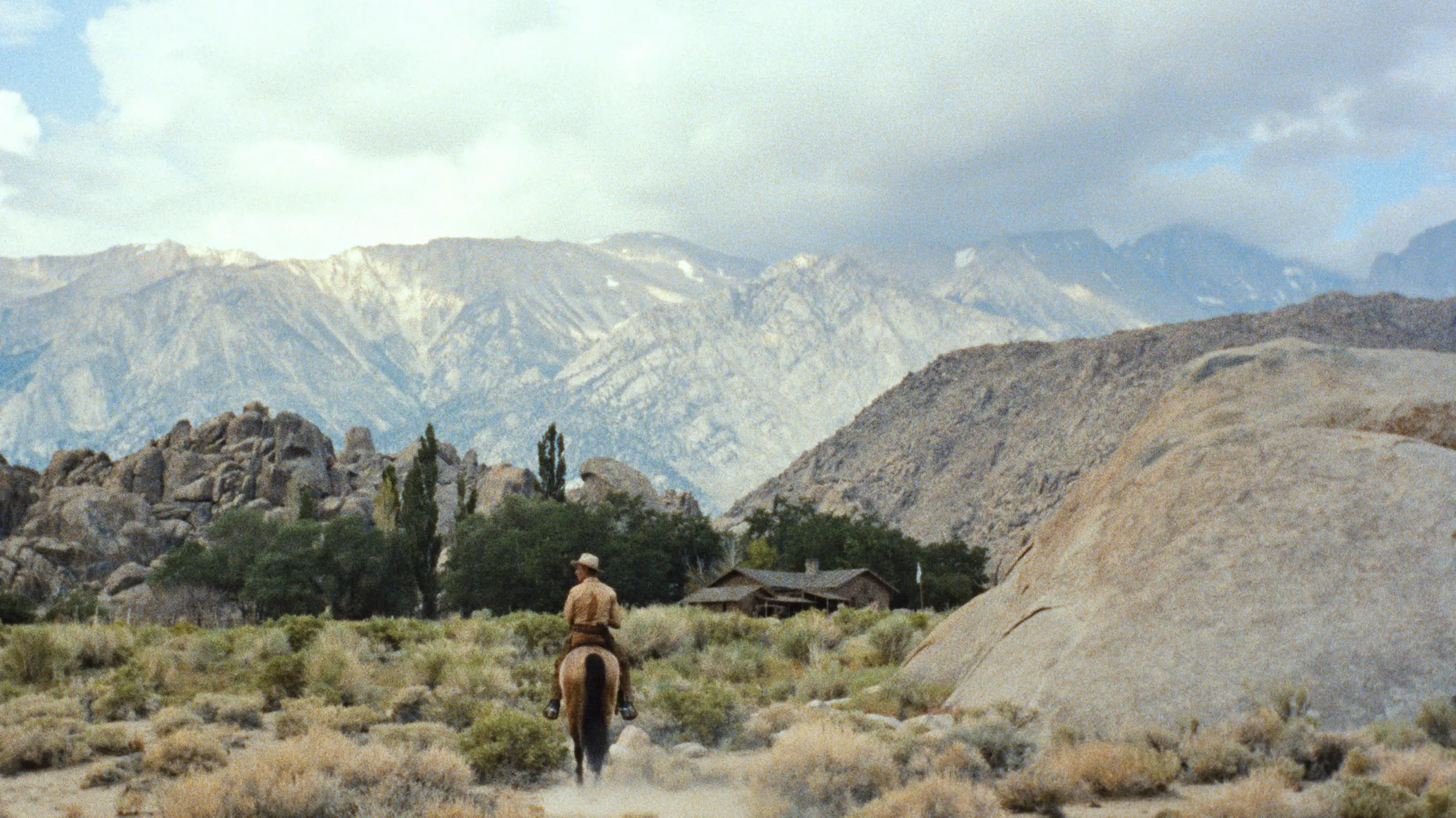
The Tall T (Budd Boetticher, 1957)
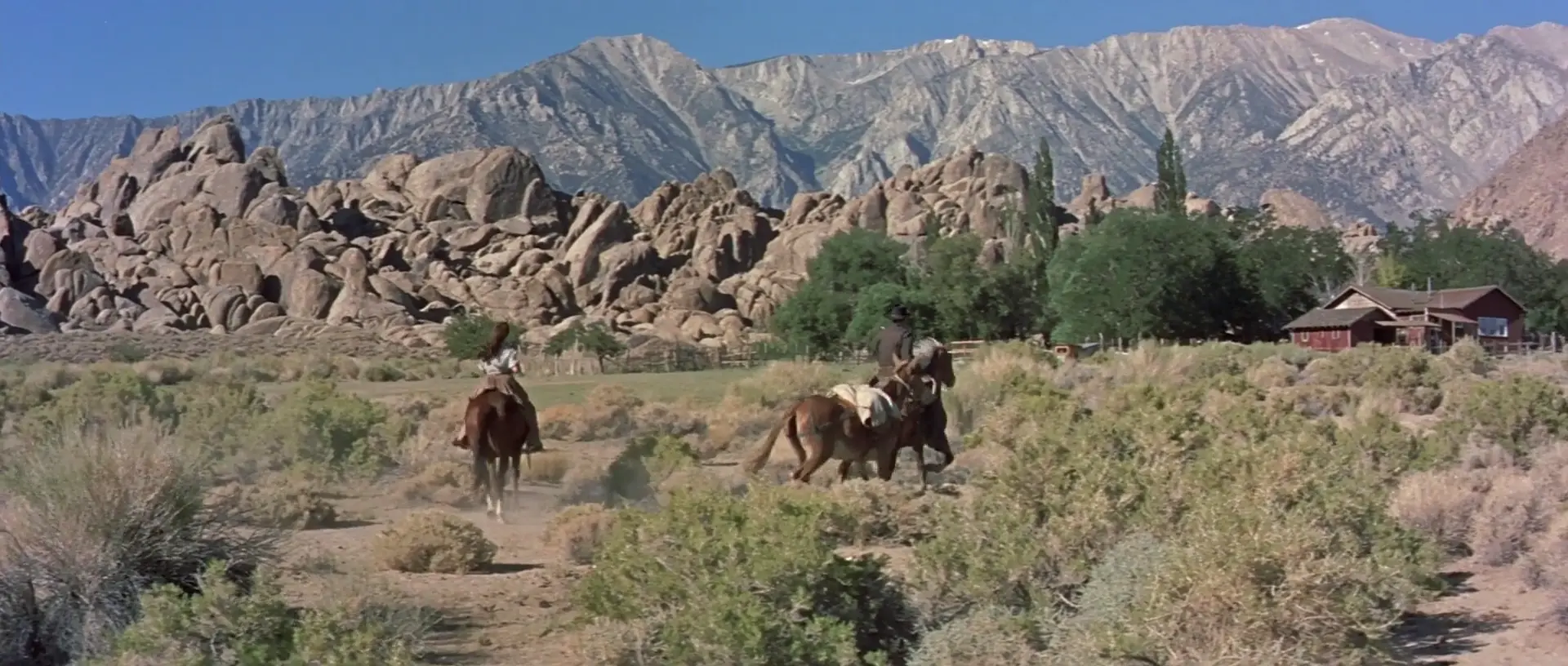
Comanche Station (Budd Boetticher, 1960)
These layered repetitions condense in the final gunfight, in which we return to what appears to be the same location as the closing confrontation with Marvin in Seven Men, but on much harsher terms. Throughout Comanche Station, Akins’s Ben Lane has come across like a version of Marvin’s earlier charismatic figure who has soured in the sun; he is the only antagonist in the cycle towards whom Scott exhibits no affection, and with whom one perceives there is a hunger for violence. The whole scenario has turned on a nastier scheme for lower profit. Whereas Marvin collaborated with Scott to bring down the bandits for the hope of a twenty-thousand-dollar payday, Akins plots to kill Scott and his female charge for a mere five thousand. This all feeds into the bleakness of the near-conclusion to the film. The shootout is no longer carried out face to face, there is no open space or note of grace to greet the surprise stumble of death, only a sad end cramped behind boulders, ‘a pure shame’. Akins’s final words before a turn that he understands plainly as the decision to die at Scott’s hands, a rifle pointed at his back, are of resignation: ‘Got to. Come too far to turn back now.’ This makes for an equivocal juxtaposition with the cycle’s immediately subsequent closing on a sole moment of reproductive futurity, with the appearance of its only living child and the conjunction of that with the blind husband, who is thus precluded from bearing witness to any of the cinematic questions we have traversed.
Viewing Comanche Station as a sixth movement, rather than an independent film, reveals the cycle to have been a drama of reconciliation. It is the sole entry to situate its emotional climax after the slaying of the antagonist. The film’s narrative has been one of rescue rather than revenge. In the opening, Scott trades goods with the Comanches in exchange for Nancy Gates. Later we discover that he only found her because he was searching for his wife, and Scott reveals in a tender late night conversation with Gates that she has been missing for ten years. We tacitly understand he knows her to be dead. Yet nothing in this is supposed to suggest his search is futile. He continues not out of denial, but as a way to stay with her. Having seen a series of variations based on the figure of the dead wife, the viewer at first easily assimilates the missing wife to this scheme. Yet the figure of the man seeking revenge for his wife’s murder and that of the man continuing to search for his wife even though she is gone are found to have the inverse meaning. The Scott figure in Comanche Station is one for whom loss has transformed, almost miraculously, into new life. The conversation ends with Scott’s statement to Gates that ‘Knowing you is the first in all that time I’ve ever been able to forget, even for a little while. I’m obliged.’ In the film’s final sequence, Scott returns Gates to her family, and after a final glance between them, he chooses not to forget. Having dispensed with Akins, who had sought to claim a reward for the return of Gates’s body, this time it is Scott who turns. The film begins and ends with the same image of Scott guarding a second horse for his phantom love, leading it gently without looking back. They move between the rocks, which, animated by Scott’s passage through them, seem to open and close like curtains.
Of all the films in the cycle, Comanche Station is the one in which the scale of the human figures is closest to that of these boulders, which take on an aspect of mortal frailty. It is also the entry in the cycle which most explicitly resonates with the myth of Orpheus. We can again recall Pavese’s rendering of the tale, or rather its aftermath, in which Orpheus tries to defend to his interlocutor Baccha that he cannot have turned ‘accidentally or on a whim’; there must have been a reason why he condemned Eurydice. [12] The answer he gives is a bad faith assertion of his masculine freedom. When he saw the spring day at the exit of Hades, he realized that if he brought Eurydice with him, she would now carry with her a knowledge of death, of materiality, which would encumber him. The freshness of the original love could not be reclaimed. In order to maintain his freedom, he had to leave her there. He thus turned around to deny the knowledge of finitude that she would impose. In his attempt to choose an eternal spring, a future that would have the untainted liberty of an imagined past, Orpheus condemns himself to dwell only in memories of that past. We already found this figure in The Tall T, yet Scott’s final turn in Comanche Station has the inverse meaning to Boone’s fatal pivot. Rather than turning in order to not see, Scott turns consciously and is reconciled with the endlessness of his search. The cycle concludes with Scott’s choice to remain with the dead, which also means accepting knowledge from them. Viewing the entries in their proper series, the figure played by Scott traverses from a refusal to move on, an inability to accept loss, to a decision to stay with it. In doing so he is absorbed into the environment of Lone Pine, and becomes a mobile inhabitant of purgatory. Eurydice isn’t here but the mountains are.
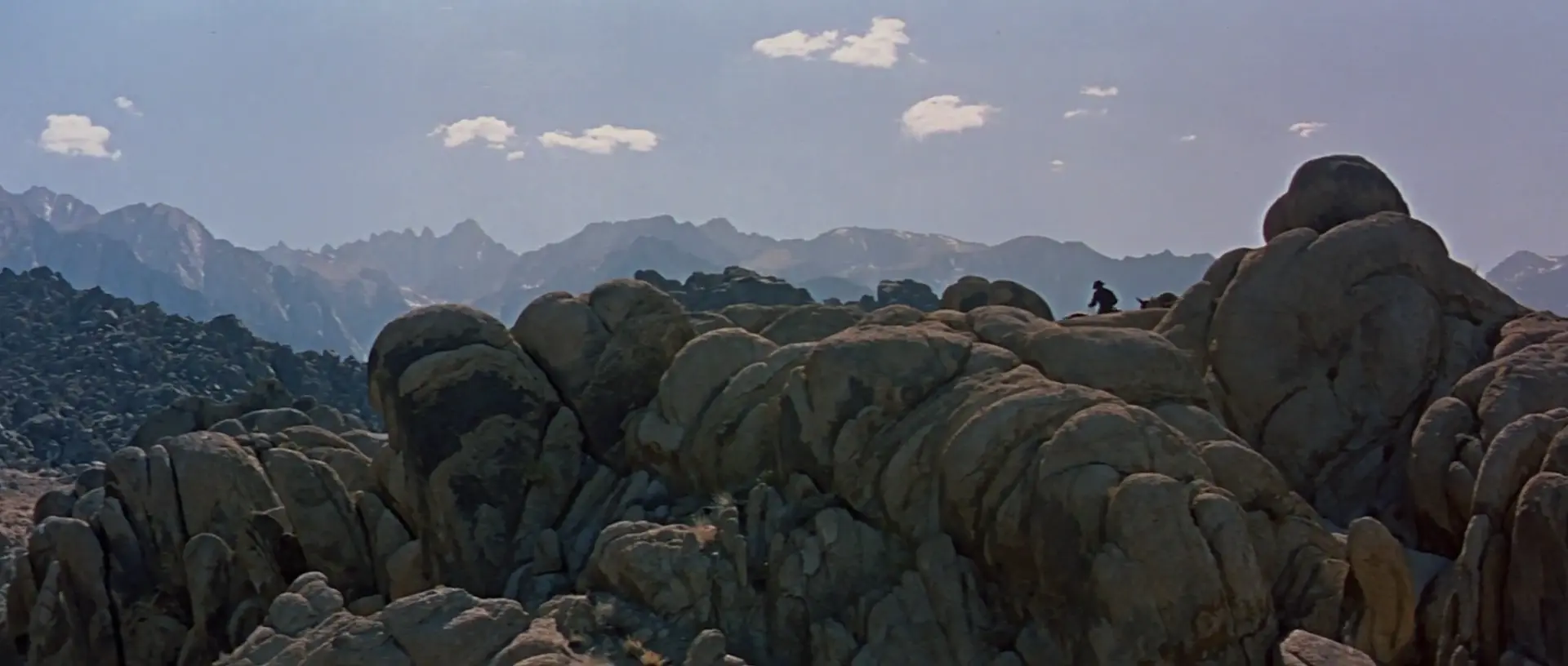
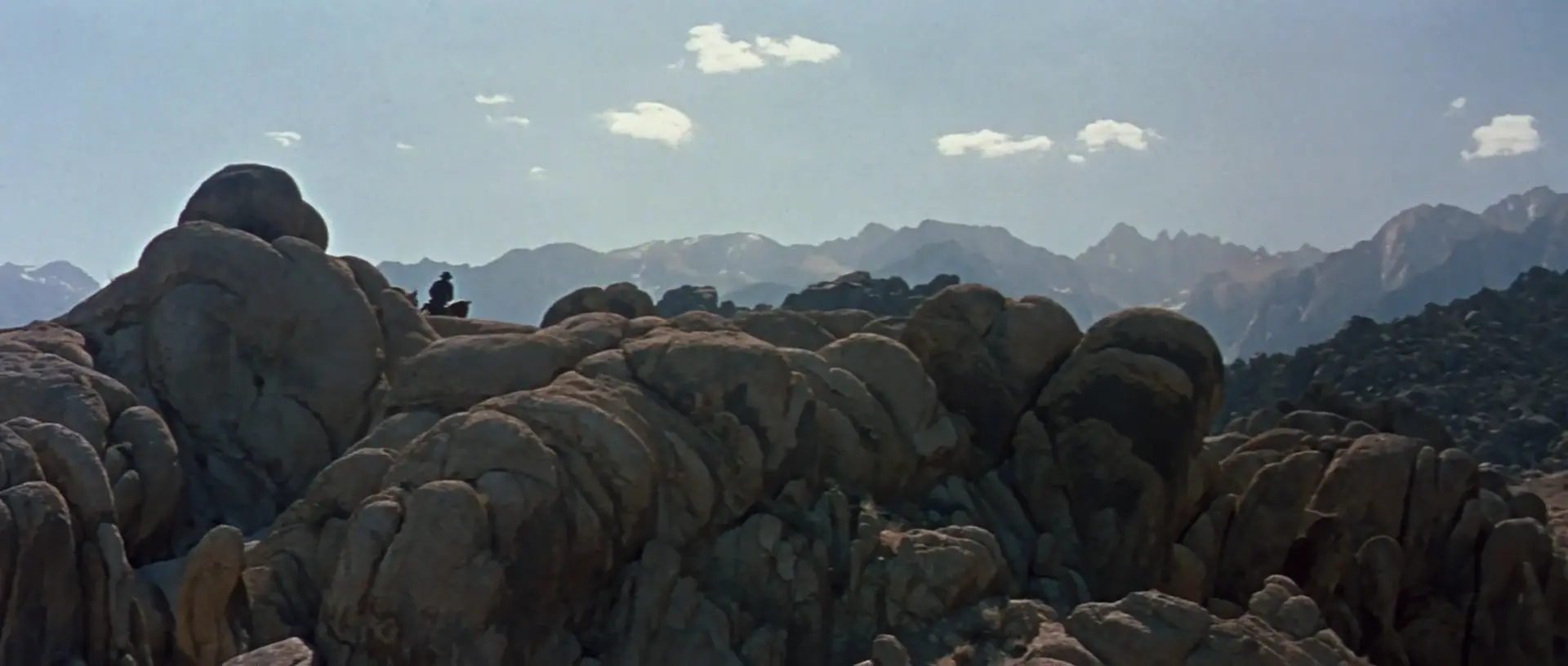
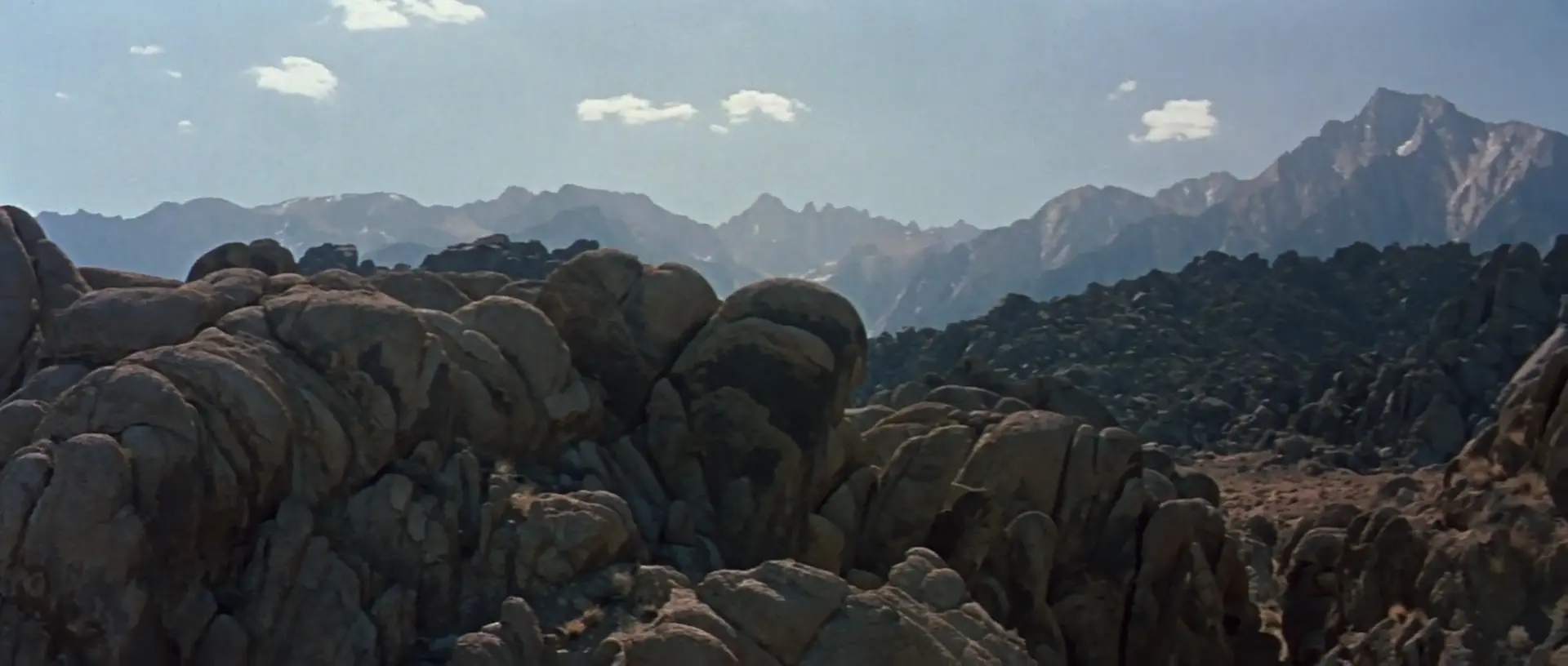
Comanche Station (Budd Boetticher, 1960)
Notes
In The Leucothea Dialogues, trans. by Minna Zallman Proctor (Archipelago Books, 2025), 86–91 (p. 89). First published as Dialoghi con Leucò in 1947.
The exceptions that test the rule being Karen Steele’s transition from the villain’s betrothed in Buchanan Rides Alone to the heroine of Ride Lonesome and Skip Homeier’s playing of the lackey in both The Tall T and Comanche Station.
Following Bertrand Tavernier’s count, which includes only the theatrical features for which Boetticher was credited as director. For the complete filmography, see ‘Budd Oscar Boetticher’, Amis Américains: Entretiens avec les grands auteurs d’Hollywood (Actes Sud, 1993), 247–269 (p. 248).
Here a central idea from Boetticher: a film should begin in the middle, and end without ceremony. Witness the interview conducted by Martin Rubin in the The Director’s Event (Atheneum, 1969), 38–72 (pp. 46–47): "Q: The moral quests of the Scott characters are always determined long before the picture starts, and they will usually go on long after the picture is over. A: I believe that a picture an hour and half long is long enough. You can tell the beginning of a story — that’s one picture. Or you can tell the most interesting part of a story — the middle. Or you can tell the end of a story, just as we could start from the ending of Ride Lonesome tomorrow. You simply have to choose. Q: Why do you choose the middle section? A: Because that’s where the action is. [...] I’d rather establish the problem right away and take it from there."
Bertrand Tavernier, ‘Entretien transocéanique avec Budd Boetticher’, Cahiers du cinéma, 157, July 1964, 1–19 (p. 11). Translation in Budd Boetticher: The Western: a BFI Education Department Dossier, ed. by Jim Kitses, 1–21 (p. 12), produced for the retrospective at the National Film Theatre in 1970–1971.
Boetticher was proud of this trick: what better way to show the speed of an action than to leave it offscreen, having passed too quickly for the viewer to catch it? (See the interview with Tavernier cited above, p. 11.) Bazin was also struck by the technique, mentioning it in both of his addresses to the film, and saw in it an essential humour: that Scott always shoots from offscreen creates an effect ‘as if he did so too fast to give the camera time to capture the reverse-field’. André Bazin, ‘Un western exemplaire’, Cahiers du cinéma, 74, August–September 1957, 45–48 (p. 47); English translation by Philip Drummond in Cahiers du Cinéma: The 1950s: Neo-Realism, Hollywood, New Wave (Harvard University Press, 1985), ed. by Jim Hiller, 169–172 (p. 171). See also ‘The Western, Loved Scornfully, Is the Lyric Form of American Cinema’, in The André Bazin Reader (caboose, 2022), trans. by Timothy Barnard, pp. 459–461. In its final occurrence, however, the same operation contributes to the feeling of tragedy.
An experiment recommended to the reader: watch Seven Men starting from around minute sixty-eight and The Tall T from minute seventy-one. What do you see?
Here perhaps a word is due on Westbound. Made to fulfill a contract with Warner Bros. on Scott’s part, and shot in September 1958 — thus in between the symmetrically titled Buchanan Rides Alone and Ride Lonesome — this very weak picture, which could well have been called Setbound, is deservedly not counted as a proper part of the cycle. It nonetheless contributes to another lesson imparted by these films: cinema is promised to no one; you can make a masterpiece and then put out a total dud six months later with the same team. But that’s OK (or at least it was then), there’ll be another one six months after that.
The Director’s Event interview, p. 44.
It is notable here that Charles Lawton Jr. was the DP for The Tall T (not in ‘Scope), Ride Lonesome and Comanche Station (both in ‘Scope), but at the time of shooting the first of these in 1957 had already filmed The Long Gray Line (1955), i.e. Ford’s transition to the new wider format.
As Silvia Mollicchi has pointed out, said tallscreen has had a contemporary revival: the phone camera.
The Leucothea Dialogues, p. 87.