Producing is the only way to make films.
—Paul Vecchiali
It is 1979. Paul Vecchiali reads in a magazine about the inflated production of Coppola’s Apocalypse Now. The waste makes him furious and he says to himself, ‘I (we) could do better for less’. He calls up a prodigious group of friends and collaborators: Chantal Delsaux, Jean-Christophe Bouvet, Hélène Surgère, Ingrid Bourgoin, Béatrice Bruno and Michel Delahaye will play roles, Georges Strouvé will shoot and Antoine Bonfanti will record the sound (as always). Marie-Claude Treilhou and Gérard Frot-Coutaz, past and future directors of features produced by Vecchiali’s company, Diagonale, will act as assistants and scenographers. After a month of rehearsals they are all standing between three exposed walls in the midst of a block of social housing in Villejuif, a setting halfway between the domestic and the open air. Roland Vincent’s score is already composed, since Vecchiali liked to listen to the music before the cameras rolled. In four days of shooting they will produce a film, C’est la vie ! (1980), not the strongest that will be made by the Diagonale group, and certainly not the most commercially or critically successful, but a film of distinct and strident charms, everything reflecting the freshness of the first take, ambitious in its weaving of set and social fabric, funny and sad. If any anecdote represents the utopia of Diagonale, it might be this: the very availability of a production house, a machine even, which can be called up immediately to demonstrate its capacities and strength, which can beat the studios at their game, and which is at the disposal of different auteurs. Such a utopia did not last long (its victorious period can be traced only from 1978 to 1983), but its existence is a singular event in the cinematic production of the latter half of the twentieth century.
Certain films produced under the banner of Diagonale have gained some measure of wider recognition: Treilhou’s marvellous Simone Barbès ou la vertu (1980), Vecchiali’s tours de force Rosa la rose, fille publique (1986) and Once More (1988). These are exquisite films about the margins of Parisian society, made against the odds. But the cinephile who enters into the world of Diagonale and makes their way through the efflorescence it produced will likely, after the shock of those flagship works, find themselves more and more attracted to the minor films, those made more quickly and for less money, like C’est la vie !, or Vecchiali’s improvised Trous de mémoire (1984), or Jean-Claude Guiguet’s short La Visiteuse (1981), or Frot-Coutaz’s Beau temps mais orageux en fin de journée (1986). Against the dogma of the microbudget or the underground, these are not films that embrace roughness as an ideal, but rather careful works of mise en scène, of direction in the fullest sense. Perhaps at this scale the hand of the author feels closer, like in cartoons by the Old Masters; perhaps, by contrast or complement, the grain of the world does, too. It is because of that quality of the handmade amid the documentary, that sense of theatricality snatched out of actualité, that these films can’t help but provoke an interest in their conditions of production. A certain machine was constructed to make them possible. What were its workings? How did it run?
The Diagonale machine has its first layer of visibility in a universe of ‘fake stars’, [1] in faces and movements that somehow seem to come not only with a personal history, but a history of representation. Vecchiali had a knack for this even before Diagonale was formed. Watching L’Étrangleur (1970), one immediately believes that, as a cop investigating her murder states, Surgère was once a famous actress, and wonders in which ‘rather old film’ she might have played the psychiatrist’s wife. The whole business is in fact a wink on Vecchiali’s part: this was the character she played in her only prior cinematic appearance, in Vecchiali’s own Les Ruses du diable (1965). Far from a simple in-joke, this technique is part of the demonstration of collective capacity just referenced: we’re as big as Dietrich, Gabin, Darrieux, the greats whose portraits adorn the walls in Vecchiali’s films. [2] Certain faces become familiar, and then cherished: Bouvet, Surgère, Delahaye, Sonia Saviange, Nicolas Silberg, Paulette Bouvet (Jean-Christophe’s mother), Denise Farchy, Martine Simonet. What is remarkable about the Diagonale apparatus is it can give its stars an air of permanence from their very first appearance. This holds for all the Diagonale productions, and not just Vecchiali’s work: we encounter Ingrid Bourgoin in Simone Barbès not as some pal that director Treilhou has dragged onto the set, but as a fully formed cinematic entity, a conviction that is only strengthened when she waltzes in character into C’est la vie !. You return to these films to get out the album, simply to see the gang again. The very aspect in which the Diagonale fan will rejoice is what others found suspect about these films at the time of their release — their bearing the mark of being produced by ‘a school, a family, a clan’. [3] And one can of course hear a familial refrain echo in these works: it doesn’t matter what they think; you’re a star, dear.
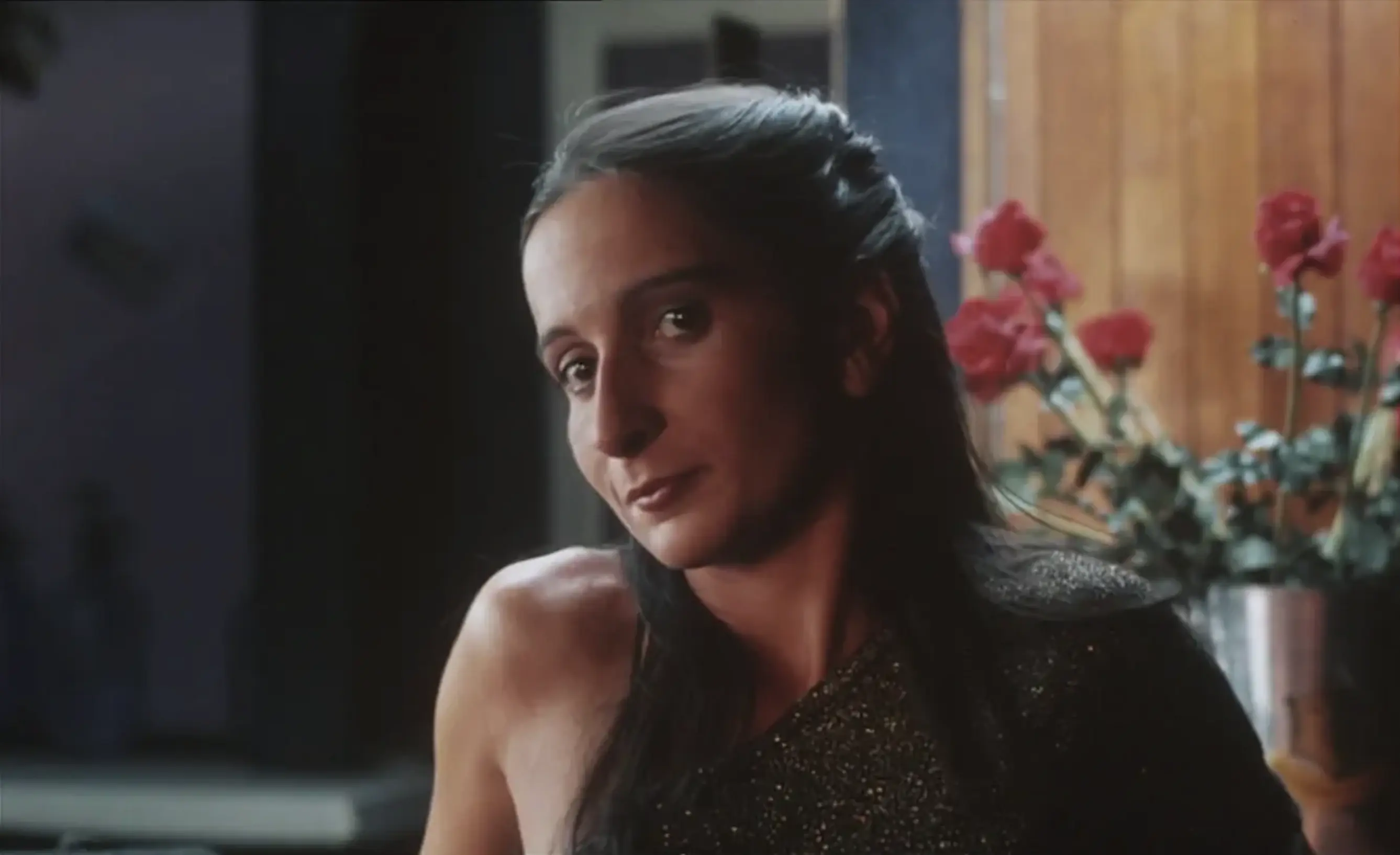
Simone Barbès ou la vertu (Marie-Claude Treilhou, 1980)
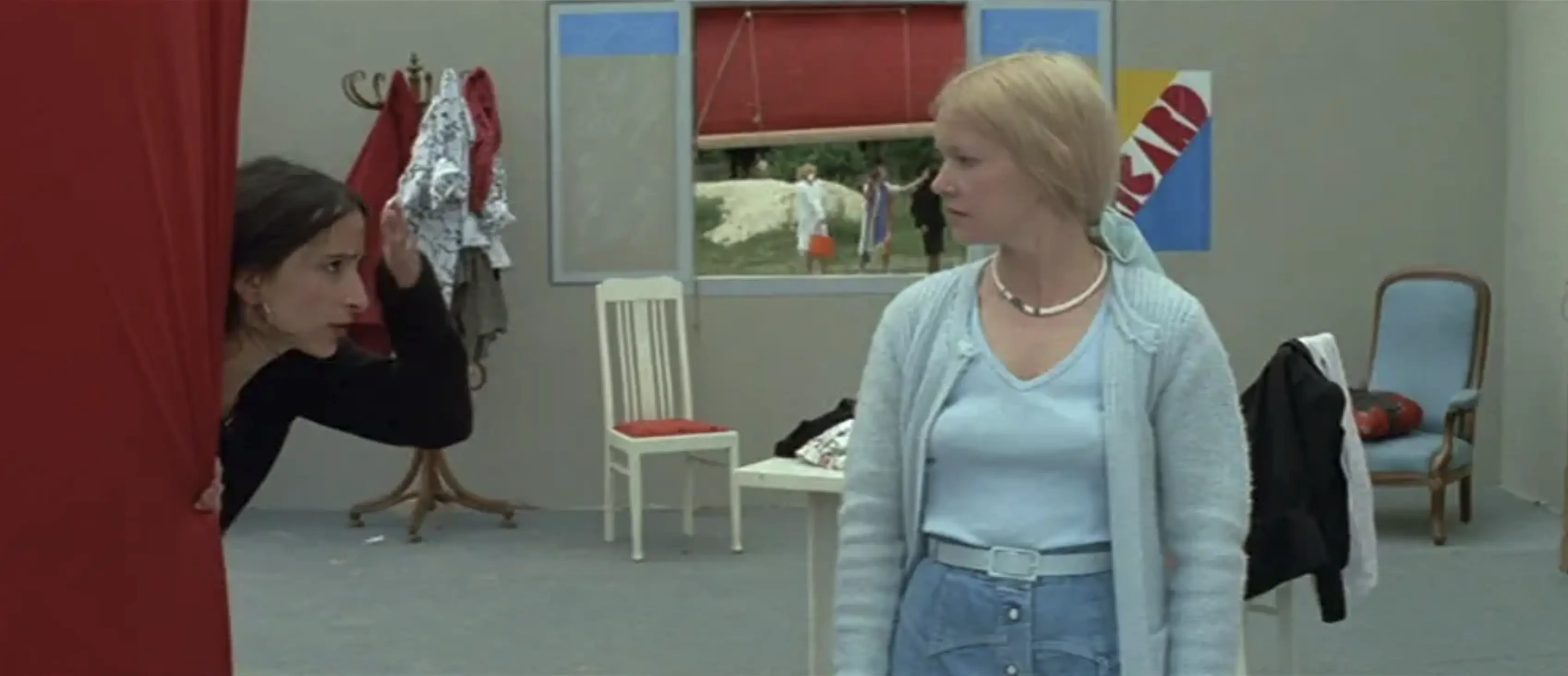
C’est la vie ! (Paul Vecchiali, 1981)
Strip back another layer of the machine and you find those Vecchiali called ‘le staff Diagonale’, a core crew that consisted of cinematographer Georges Strouvé, composer Roland Vincent, sound engineer Antoine Bonfanti, and sound recordist Jean-François Chevalier. To Vecchiali, these were les incontournables, the stalwarts. [4] Besides regularly collaborating on Vecchiali’s own films, they were at the disposal of the directors Diagonale produced. In this respect, Vecchiali himself rounded out the staff in his work as an editor. The unity of this instrument is apparent in the startling run of debut films produced by Diagonale and discussed by Pierre Eugène in this issue: Jean-Claude Biette’s Le Théâtre de matières (1977), Guiguet’s Les Belles Manières (1978) and Treilhou’s Simon Barbès. The Strouvé-Bonfanti-Chevalier trio worked on Biette’s and Guiguet’s films, while Vincent composed music for Treilhou’s, and Vecchiali edited Guiguet’s and Treilhou’s. These are individual works in every sense, radiant with authorial idiosyncrasies, and yet one emerges from the three of them with the impression of a kinship deeper than the fact of a few overlapping actors and the same logo at the start. To what extent this feeling is a consequence of a shared aesthetic approach, rooted in an anti-naturalistic fauvism à contre-courant that had been pioneered by Vecchiali himself — bold colours, loud costumes, sets that are visibly sets — and to what extent it comes as an inevitable consequence of a mise en scène shaped by Strouvé’s photography, which favors elegant sequence shots and sweeping travelings, and Vecchiali’s own montage, similarly classical, grounded in the graceful raccords of the French cinema of the thirties, is a question with which anyone who dives into the Diagonale canon is likely to emerge, especially if they go on to consider and compare what these directors made once they had left the Diagonale fold.
On the one hand, and in line with the ideal (or fantasy) of a low-budget production company that could function like a Hollywood studio, a figure such as Strouvé might be comparable to someone like Nicholas Musuraca at RKO, a consummate pro whose technical skill, lustrous in its own right, harmonises with the personal visions of the auteurs with whom he works. But in the France of the late seventies, auteur cannot mean the same thing as it did in the Hollywood of the forties (or, more precisely, as it did retrospectively applied to that era). In his review of the Diagonale anthology film L’Archipel des amours (1983), Serge Daney refers to Strouvé as ‘the louche house cinematographer’, and praises Treilhou for avoiding his services. [5] To do so, he implies, was to maintain her authorial integrity against the independent operation of the machine Vecchiali had built. And so the mind wanders from the visible evidence of that machine at work to speculation on the situation behind the scenes, for these young directors working with a crew that was, in a very real sense, someone else’s, under the aegis of one of the largest personalities in that menagerie of large personalities that was French cinema between 1960 and 1990. One might think it no wonder that they all chose to go their separate ways.
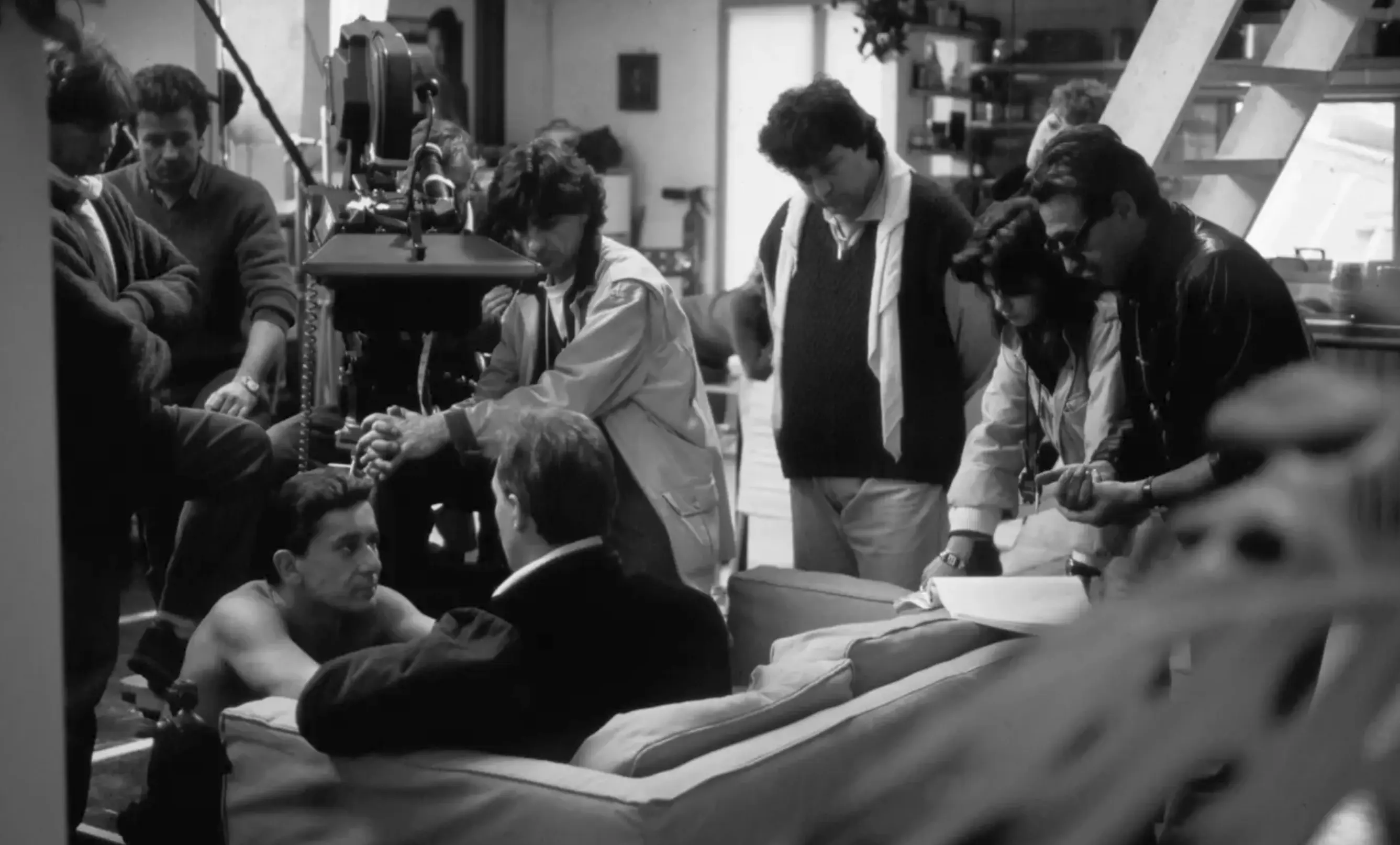
Behind the scenes of Paul Vecchiali’s Once More (1989)
We’ll return to this question, but for now it brings us to why, beyond our interest in the films as universes unto themselves, we have decided to dedicate an issue to Diagonale. Film criticism remains basically wedded to the framework of auteurism, even when it acknowledges, at one end of the scale, the distributed authorship of even the most canonical works of the politique des auteurs, and at the other, the banality of a concept of the auteur that has for many decades now served perfectly well as a generalized marketing strategy. We are not innocent of this either. Criticism has a hard time thinking about collectives, about works that are related in ways more ramified than sharing space in the oeuvre of a certain director, actor, or cinematographer. A comprehensive treatment of Diagonale cannot avoid running up against the question: ‘Of what was Diagonale the name?’ Was Diagonale a ‘production house’ in the sense of mere stamp of funding, or a real collective with a shared aesthetic vision? Did its own members conceive themselves as a part of an aesthetic ‘movement’? Were they part of such a movement despite themselves? In his compte-rendu of French cinema in the seventies, Daney discusses the ‘microsystems’ (the term is Rivette’s) that a select few filmmakers were able to construct; such ‘dream mini major studios’ or ‘auteur-machines’ are ascribed to Vecchiali, Godard, and Rohmer. But Godard’s Sonimage was for him and Anne-Marie Miéville alone, while Rohmer’s Films du losange was and is a much more conventional production company — nobody groups Rohmer, Rivette, Schroeder, Duras and Wenders together as part of a cohesive aesthetic project or even conjectural phenomenon. If Diagonale stands apart, in what precise sense does it do so, and how is this manifested in the films it produced? What is a ‘Diagonale film’, after all? As we’ll learn in this issue, heterogeneity was for Vecchiali the sine qua non of a cinema that wants to do justice to life in its richness. How does the heterogeneity within and between films interact with the ideal of Diagonale, described by Vecchiali at its birth as ‘a hive’ manned by ‘a swarm of willing bees’? [6] What, precisely, has Diagonale to do with the films that came out under its banner, with the people who made those films, and with their artistic careers as a whole?
It might be helpful to start by getting the facts straight — at least as they come down to us.
Grandeur et décadence d'un petit commerce de cinéma
Paul Vecchiali was a teacher at the École Polytechnique when he made his first short film in 1961. By 1963, he had created a production company, Les Films de Gion (named in honor of the Mizoguchi film), which would go on to produce Jean Eustache’s first short films. From this point onwards, the twin roles of filmmaker and producer would characterize Vecchiali’s career, though not without significant obstacles. His feature debut, Les Ruses du diable, was a commercial and critical disaster; Vecchiali later claimed, in an interview translated in this issue, that ‘Eustache and [the critic] Jean-André Fieschi, who were my best friends, wouldn’t speak to me’. [7] He was forced to sell his apartment to pay laboratory debts, and it would be another five years before he could make his next film, L’Étrangleur, for which he finally obtained an advance on receipts. [8] For this film, he founded another production company, Unité Trois, with the filmmakers Guy Cavagnac and Liliane de Kermadec. L’Étrangleur was another commercial failure, but an unexpected reversal of fortunes came in 1974. Femmes femmes, written in five days and shot in sixteen on a tiny budget of 80,000 francs, was picked up by the Venice Biennale through the intervention of Jean-Claude Biette, and the festival ultimately decided to hold a retrospective of Vecchiali’s films. The Femmes femmes screening was a huge success, with Pier Paolo Pasolini a particularly outspoken fan (see ‘On Femmes femmes’ in this issue), and the Biennale even commissioned a book on Vecchiali. The film was also the first proper manifestation of what would become the Diagonale apparatus. The production brought together several future Diagonale actors — Surgère, Vecchiali’s sister Sonia Saviange, Michel Delahaye, Noël Simsolo, Marcel Gassouk, Liza Braconnier — with much of the production company’s future technical team. Biette would later thematize the film as ‘a guiding light’, a ‘secret classic’, which had crystallized for the nascent collective a desire and a taste for films whose ‘lucidity’ (as Guiguet would have it) [9] came from an economy of production and a confidence in the acting body:
Very few people went to see it, but I sensed that it had thrown open the doors, that it was a manifesto against the complacency of the auteur, amongst other things. In the potency of Femmes femmes there lay the possibility of moving towards a cinema that incorporated the pleasure of acting, a dimension that had been missing from the cinema that we all liked at the outset of the 1970s. This dimension exists in the film, and passes through the actors, who became at once the content and the expressive and stylistic propositions of the film. It responded to a felt need, following a period that had instead been marked by the neutralization of acting. [10]
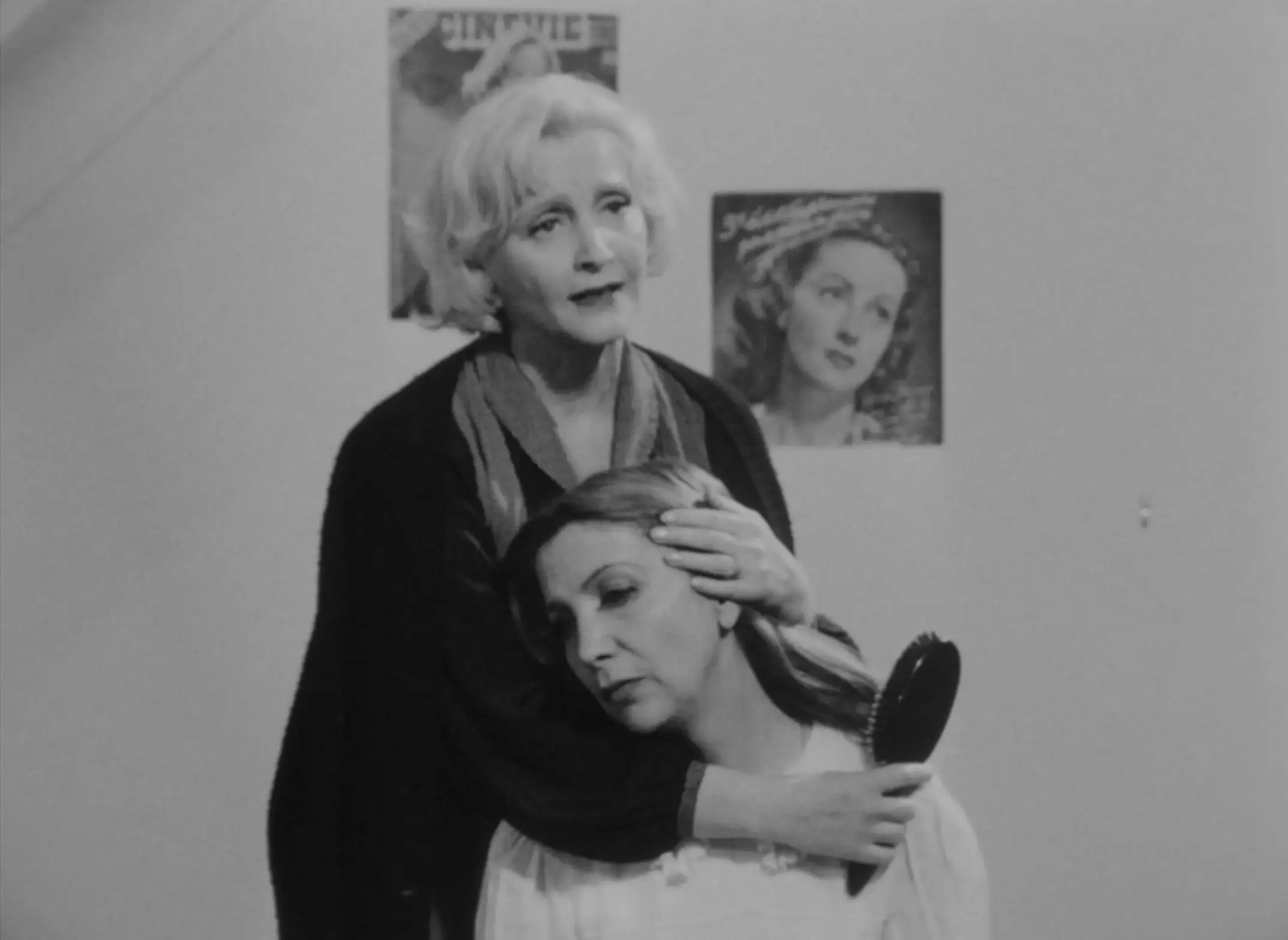
Femmes, femmes (Paul Vecchiali, 1974)
Meanwhile, Vecchiali’s production activities had continued through Unité Trois; notably, he produced Chantal Akerman’s Jeanne Dielman… (1975). But he didn’t have complete creative freedom in the (as the name suggests) trilateral Unité Trois — his proposal to make a porn film in 1973 had been voted down out of fears for the company’s ‘corporate image’. [11] In 1976, disagreements came to a head, and Vecchiali left the company. He then reunited with Cécile Clairval, an ORTF producer he had met in 1973 when she produced his television film Albert Camus. That September, the pair founded Diagonale, with the initial horizon of financing the production of Biette’s Le Théâtre des matières (1977) and Vecchiali’s La Machine (1977). In Vecchiali’s own words,
The central idea was this diagonal journey through cinema. I wanted to be a producer, to make my own films and those of directors with whom I felt I could build up a real language over the long term. I no longer wanted to report to a superior who would very quickly use my commercial failures to dismiss my new projects. [12]
From the start, Diagonale consisted of both a film production company, Diagonale Cinéma Television, and a catering company, Diagonale Traiteur, run by Pierre Belot, whom Vecchiali had met in 1972 when the former catered a screening of an industrial film Vecchiali had made for a pharmaceuticals company. The steady flow of money from the catering side of Diagonale made up for the variable income from the production side. Vecchiali and Clairval would also supplement the company’s funds by taking on industrial commissions documenting civil construction projects. Vecchiali took pride in an economic scrupulousness that contrasted with the dodgy dealings for which many European producers were notorious:
At Diagonale, there was absolute transparency. The accounts were made available to everyone involved in the film. And there was a film-by-film account, which isn't usually done. Because, very often, the money from a new film helps the producers to pay off the debts of the previous one. But here, nothing was mixed up. At Diagonale, every film was its own territory. [...] To avoid any money problems (on my films or those of others), I always signed a contract with the directors, specifying that the film's budget had to be respected, whatever the cost. [13]
Vecchiali himself took on roles far beyond the usual ken of the producer: ‘all the favors I could do — for example, editing films for free, doing production management for free, doing production for free — I did willingly because it allowed generalists to make their first full-length film.’ [14] At the same time, at least by his own account, he gave his filmmakers complete creative freedom, putting himself ‘entirely at their service’ and deferring to them on artistic matters. [15] He gives a good example of this balance of financial conscientiousness and artistic deference, from the production of Simone Barbès:
I remember that a car was needed for Simone Barbès. I managed to get one for free, and when I told Marie-Claude [Treilhou] the good news, she replied, ‘I don't want a Renault. I want a Volvo!’ I looked at her, saw the look in her eyes, which was completely crazy, and said to myself, ‘There's a secret here. You'll get your Volvo.’ We worked out together how to save the money elsewhere. That was typical of Diagonale. Another producer would have said, ‘The Renault is free, you take the Renault!’ But I believe that, completely unconsciously and informally, in the mind of a director, there are secrets, which are the fundamental material of the film, and which no one can explain. Maybe Volvo and vulva? I don't know. When I work with other producers, I know I have secrets, things I fight for like crazy without being able to explain why, and that push me to propose trades. For example, I’ll cut some of the extras to get what I want. So I'm perfectly capable of understanding that in others. [16]
As Vecchiali would later put it, ‘I never produced films. I produced people [...] If a person is interesting, their film can’t be bad.’ [17]
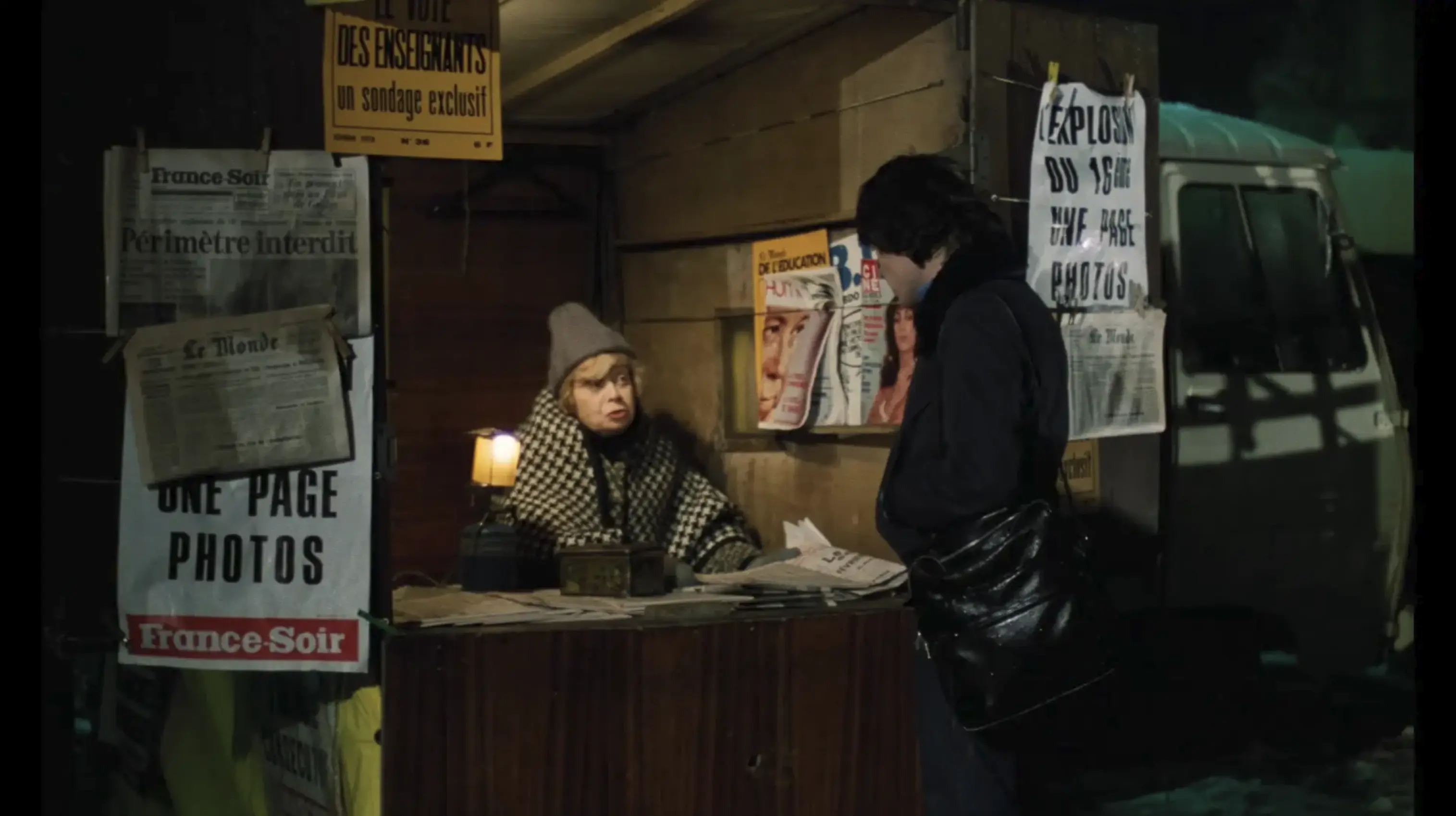
Les Belles Manières (Jean-Claude Guiguet, 1978)
Vecchiali’s approach allowed for the steady production of a number of important features in Diagonale’s first years of existence. Alongside his own La Machine (1977), Corps à cœur (1978), C’est la vie ! (1980) and En haut des marches (1983) were Biette’s Le Théâtre des matières (1977) and Loin de Manhattan (1982), Guiguet’s Les Belles Manières (1978), Treilhou’s Simone Barbès ou la vertu (1980) and Simsolo’s Cauchemar (1980). In each case, Vecchiali produced the filmmaker’s debut film. As alluded to above, the sense of Diagonale as, beyond merely a production company, a veritable film collective was fostered by the passage of personnel between films. Guiguet, who had been assistant director on Femmes femmes, was the set designer for Le Théâtre des matières. Simsolo had co-written Femmes femmes and Change pas de main and played small roles in both; he also appeared in Simone Barbès. Hélène Surgère and Sonia Saviange (Vecchiali’s elder sister), the stars of Femmes femmes, appeared in, respectively, Les Belles Manières and Cauchemar, and Le Théâtre des matières, Simone Barbès, and Loin de Manhattan. Again, this cross-pollination had both creative and financial motivations:
In general, we made films in pairs. Le Théâtre des matières was twinned with La Machine, shot at the same time. […] I needed time to think in the middle of shooting, so I stopped shooting La Machine. I sent the crew and the actors to Biette, he did his three weeks of filming, he gave everything back to me. The handover took place in a bistro where he had been that morning. I spent the afternoon in the same setting with practically the same actors. And Les Belles Manières was followed up with Corps à cœur. […] Rosa [la rose, fille publique] was paired with Beau temps [mais orageux en fin de journée]. Simone Barbès was with Cauchemar. It was always done two by two, because we could hire the technicians for a longer period. [18]
This free exchange of production apparatus was accompanied by an intense and by some accounts fractious friendship and collective life, whose central node was Vecchiali’s house in Kremlin-Bicêtre, a home studio and frequent set for Diagonale productions. It was this very personal closeness, so crucial to the transitive fabric of different Diagonale productions, that would lead some critics at the time to dismissively label them as a ‘gang’, a group of friends more than a serious film collective with any shared aesthetic agenda. That they were also almost entirely a group of ‘queer’ film workers (or at least: none of the major figures on the authorial side were straight) seems both significant in this regard, and striking in its absence from the reception of Diagonale’s work at the time. More than the detested term ‘homo’, if there was a collective self-conception for the members of Diagonale the term of solidarity might have been ‘marginal’, a characteristic which was not applied positively from all quarters; in an interview, Surgère would later relay that Jeanne Moreau, who had hated what she perceived as her friend’s degradation in Femmes femmes, inveighed on Surgère at the peak of her involvement with the group that ‘it’s all well and good, but still, you need to leave that clan’, whom she judged would remain ‘marginal with respect to the profession, marginal with respect to life.’ [19] Yet for Vecchiali himself — not given to political affiliation or narration — the family resemblance of the Diagonale output was first and foremost a matter of economy: ‘From the moment we work with the money we have and accept it, inevitably, a stylistic movement will begin.’ [20] But he admitted that there was at least a negative aesthetic solidarity among the Diagonale filmmakers: ‘We had common dislikes, dislikes of naturalism, dislikes of intellectualism.’ [21] It was in fact this common cinephobia (as Guiguet labelled it, in his Cahiers du cinéma questionnaire response included in this issue) that led to Diagonale’s only genuinely collective project:
Cécile and I gathered together the diagonaleux (Biette, Guiguet, Frot-Coutaz, Treilhou, Davila, Delahaye). My proposal was simple: to found a monthly magazine loosely inspired by Cahiers du cinéma but with different objectives. Each issue would have three sections: film news (we had all been critics); remembrance of the French cinema of the thirties; and finally, an interview with a guest chosen from among the directors whose films we didn't like. This last section would have consisted of a round table discussion. Whether or not the person in question was present, we would have developed our arguments as precisely as possible, but in the most courteous manner. The title? DIAGONALES. Apart from Biette, it was totally rejected. Counter-proposal: make a film in sketches, a kind of Diagonale manifesto. I bowed to democracy. [22]
That film of sketches was L’Archipel des amours (1983), to which all the aforementioned Diagonale directors contributed, along with Cécile Clairval, Jacques Davila, Michel Delahaye, Jacques Frenais and Gérard Frot-Coutaz. But what Vecchiali had intended as ‘a film-manifesto’ for Diagonale ended up, in his own words, ‘soft and consensual’. [23] It was savaged by critics, with Daney (generally a strong supporter of Diagonale) writing in Libération that ‘Diagonale has not succeeded in making a minor film. Instead, it has autophagied into a world so shrunken that it suddenly appears to us to be very small.’’ [24] According to Vecchiali, ‘The failure of this film broke up the group a bit. We didn't see each other as much as before.’ [25] As he puts it in his memoirs, by 1984, ‘as far as the diagonaleux are concerned, it’s the doldrums.’ [26] After this point, he would only produce two more films by other filmmakers under the Diagonale banner, Gérard Frot-Coutaz’s Beau temps mais orageux en fin de journée and Claudine Bories’s La Fille du magicien (1990); the rest of Diagonale’s remaining output consisted of Vecchiali’s own films: Rosa la rose, fille publique — Diagonale’s greatest financial success, with 400,000 admissions — Once More, Le Café des Jules (1988) and Wonderboy (1994), the latter two co-productions with television channels.
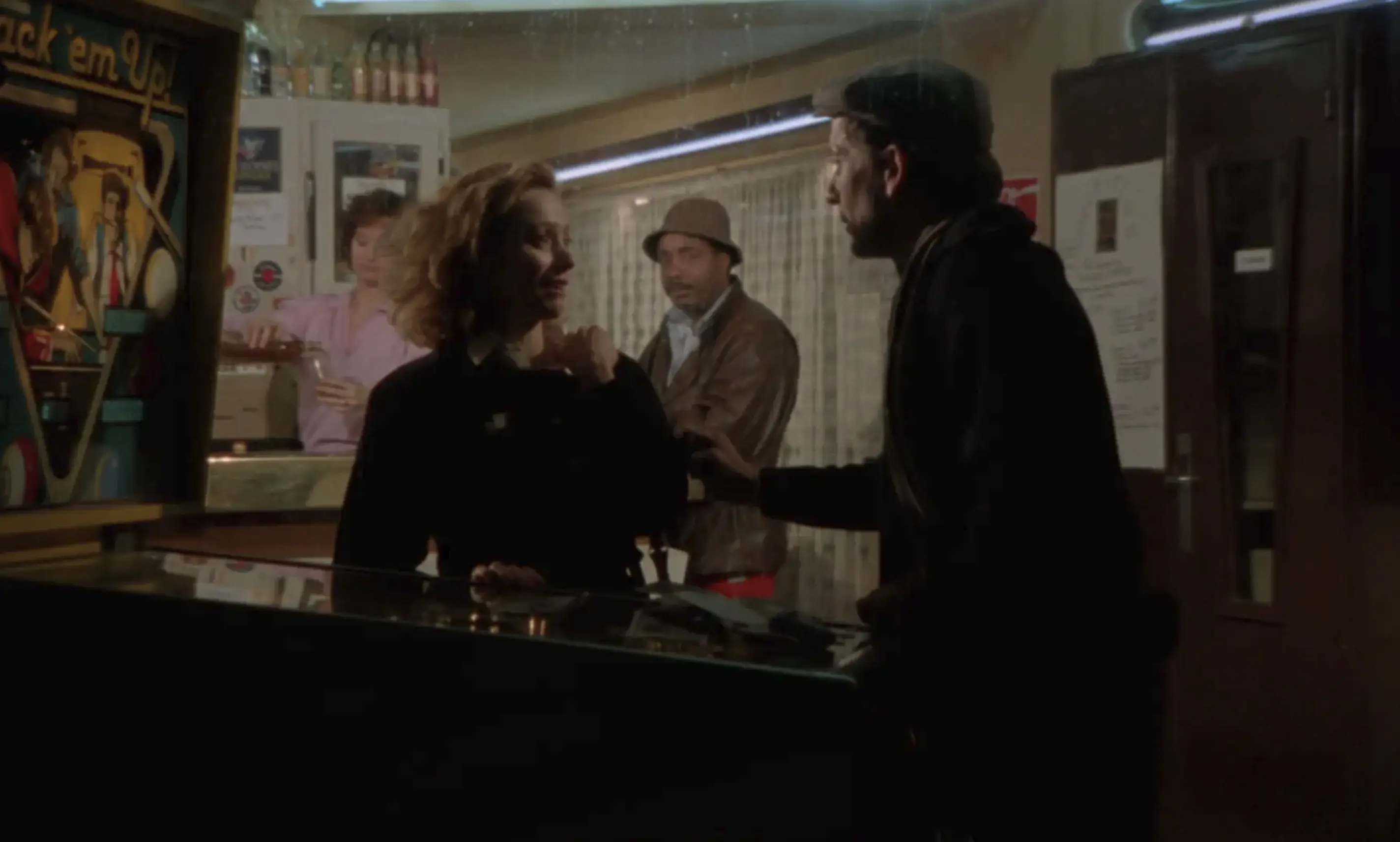
Le Café des Jules (Paul Vecchiali, 1989)
Vecchiali eventually wound Diagonale down in 1998 and sold the company’s catalogue; in his own words, he was ‘fed up with the job’. [27] He left Paris and moved into a house he named Villa Mayerling (in tribute to Anatole Litvak’s 1936 Boyer/Darrieux vehicle) in Var in Provence, where, between 2004 and his death in 2023, he would make seventeen independent features under the banner ‘Antidogma’. Nearly all the directors who had got their start with Diagonale went on to make films with other producers, and several made masterpieces; but for Vecchiali, as he would later put it in a conversation with Pascale Bodet, they remained Diagonale directors in the same way that a child retains their parent’s name. Looking back in 2005, Vecchiali reflected: ‘We were really, really happy, and I know there are extremely deep bonds between the Diagonaleux, as we were called’. [28] Treilhou also uses the language of family when recalling the collective and its dissolution:
We remained tied to each other like a family that has dispersed around the world. We had a familiarity that was sealed forever in Vecchiali’s cinema, in the everyday practice of Diagonale, in which everything circulated: the food, the dogs, the people. Everyone served everyone, and we even came to serve each other as actors, we helped out with this or that. That’s what brought us together truly and definitively. I think we loved each other, deep down, despite it all. [29]
…mais orageux en fin de journée
It is here, at the end, that the critical trouble begins. For while this is one version of events, it is less clear that the other directors who made films with and then broke from Diagonale would ever have called themselves diagonaleux. The ideal of Diagonale is perhaps best illustrated in the aforementioned anecdote, from very early in the company’s existence, of Vecchiali passing the whole crew of La Machine over to Biette to make Le Théâtre des matières, and then picking them back up on the other side. Here is the efficiency, the agility, the camaraderie of the Freed Unit or the RKO B unit, recreated in French independent cinema. A real miniature dream factory, where the director has a whole apparatus at their disposal. Yet the period in which Diagonale actually operated in this way was only around five years. Pierre Léon records that Biette’s second film, Loin de Manhattan, though a Diagonale co-production, was for the director ‘an opportunity to get away from Diagonale’ — he relays an anecdote in which the director, slating the first shot of the film, accidentally announced it as ‘Loin de Diagonale’. [30] That film was co-produced by the now legendary (and perhaps infamous) Paulo Branco, who was also the sole producer of Guiguet’s second film, Faubourg St Martin (1986). [31] In his memoir, Vecchiali reports, with some coldness, how he turned Guiguet down when the latter ‘begged’ him to watch the film and make editing suggestions; Vecchiali suggests that Guiguet’s refusal to hire Strouvé as cinematographer on the film was an act of ingratitude, and it doesn’t take much reading between the lines to sense that he felt the same way about his and his company’s lack of involvement. [32] Treilhou didn’t make another fiction feature until 1988’s L’Âne qui a bu la lune, which was produced by Vecchiali’s old colleague Guy Cavagnac along with Nicole Azzaro. None of the original Diagonale directors would make a film produced by Vecchiali again. In fact, putting aside Vecchiali’s own films, the only other work that would emerge from the original Diagonale ‘hive’ after the failure of L’Archipel des amours was Beau temps mais orageux en fin de journée, the feature debut of stalwart diagonaleur Gérard Frot-Coutaz, who had been part of the Kremlin-Bicêtre set since 1974 and had acted as an assistant director and/or dialogue writer on numerous Diagonale productions, while also making a couple of his own shorts, the second of which was included in L’Archipel. Vecchiali gives a rather moving vignette of seeing Jean-Claude Biette at one of the press screenings for the film, his thumb raised in approval: ‘For a moment, I thought that the diagonaleux were going to regroup. In vain.’ [33]
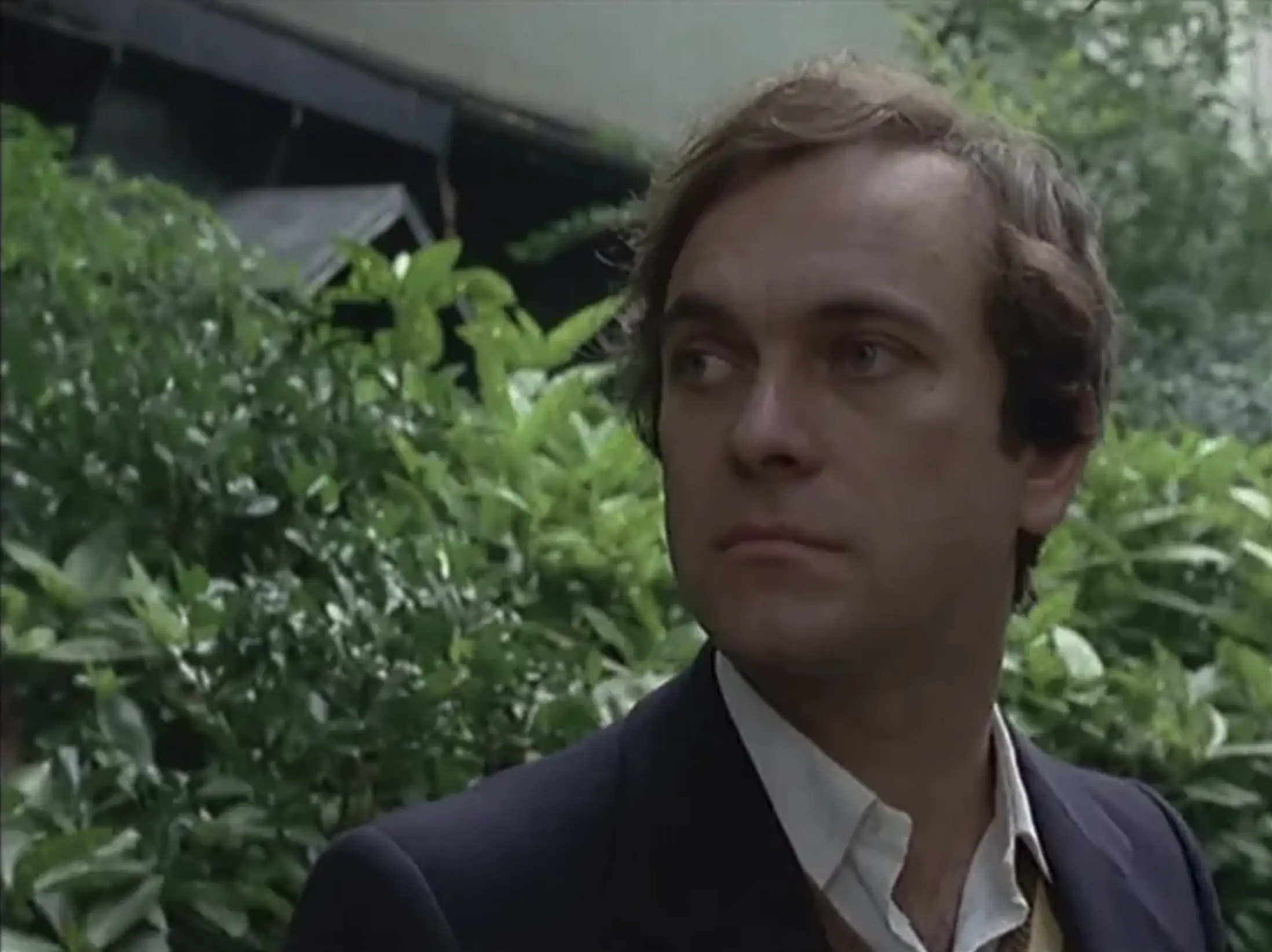
Loin de Manhattan (Jean-Claude Biette, 1982)
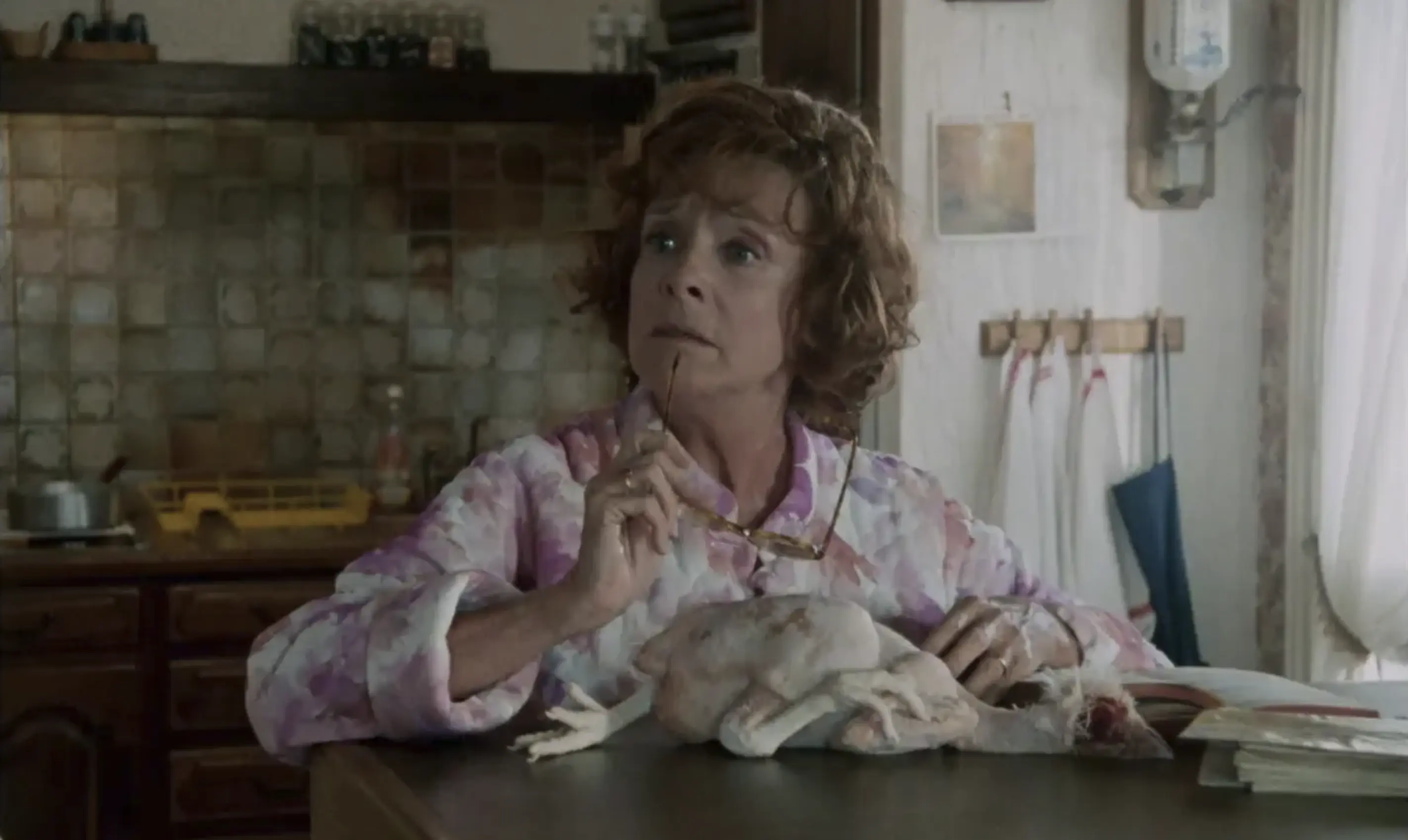
Beau temps mais orageux en fin de journée (Gérard Frot-Coutaz, 1986)
If it seems as though we are relying heavily on Vecchiali’s own accounts, it’s because in large part we only have his side of the Diagonale story. In retrospective career interviews from 1988 and 1992 respectively, neither Biette nor Guiguet, nor their interviewers, mention the word ‘Diagonale’. [34] It seems that, as far as the film critical culture of France was concerned, a few talented directors had for a moment been drafted into ‘la société Vecchiali’, [35] before leaving it. Vecchiali himself acknowledges at least a few tensions even in the glory days: he reports that, during the editing of Les Belles Manières, Guiguet believed his producer-editor was trying to ‘sabotage’ the film, reflecting: ‘I felt my dual role (producer, therefore boss; and editor, therefore employee) was raising suspicions’. [36] In 2018, he recounted how an editing disagreement with Biette on Le Théâtre des matières culminated in the latter accusing Vecchiali of ‘playing producer’; the story ends with Biette phoning Vecchiali ten years later to admit that he was right, and that Vecchiali should have insisted, to which the latter responds: ‘you branded me a producer, I didn’t like it.’ [37] These anecdotes perhaps suggest the paradox at the heart of Diagonale: an apparatus by which auteurs could make work unmolested by outside interference, kept in motion by the scrupulous management of someone who was not only an artist in his own right, but, by his own description, an impresario, a producer of people.
In that same interview, Vecchiali is forthright about his feelings of betrayal, even more than thirty years later: ‘It hurts me very, very much that they all abandoned ship. [...] If they had stayed, I would have kept Diagonale; rightly or wrongly, I resent them very much.’ [38] So are these directors, this ‘they’ of which Vecchiali speaks, diagonaleux — that is, a group united by more than a transitory social-artistic scene that, relatively briefly, issued in a film production company? Are they deserters of a ship that could have sailed on indefinitely, or are they simply filmmakers who, like almost all filmmakers, moved from one producer to another? Do we take from the development of Biette, Guiguet and Treilhou’s individual voices in their later films evidence of an escape from the aesthetic predicates of Vecchiali’s universe, or merely the natural evolution of the artist with time and experience? Should we, as many have, treat these later films as part of a continued tradition within French cinema that can itself be called ‘Diagonale’, the afterlife of a ‘film collective’ with a strong enough shared identity that even these works can coherently fall under its penumbra? [39] The answers to these questions are, of course, beyond the ken of this editorial, and even this issue, which for the most part sticks to the Diagonale productions, and for the most part takes them one by one. But it is our hope that the reader will be left ready to carry them into their experience of the oeuvres of these singular filmmakers, whether that amounts to an exploration of unfamiliar terrain or a return to beloved haunts.
Ou la vertu
Beneath the grumbling of former collaborators, there is a story here about the lamentable narrowing of the financial conditions of film production in France from the mid-eighties onwards. Treilhou again:
For those [of us] who had lived through such an auteur’s feast — those who we called auteurs then — there was an abundant period, very abundant. Up until around 1985 it was extremely abundant. There was space for artisans and space for industry. For the artisan everything was small, modest, but no one asked for more. And then it was all called into question. It became like with antique dealers set against peddlers, big farmers against small producers, the same model, let’s say. [40]
Diagonale’s glory years coincided with a comparatively rich period in French independent film funding, and its dissolution with the retrenchment of the same space of possibility. In 1986, Vecchiali actually presented his proposals to ameliorate the system of French cinema funding to the Socialist Minister of Culture Jack Lang, envisioning a ‘Banque du Cinéma’ that would distribute the tax on box office receipts more widely and no longer favor the big producers. Lang’s response: ‘What would people like Gaumont and Pathé say?’ [41] By the end of the eighties, Vecchiali clearly, and with no small reason, considered himself a persona non grata: when he agreed to produce Claudine Bories’s La Fille du magicien (1990), he advised her not to mention him when she applied for the advance on receipts. [42] In the decade after Diagonale’s greatest financial success, Rosa la rose, he reports that he was turned down for the advance about twenty times. [43]
The achievement of Diagonale as an intervention into the system of production should not be underestimated. ‘People didn't accept that we could have things’, said Vecchiali retrospectively, ‘that we could work according to an economy with personal investments so that a cinema could exist; or, to put it better, so that a different cinema could exist'. He claimed that other producers would phone Diagonale’s suppliers and ask if he had really paid everyone, baffled by how such an operation was solvent. [44] In response to a questionnaire Cahiers du cinéma circulated to film producers in 1981, Vecchiali and Clairval wrote that the survival of Diagonale mattered ‘above all, insofar as it is, has been, and will be an instrument for our work and the work of others.’ [45] The ‘insofar as’ is essential; cinema is an art of the achievable, and Diagonale was about making things achievable for filmmakers: ‘We believe that when a film can be made, it should be made by forcing the odds if necessary, by any means possible, provided they don’t harm the nature of the film as a whole or its elements’. [46]
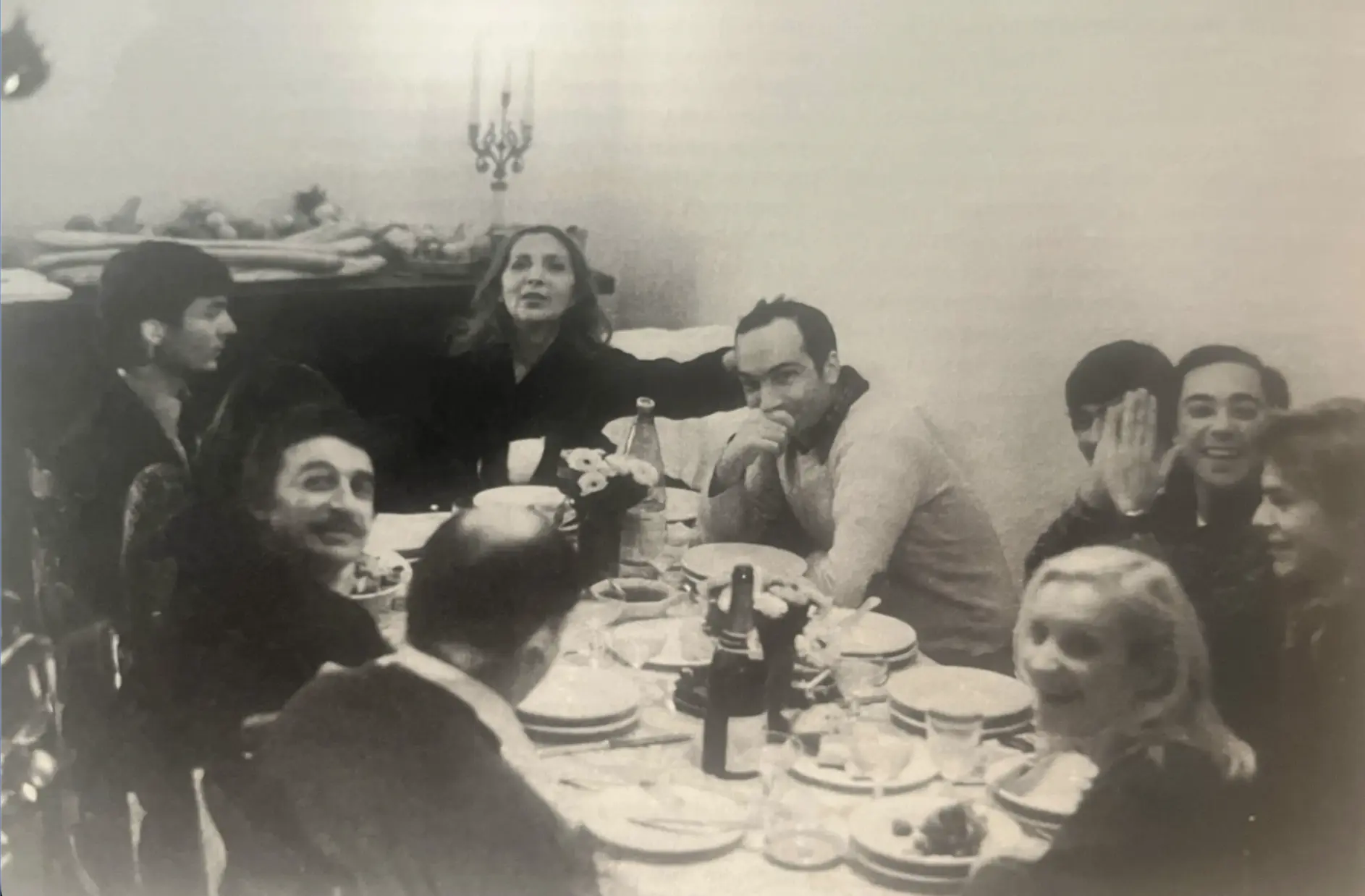
A Diagonale Christmas at Kremlin-Bicêtre, 1977. Around the table, starting from bottom left, are Pierre Bellot, Paul Vecchiali, Jean-Claude Guiguet, Sonia Saviange, Jean-Claude Biette, Emmanuel Lemoine, Guy Gilles, Philippe Chemin, Hélène Surgère
Films don’t need the excuse of concocted ‘contemporary relevance’ to be worth talking about; endless ‘rediscoveries’ and anniversaries are the material of publicity, not criticism. But Diagonale as a historical phenomenon may have a particular importance in our own historical moment, as a reminder that the politics of a film is the politics of its production, when many ‘film buffs’ spend their time debating the leftist bona fides of hundred-million-dollar Hollywood products. When everyone and their grandma is an auteur, and indeed that category is most consequential as a way for huge corporations to anoint themselves with the pleasant scent of artistic patronage, the Diagonale experience teaches us that what matters is to intervene in production: to work out how to make a film, what you need to make it, how you can use what you have, how you can establish working relationships that last, how you can give people what they need to do the work they need to do. It’s not surprising that Vecchiali took up digital video when he returned to filmmaking in 2004 with A vot’bon cœur, which united many of the surviving diagonaleux, and which Jean-Luc Godard, on whom the politics of filmmaking was rarely lost, declared ‘Minnelli + Front populaire’. [47] Vecchiali spent the last eighteen years of his life making films with his cherished collaborators, mostly in and around Villa Mayerling. This was a continuation of the ethic of Diagonale, adjusted to the reality of new conditions: state subsidies out, cheap equipment in. And this ethic of organization, of shooting, of production, is continuous with an ethic of representation, of attention, of creation:
Each ‘character’ on the shoot (technician or actor) has their own time. The aim is to make all these times coincide, so as to create a single time of shooting. If you work with urgency, everyone's time will be roughly identical and become the time you’re looking for. That's the reason why I shoot fast. Duvivier also shot fast. It’s concentration that creates the possibility of capturing the moment, of recording everything that might happen, and that you might not have seen: a cloud, a bird, a sound, an extra in the background who will bring an echo to your narrative. [48]
Diagonale doesn’t mean slumming it, or making a fetish of the cheap. It means finding yourself where you are, and working out how, from that place, you can achieve the grandeur of Von Sternberg, Ophüls, Grémillon, Ford. As Treilhou would later put it, ‘We made do with what we had, which took an almost religious and mystical fervour. We learned, we gained strength, we formed a group of people who had similar cinematographic tastes and who spent their time debunking the dominant cinema, which would eventually prevail.’ [49] For those of us living in the shadow of that victory, the Diagonale productions are incandescent evidence that a few people, at a certain point, managed to do things differently; that a different cinema existed and that it mattered. Their films could be your life.
Notes
The term is Serge Daney’s; see ‘L’Archipel Diagonale’, Libération, 19 and 20 March 1983, translated in the ‘Tout Diagonale’ dossier section of this issue.
Notably in Femmes femmes and Change pas de main, but Pascal Cervo hazards that Darrieux in particular appears in all of Vecchiali’s films, either in person (En haut des marches) or photographically, enshrined somewhere in the scenography. See ‘Des points des rendez-vous’, in Paul Vecchiali: Once More (Les Éditions de l'œil, 2023), 101–128 (p. 120). An extract from this career-spanning interview with several of Vecchiali’s key actors appears in this issue.
Louis Skorecki, ‘Chansons, chansons’, Cahiers du cinéma, 319, January 1981, 47–50 (p. 48); translated in this issue.
Vecchiali, Le cinéma français: Émois et moi — Tome 2: Accomplissements (Éditions Libre & Solidaire, 2022), pp. 51, 118 (emphasis on staff in original — the word is an anglicism).
Daney, ‘The Diagonale Archipelago’.
Vecchiali, Le cinéma français, Tome 2, p. 11.
Frédéric Strauss and Serge Toubiana, ‘“Ne vivez pas la peur”: Entretien avec Paul Vecchiali’, Cahiers du cinéma, 411, September 1988, pp. 19–21. See ‘Don’t live in fear’ in this issue.
The production of independent cinema in France depends on the ‘advance on receipts’ [avance sur recettes], a subsidy created by André Malraux in 1959, which is funded by taxes on film tickets and television channels and distributed by the Centre national du cinéma et de l'image animée (similar to the Eady Levy in the UK, abolished by Thatcher’s government in 1985). Filmmakers who apply for the advance have their proposal evaluated by a committee of industry professionals; if they are successful, they are provided with funds towards production, which only have to be repaid if the film makes a profit (in practice, only a very small proportion of films repay their funds). The advance therefore provides a way for independent French filmmakers to fund features without relying on wealthy private patrons. Competition is tight, however, and the vagaries of the committee’s awarding decisions have been a constant subject of discussion in the history of French independent cinema. The plot of Vecchiali’s later À vot’ bon cœur (2004) turns on the murders of members of the awarding committee, with Vecchiali himself cast as their assassin.
See Jean-Claude Guiguet, ‘Paul Vecchiali ou Le triomphe de la lucidité’ Cinéma, 224–225, August 1977, pp. 148–149.
Interview with Jean Narboni and Serge Toubiana in Poétique des auteurs (Éditions de l’Etoile, Cahiers du Cinéma 1988), 6–20 (p.18). Translated in this issue.
Alain Carbonnier, ‘Paul Vecchiali, cinéaste et producteur’, Cinéma, 298, October 1983, 12–15 (p. 14). Despite the objections, Vecchiali eventually made Change pas de main in 1975 with the support of the producer Jean-François Davy, and released it under the Unité Trois banner, a move that contributed to the friction that would soon lead to his departure from the company.
Quoted in Mathieu Orléan, Paul Vecchiali, la maison cinéma (Éditions de l'œil, 2011), pp. 84–85.
Quoted in ibid., p. 89.
Rien à voir [radio program by Hélène Frappat], 24 October 2005.
Josiane Scoleri and Vincent Jourdain, ‘Entretien avec Paul Vecchiali’, Zoom Arrière, 6 (2022), 140–172 (p. 155).
*‘*Le branle des évidences (2)’, p. 42.
Scoleri and Jourdain, pp. 157–158.
Rien à voir.
Hélène Surgère, ‘Entretien avec Hélène Surgère sur Paul Vecchiali’, conducted by Jérôme Reybaud, 17 July 2009, https://www.youtube.com/watch?v=FXgs6RppgM4.
Rien à voir.
Rien à voir.
Vecchiali, Le cinéma français, Tome 2, p. 49.
Quoted in Orléan, p. 91.
Serge Daney, ‘The Diagonale Archipelago’.
Quoted in Orléan, p, 91.
Vecchiali, Le cinéma français, Tome 2, p. 77.
Scoleri and Jourdain, p. 156.
Rien à voir.
Treilhou interviewed in Biette, dir. By Pierre Léon (Les Films de la Liberté, 2013).
Pierre Léon, Jean-Claude Biette: Le sens du paradoxe (Capricci, 2013), p. 55.
For his part, Vecchiali calls Branco ‘an approximate but courageous producer’; Le cinéma français, Tome 2, p. 243.
Vecchiali, Le cinéma français, Tome 2, p. 93.
Ibid., p. 101.
Cf. the interview with Biette conducted by Toubiana and Narboni included in this issue, and the interview with Guiguet conducted by Phillipe Rogier in Guiget, Lueur Sécrète : carnets de notes d’un cinéaste (Eléas Editeur, 1992), pp. 10–38.
From Guy-Patrick Sainderichin’s scathing review of L’Archipel des amours, in Cahiers du cinéma, 347, May 1983, pp. 70–71.
Vecchiali, Le cinéma français, Tome 2, pp. 35–6.
Unpublished interview with Vecchiali by Pacale Bodet, September 2018, Paris.
Ibid.
See for example Patrick Preziosi’s ‘Notebook Primer: Diagonale et Co.’, MUBI Notebook, 16 December 2021, https://mubi.com/en/notebook/posts/notebook-primer-diagonale-et-co.
In Pierre Léon’s Biette (2013).
Vecchiali, Le cinéma français, Tome 2, p. 94.
See the interview with Bories included in this issue.
Vecchiali, Le cinéma français, Tome 2, pp. 184–85.
Rien à voir.
Paul Vecchiali and Cécile Clairval, ‘13 (+1) questions aux cinéastes’, Cahiers du cinéma, 325, June 1981, 70–71 (p. 70), emphasis in original.
Ibid.
Vecchiali, Le cinéma français, Tome 2, p. 273. The Front populaire was the alliance of the left formed as a bulwark against the right in the legislative elections of 1936.
Vecchiali quoted in Orléan, p. 97.
Interview with Marie-Claude Treilhou, conducted by Eric Biagi and Andrea Inzerillo for Queer Sicilia Film Festival, 2021, <https://www.another-screen.com/simone-barbes-or-virtue>.