Issue 276 of Cinéma (December 1981) included a ‘Homage to Jean Grémillon’ to which both Jean-Claude Guiguet and Paul Vecchiali contributed. Their texts are translated below.
Jean-Claude Guiguet
He was the filmmaker of compassion, kindness, and solidarity.
He filmed vitality, courage, and zeal for life with an energy that misfortune and disillusionment never dented.
He described the average concerns of man with the same enthusiasm as he did the determination of the winner to achieve victory.
He could talk about simple feelings and look at humble people without condescension.
He taught us that suffering can take the form of nothing greater than an everyday event, and that the desire for happiness remains deeply rooted in the human heart, regardless of setbacks, disappointments and betrayals.
He was able to bring out the heroism that lies in everyone, without ever moralizing about this discovery.
He looked the grandeur and unrest of passion square in the face: staggered at the spectacle of its excesses, he allowed himself to get lost in the shadows of its secrets, and exalted its lucidity in its dazzling and dizzying light.
He showed beauty residing in the face of crime, and ugliness in the face of innocence, with a respect, attention and equal understanding for everything that is born, lives and dies.
He traced the inexorable course of days, recorded the slow degradation of matter.
He was obsessed with time.
Such are, still today, after all these years, some of the merits of Jean Grémillon.
No matter how comprehensive it may be, however, no list of rare qualities can truly encapsulate such a universe.
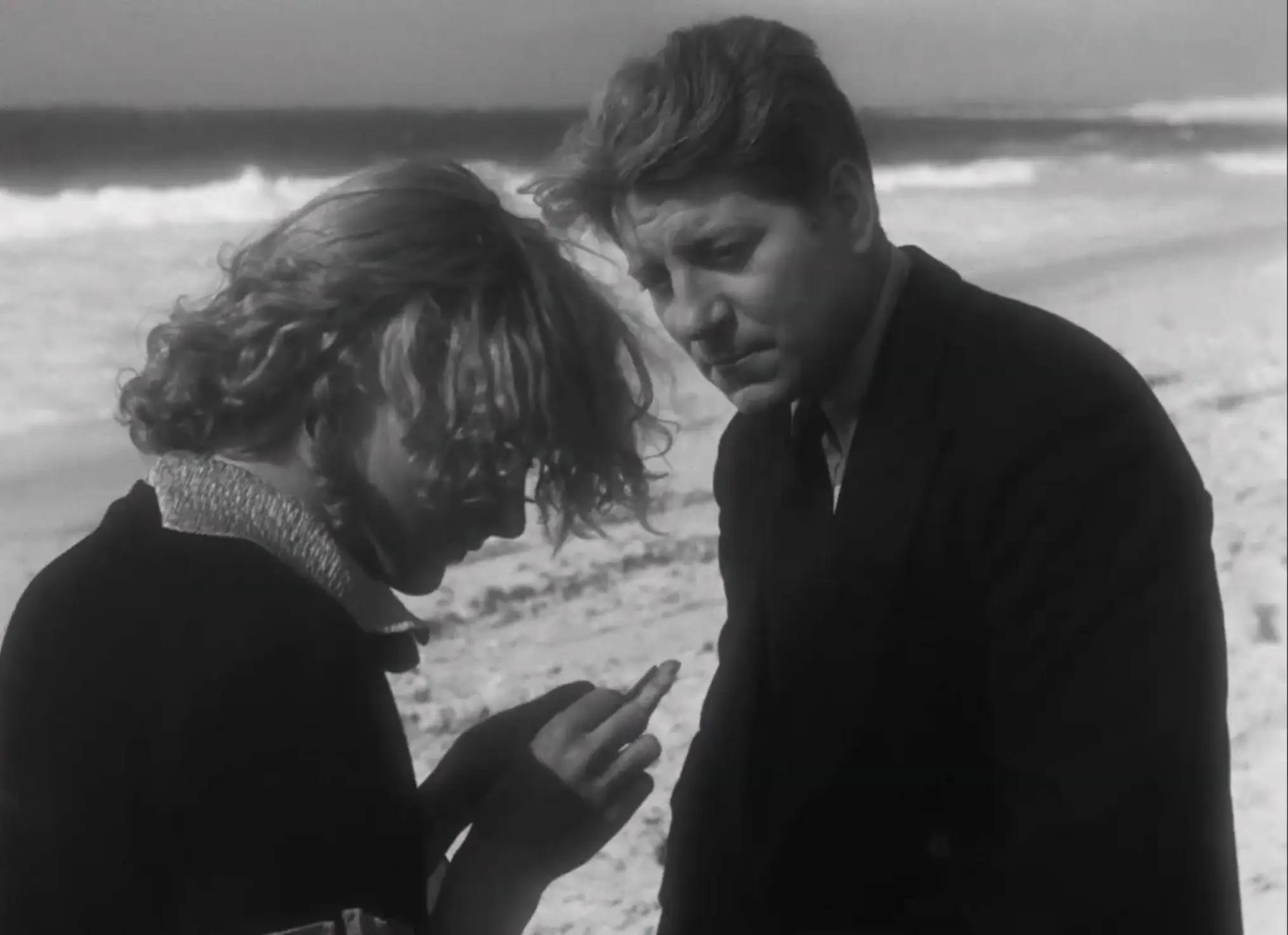
How can we talk about realism here when its documentary description carries us towards the most dazzling lyricism? Is Remorques primarily a film about maritime workers or an oratorio on communication between the living and the dead?
One thing is certain: Grémillon’s world cannot be transposed. It seems that everyone has failed to do so, contenting themselves with approaching it from one of its many angles, which are always carefully isolated from the whole.
The sensory, emotional, luminous reality of this oeuvre evidently begins beyond the repertoire of themes, the list of preoccupations and the program of obsessions.
These few notes, written as a tribute to the memory of one of the world’s greatest filmmakers, are nothing more than an additional exhibit in the impossible investigation of the Grémillon case. I repeat: this art cannot be described.
How can we articulate greatness?
It is reasonable to see in this powerlessness one of the causes of the incomprehension and condemnation that weighed so heavily on the career of a man who nevertheless progressed beyond measure for thirty years, and who was the great unsung figure of French cinema.
Might the distinctive feature of the most remarkable filmmakers then lie in the impossibility of articulating their greatness? One thing is certain: Grémillon is a cursed filmmaker — that is to say, an absolute one.
While an author of the calibre of Jean Renoir has always encouraged analysis, Grémillon defeats it. Everything depends, in both cases, on the degree of fusion of the various elements, on their density and fullness.
It’s also a question of temperament, a matter of weight. Certain gaits leave the imprint of a heavy step. Others, lighter, don’t leave any.
Beneath the secret varnish of the film, we can often detect in Renoir the visible traces of the initial stroke of the pen. We find nothing of the sort in Grémillon, where the work of the artist is invisible, contained in the living matter, installed in the heart of the drama.
Formal appearance never seems to be, in itself, the object of concern, as if the question were not posed in these terms.
It’s not about learning how to fashion a form or make a choice. Here, plastic expression isn’t a matter of a collection of aesthetic virtues taken as add-on objects, which some like to use as a pastry chef does a glaze. Grémillon puts himself at the heart of things and people, so that the unique form that will spring from their conflict or harmony, the one most internal, can mature.
A real so sacred
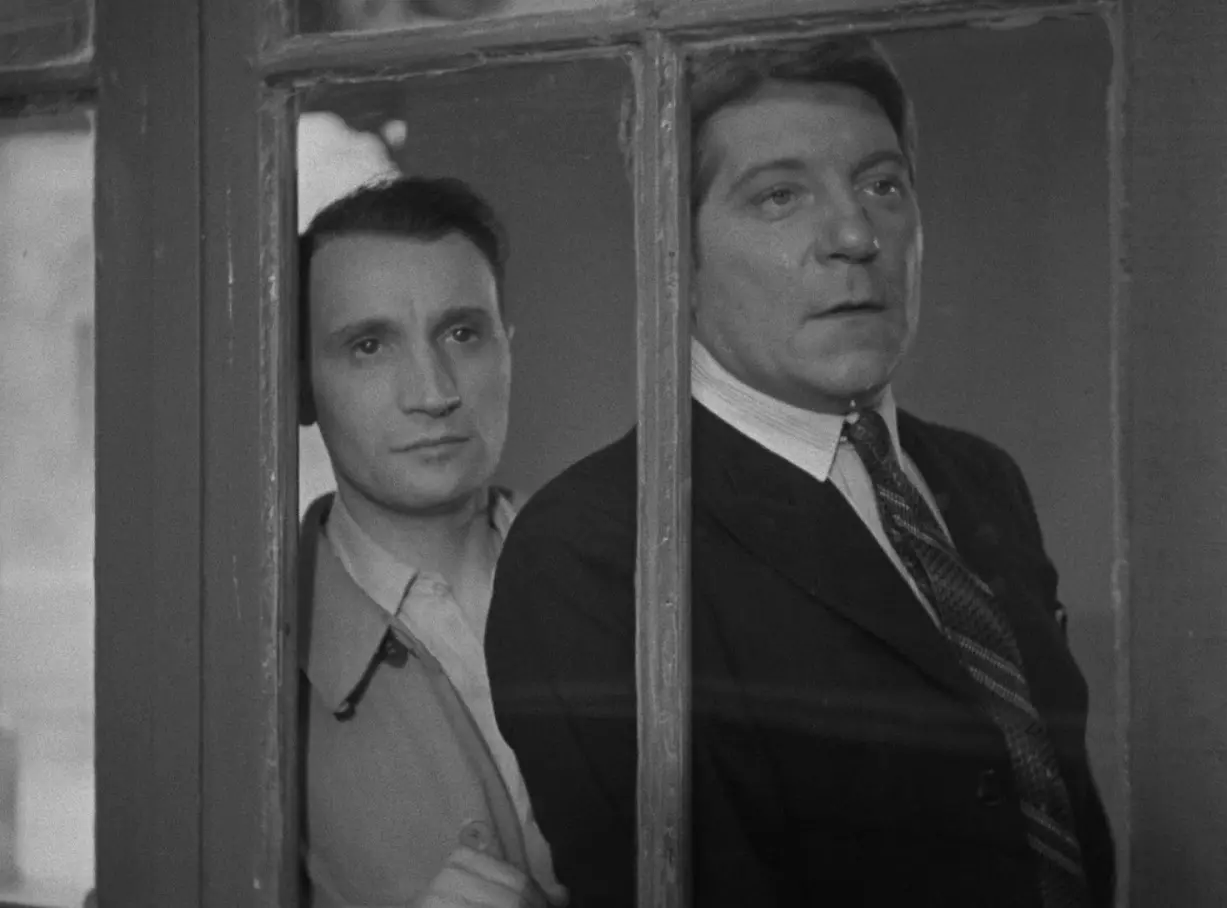
Faced with Remorques, L’Étrange Monsieur Victor, Gueule d’amour and Le Ciel est à vous, we encounter the impossibility of articulating the permanent miracle before our eyes, awestruck by the grace of the framing, the singularity of the lighting, the evidence of an angle of vision and a direction of actors so masterful that we even forget the identity of such conspicuous screen giants as Raimu, Gabin or Madeleine Renaud.
Everything seems to obey a secret law, a superior instinct turning cinema into a prestigious form of magic that opens onto a more profound, more unified, more vast world, one that seems rid of obstacles and partitions.
We therefore perceive something of the inexpressible which bears on both the infinite complexity of life and the permanent mystery of creation. Hence that unforgettable impression we feel before each of Grémillon’s films: the slightest shot gives the sense of having been snatched from the fleeting, from the unstable, from death, like a fragment of eternity.
How to understand, then, the origin of this impression inscribed in the living matter of the film, which gives each second its particular color, its unique density and its universal dimension?
A detail, perceptible from one end of the oeuvre to the other, perhaps provides the germ of an explanation. The same immeasurable importance is given to small and large things alike, and is the subject of an attention Grémillon never strayed from, as much in the material order of the world, throughout all the signs of its concrete reality, as in its spiritual nature, transmitted by the various behaviours of its characters.
We can say that the spiritual energy here is conveyed through respect for matter, even in the expression of its tiniest representations. There are few oeuvres where the real is so sacred. This notion should be taken in its largest sense, outside of any denominational reduction.
The smallest living cell participates in a vast unanimous movement which includes in its impetus both the rage of natural elements and man’s aspiration for a better world, both desire for shared harmony and cosmic disorder.
From the cradle to the grave, all is only passage and incessant movement. Beyond the ruins of time, memory ensures the permanence of those we love when they leave us.
Here, the death knell brings lovers closer together (Le Ciel est à vous, L’Amour d’une femme). There, the G major arpeggio blends with the promiscuous hum of engines (Le Ciel est à vous). Elsewhere, the sound of a tiny file on the bulb that will lull the dying watchman’s pain to sleep imposes its rhythm on the din of the storm that is assaulting a lighthouse lost in the tumult (L’Amour d’une femme).
In Remorques, the captain Laurent (Jean Gabin) contends with the raging ocean, while the wind, rushing into his cabin, tears up his seaman’s certificate. When André Gauthier (Charles Vanel), possessed by the frenzy of adventure in Le Ciel est à vous, asks the airfield bartender, ‘Wouldn’t you like to stroll through the sky as if it were a garden, Marcel?’, the employee replies in a steady voice, ‘Oh, I have dishes to wash’.
Jean Grémillon is not, as we can see, a filmmaker of types. He is a filmmaker of essentiality. He is the brother of Mizoguchi and John Ford. Like them, he never feared conventions or constraints, since they form the very thread of existence and the support for every subject. He never sought to show that he was smarter than the stories imposed by producers or circumstances. It was from elsewhere that he drew the strength to demonstrate the true magnitude of his work. For such a man, cinema was not an instrument of power. It was an occupation. He was its conscience and its dignity.
If the occupation is the figure most often taken up by Grémillon, the leitmotif that appears in all his films, then I believe that the character of Germaine Leblanc (Gaby Morlay), the unforgettable schoolteacher of L’Amour d’une femme, embodies its most sublime portrait.
When Micheline Presle asks her if she ever regrets not having married and had her own children, she points out the children in the playground, before replying: ‘Do you believe that a man could have given me such a big family?’
Cinéma, 276 (December 1981), pp. 37–39.
Remorques (Jean Grémillon, 1941)
Paul Vecchiali
First of all, to live.
To trace your route — it’s difficult when you want it to be a straight one — to cross the forests of confusion, to furrow.
To accept constraints, fears. Failures. To deal with all of it.
To plunge, naked, into mediocrity, cowardice, scheming, lies, false pretenses, abdication, cynicism, incomprehension. And again, to deal with all of it.
And then to film.
To confront images with sounds, to perform your occupation properly, to lead calmly, to communicate certainties.
And also to regurgitate instances of life. To redirect them. To make the most of emotions, even the most negative, in order to help the actors to make a spectacle out of them.
To prolong your life among others, at random. To expand… To not be stingy; to remain modest. So that passion is felt but not flaunted.
To return, exhausted, to everyday life. Little by little, to feel dispossessed of yourself. To carry your suffering lucidly, then, receptive to the suffering of others, to combine it once more with the joy of work…
To begin to film again, to live again…
When weariness begins to pierce holes in your memory, drain your reflexes, undermine your will — then close your eyes, grit your teeth, and, without abandoning your route, wait for death.
It comes.
If there is something that cannot be denied Jean Grémillon, it is that he was a working human being.
It’s perhaps this persistence in remaining himself, film by film, beyond his problems as a man (‘decent’) or as an artist (‘accomplished’), present with discretion, burdened by injustices suffered, weary of futile efforts, defeated but still standing, that has long made him seem ‘uneven’. (Cf. the outrageous Boussinot, and the pile of muck that appears there.) [1]
I use the word ‘uneven’ deliberately.
The passion which once united films and viewers has been replaced with the cold, Cartesian judgment of the schoolmaster: very good, average, could do better… uneven!
There are no more masterpieces. At any rate, it seems to me that, for some years now, very few films have offered that self-evident perfection that makes them irresistible.
Classicism is becoming diluted: it survives, with difficulty, among the cautious, or flickers through the prism of revisited clichés.
Today, everyone can make a good image, a ‘well-worked’ sound, which means one that is doubled, well-polished, smooth, consumable.
The technique and grammar that Grémillon’s contemporaries invented alongside him have now been entirely assimilated.
With the alibi of ‘respect for the audience’, in search of this perfection, we end up with the ready-to-wear…
And films come crashing down on us like a waterfall. Why bother complaining? But how can we find our bearings in it all?
Let’s talk History later… much later!
But if we do talk about the past, I mean up until 1960, for example… we soon realize that those who, in each period, professed to write about cinema did not see things clearly…
In any case, their judgments are contestable.
So then today…
How can we be sure that that momentary magic we feel here or there is communicable? How can we try to communicate it?
We often meet with skepticism, snickers, the retreat of reason, with the intelligence (you understand me, at any rate) which asks for enlightenment before feeling.
A light, a word, a smile, a modulation, a distant sound, a grace, project us beyond the story into the vertigo of poetry.
Cinema diverges from its component parts, takes flight.
From these two contradictory energies, that which engenders the passion to show and that of the reserve that holds back, the collision, the fleeting spark, is harmonized in collusion.
To wear out your life, film after film, searching for the secret of images
Something more is happening.
One man is imprisoned in place of another, whose remorse drives him to help the innocent man’s family. When the innocent man manages to escape, he naturally goes to his benefactor. And the other man hides him, just as naturally… The strange monsieur Victor (Raimu) has a wife (Madeleine Renaud) with whom the innocent man (Pierre Blanchar) falls in love.
In the house, the shutters are closed so that Blanchar can come and go without risking being seen by the neighbors.
One day, when he becomes too insistent and persuasive, Madeleine Renaud, who is also in love and afraid of succumbing, rushes to the shutters to stop Blanchard and throws them wide open.
This gesture bathes him in sunlight.
The beauty of this moment, without grandeur, its profound effectiveness, the lightness of its discourse, is enough for us to declare that the film that contains it is a masterpiece.
We can say the same about Pattes blanches on the basis of the wedding of Suzy Delair and Fernand Ledoux, seen from above by Michel Bouquet, or on the basis of Arlette Thomas’s dance; the same goes for Jean Gabin’s tears at the end of Gueule d’amour, and for the penal colony in La Petite Lise, for the visit to the empty house in Remorques, for Gaby Morlay’s death in L’Amour d’une femme…
If, once we’ve picked out these celebrated moments, the rest of the film seems less strong, less just, less… what? whatever you like — let’s not forget that these strong moments are always prepared by more diffuse, more melodic moments… Let’s not forget either that judgments of ‘content’ are subject to fashions and moods.
So to lay such a charge on the film is perhaps to become aware of our own shortcomings, our own limitations.
To diminish his merit by quibbling is to betray a man who took risks and assumed responsibility for them.
Oh no, it’s not a question of a moral lesson, but of a warning.
By trying too hard not to be fooled, we let pleasure die… By wishing too hard for perfection, we dessicate our judgment.
Grémillon did not achieve the career that the profession owed him and, even worse, he did not always make the films he was burning to make.
History repeats itself.
There are, for example, in Jacques Demy, in Jean-Daniel Pollet, in Jacques Rivette, moments of grace comparable to those that abound in Grémillon…
For a filmmaker, it is impossible to escape these alternatives: either stringing beads together to make a beautiful piece of jewelry out of your necklace of films, or wearing out your life, film after film, searching for the secret of images.
Like it or not, there are two worlds here, incompatible, strictly impermeable.
Grémillon must have known this.
He perhaps tried to live as if he didn’t know it, but the consequences are the same… And if there is anyone to pity in this matter, it’s not him, but those who confined him to silence.
He’s doing fine, thank you. He’ll keep getting better and better.
Cinéma, 276 (December 1981), pp. 40–41.
Gueule d’amour (Jean Grémillon, 1937)
Notes
Translator’s note: a reference to Roger Boussinot’s Encyclopédie du cinéma, first published in 1967.